Commodities Market


Commodity Categories
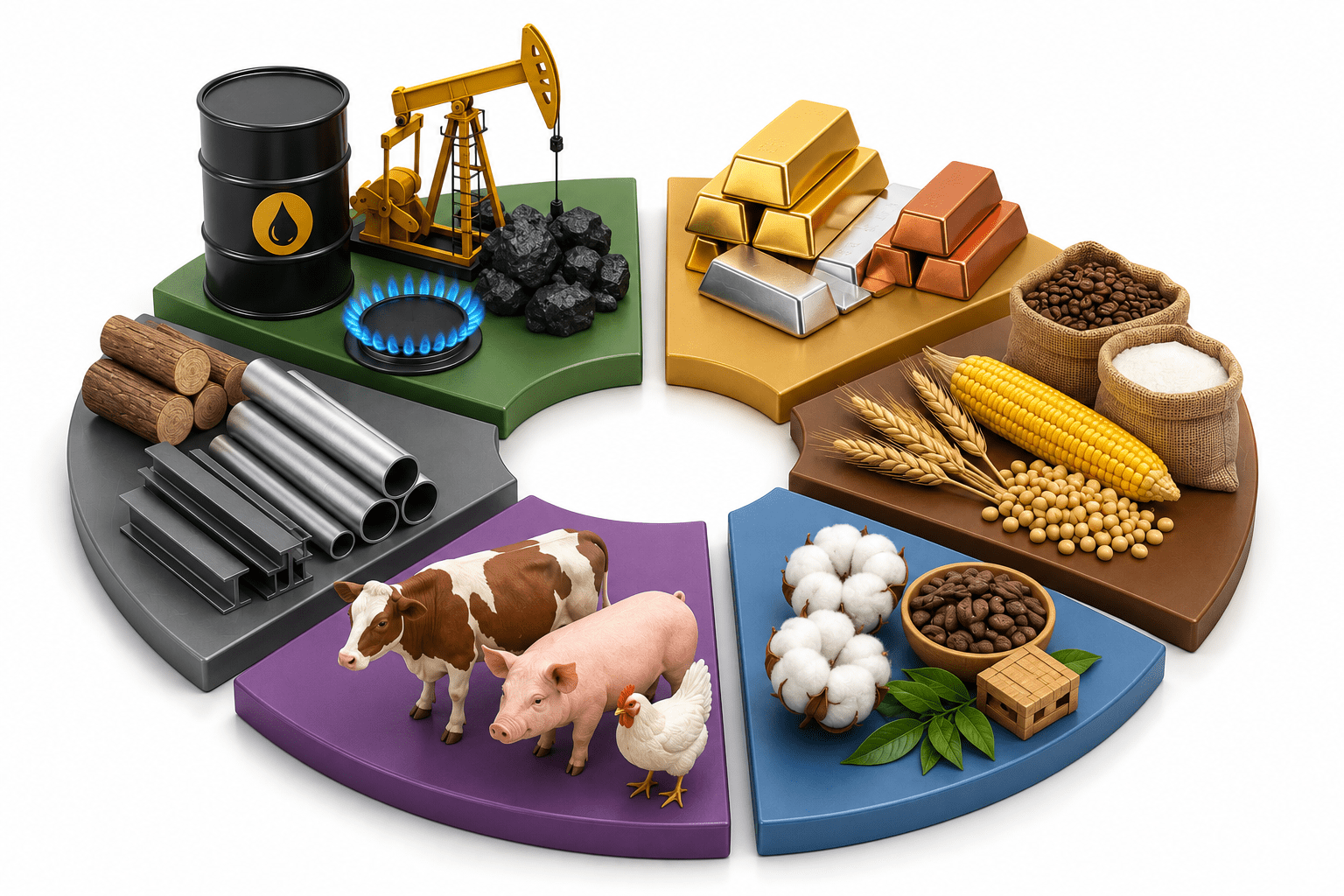

Learning Outcome
5
Understand the role of commodity categories in the market
4
Explain Energy, Metals, and Agriculture commodities
3
Distinguish between hard and soft commodities
2
Identify how commodities are classified
1
Understand the concept of commodities
What is Commodity?
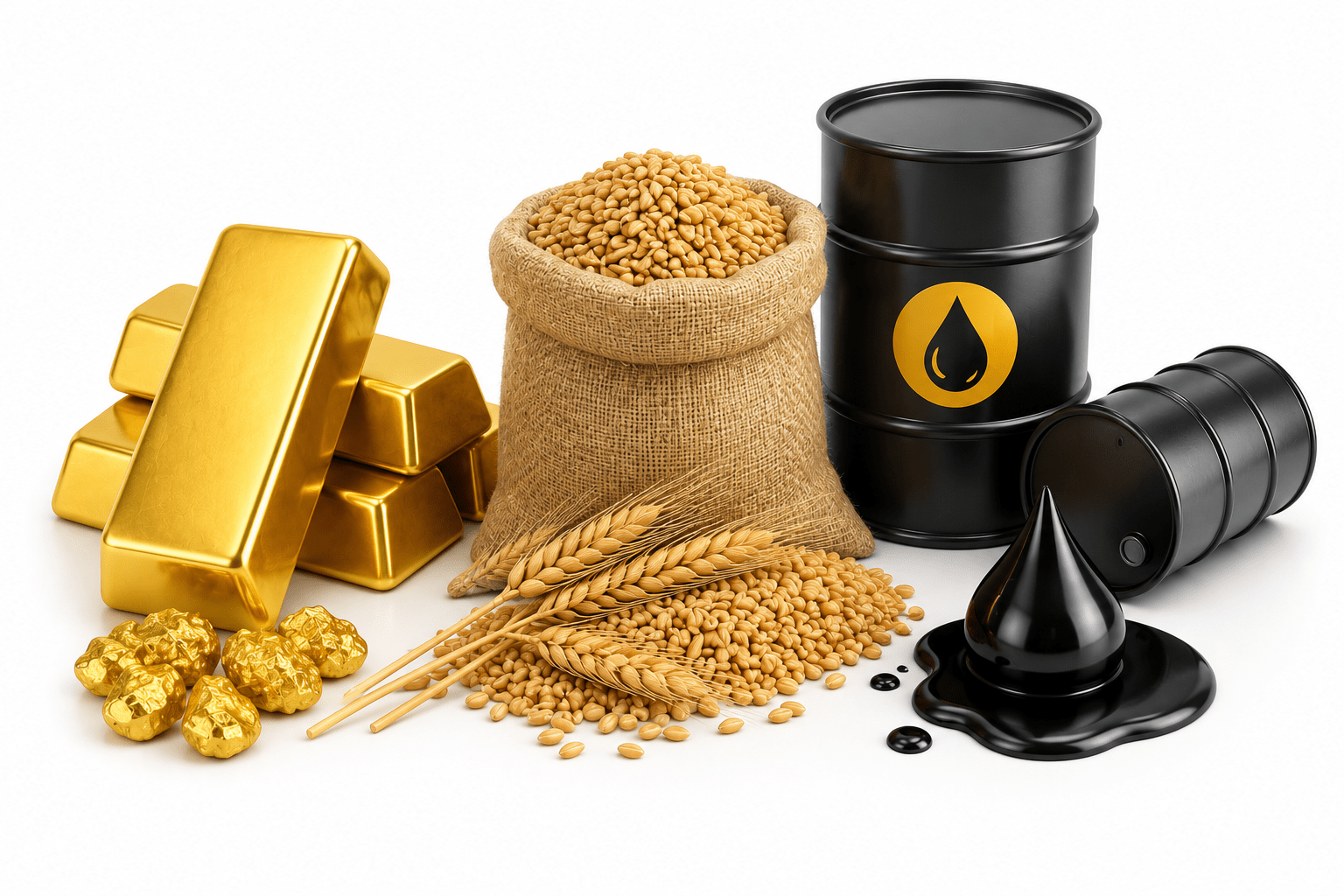
A commodity is a standardized, interchangeable good—like oil, gold, or wheat—that serves as the raw material for industries and is traded worldwide

Gold, wheat, or crude oil — one kilogram of gold or one sack of wheat is the same everywhere, so they can be traded easily in the market.
How Do We Classify It?
For this module, commodities are classified on the basis of their source of origin and storability – that is, where they come from, and how long they can be kept without losing value:
Hard Commodities
extracted or mined from the earth; durable and can be stored for long periods without spoiling. This covers Energy and Metals.
Soft Commodities
grown or cultivated through farming; perishable, and cannot be stored indefinitely. This covers Agriculture
Category 1: Energy Commodities
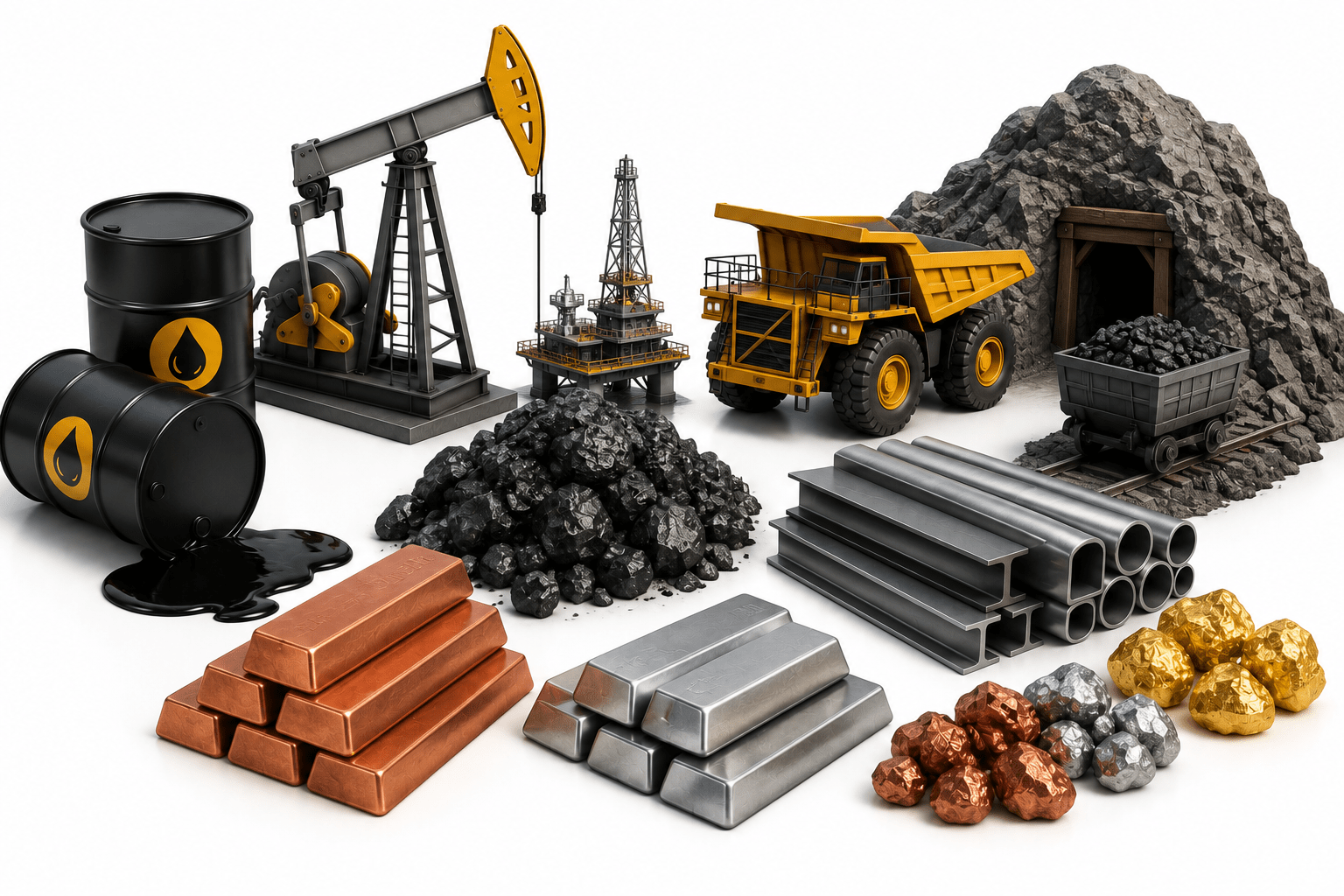
Energy commodities are fuels and power sources extracted from the earth, used to run vehicles, generate electricity, and power industries
Crude Oil
refined into petrol and diesel; actively traded on MCX
Natural Gas
used for electricity generation, heating, and as CNG in vehicles
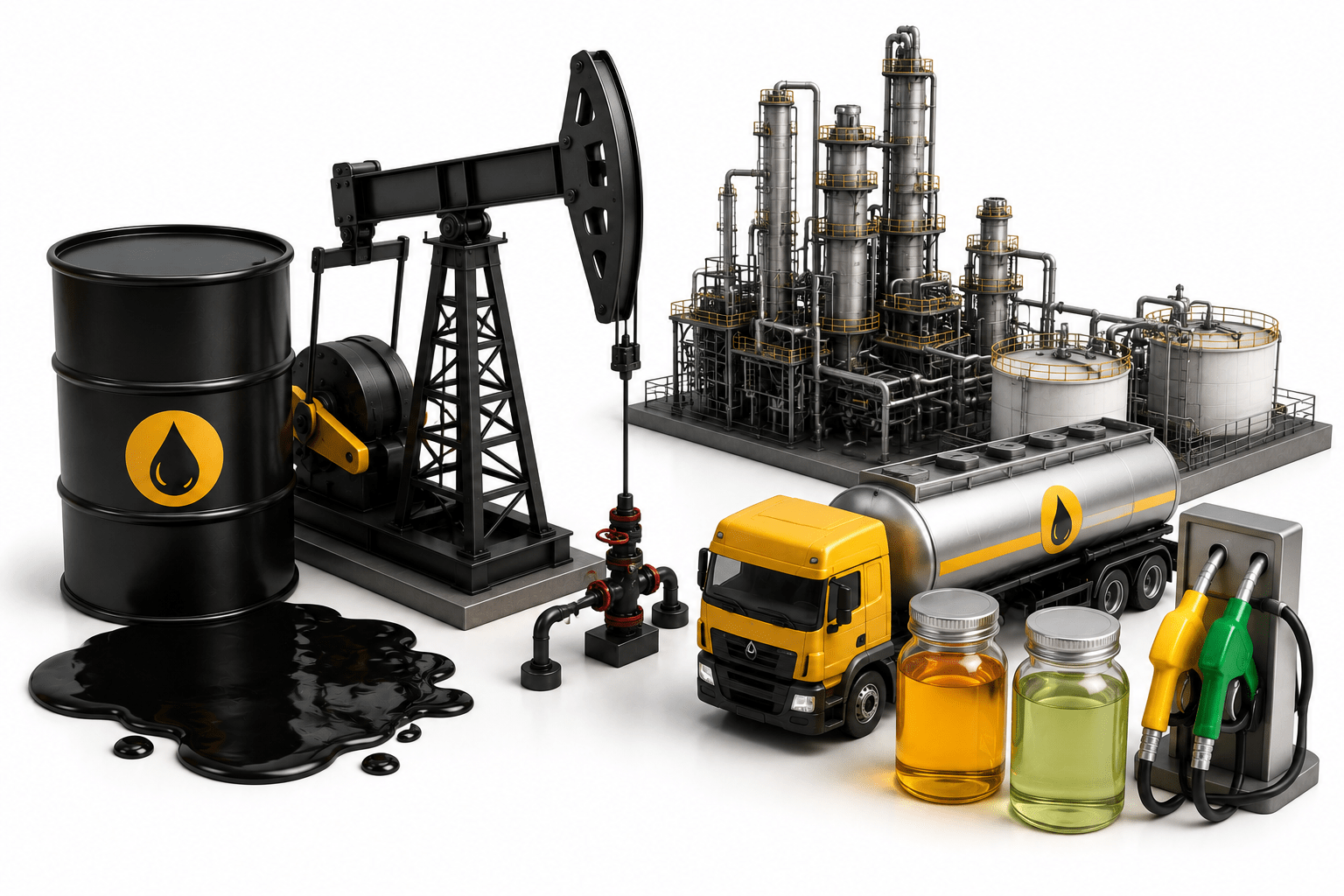
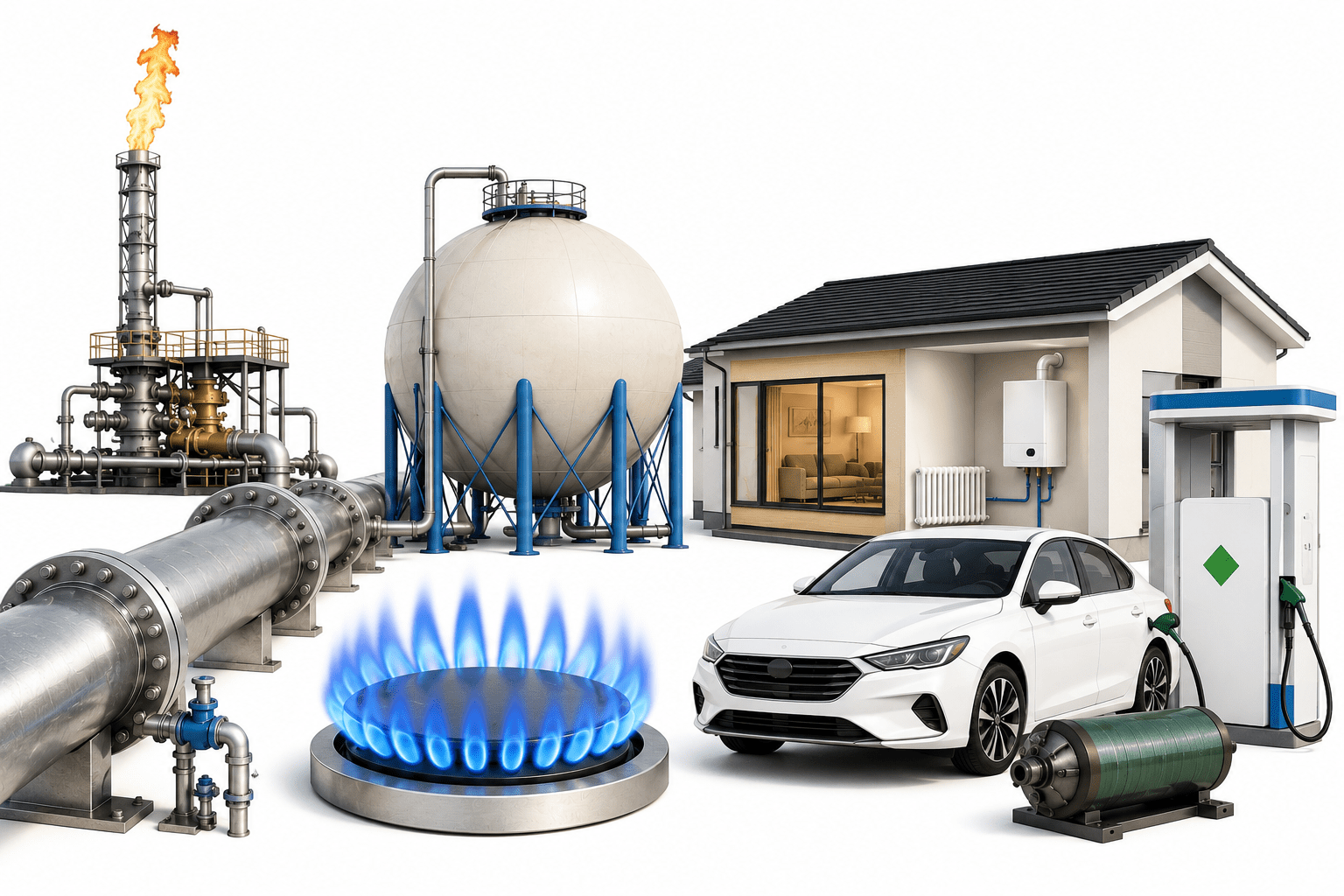

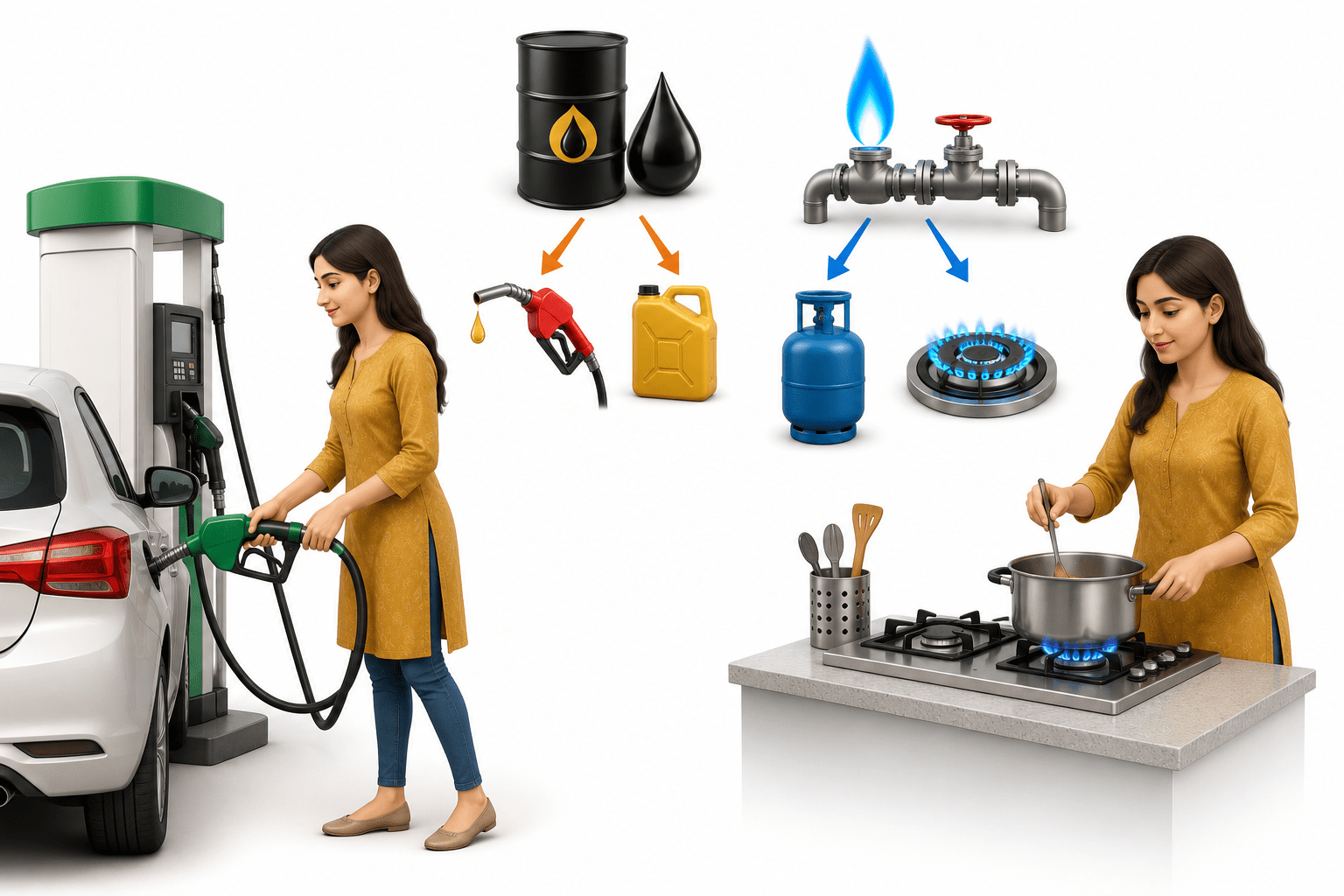
When Anjali fills petrol at the pump or cooks on a gas stove, she is using products refined from crude oil and natural gas – both Energy commodities
Category 2: Metals
Metals are mined from the earth and are generally split into two groups:
Precious Metals
Gold, Silver – valued for investment, jewellery, and as a store of value
Base (Industrial) Metals
Copper, Aluminium, Zinc, Lead, Nickel – used as raw material in construction, electronics, and manufacturing
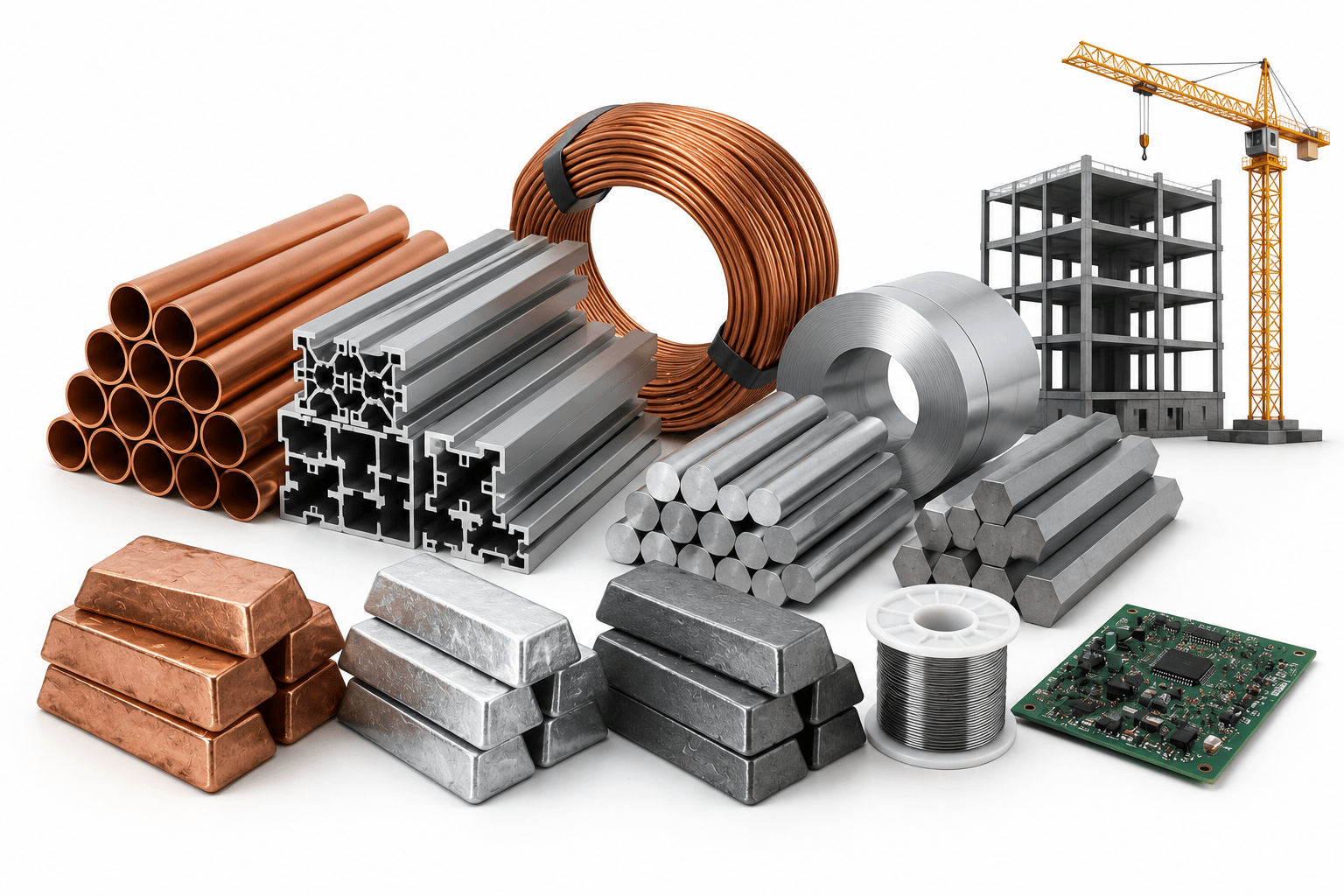
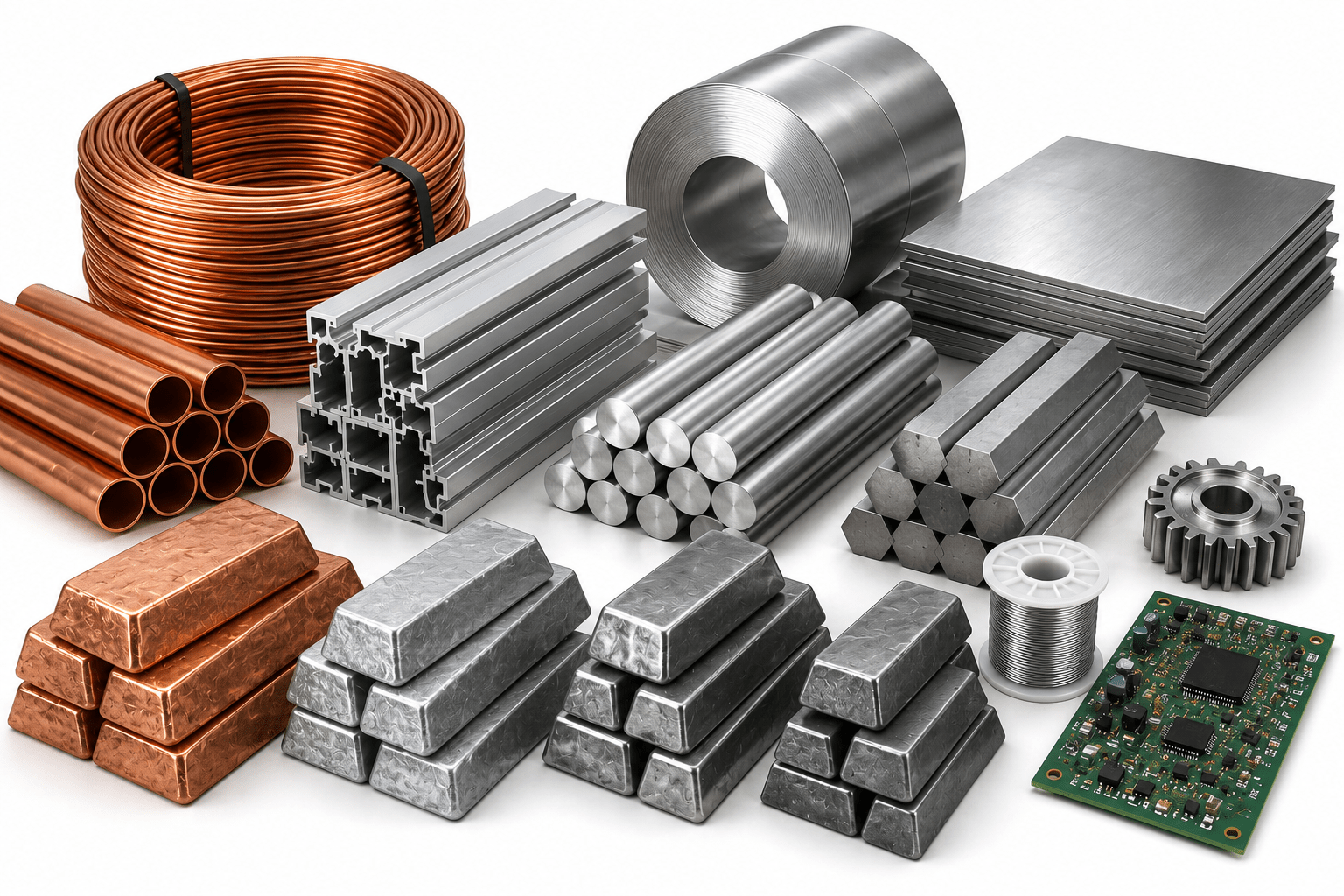
Anjali invests part of her savings in gold ahead of a family wedding (precious metal, investment use), while the electrical wiring in her new home uses copper (base metal, industrial use).

Category 3: Agricultural Commodities
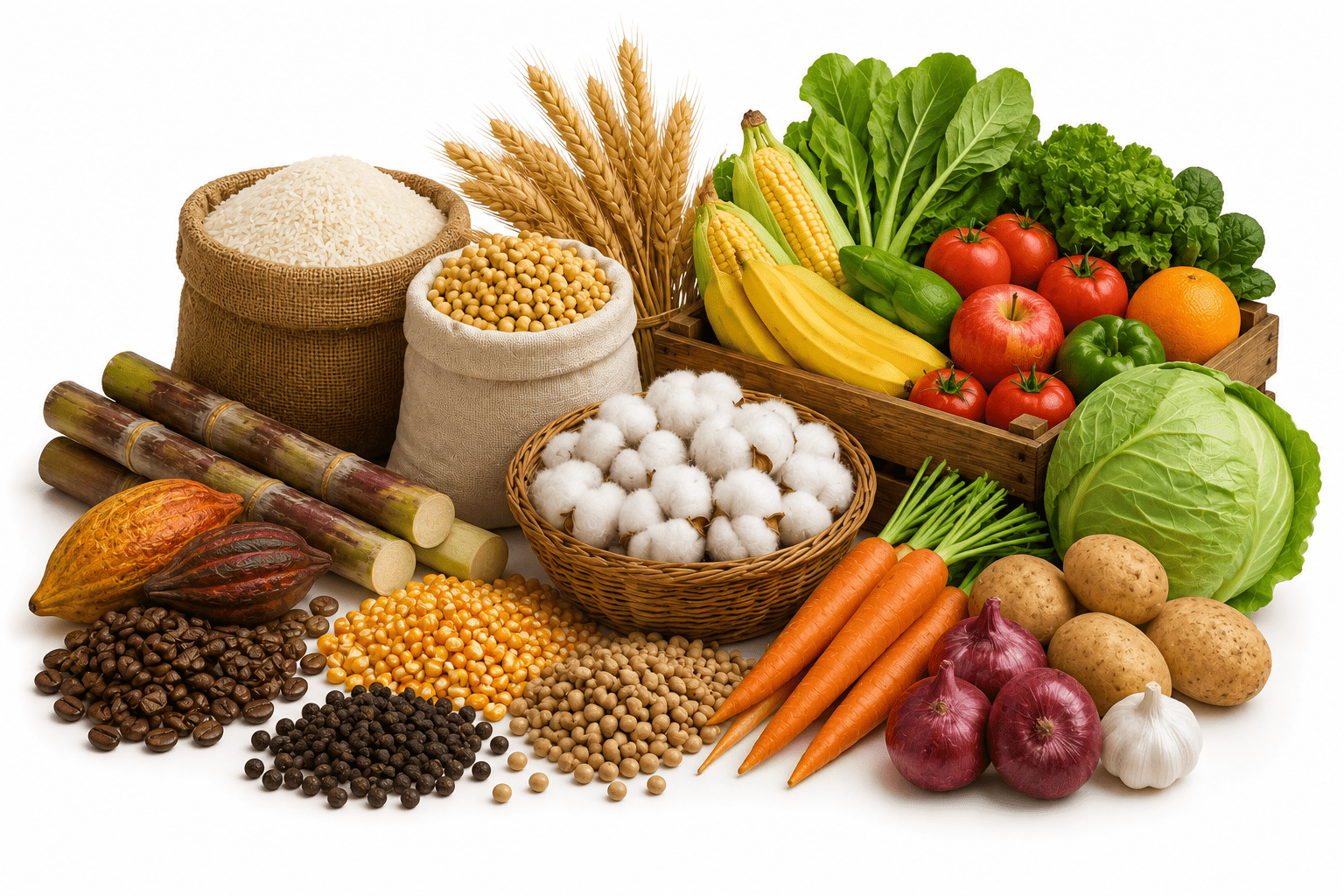
Agricultural commodities are grown or cultivated, and are further grouped by type:
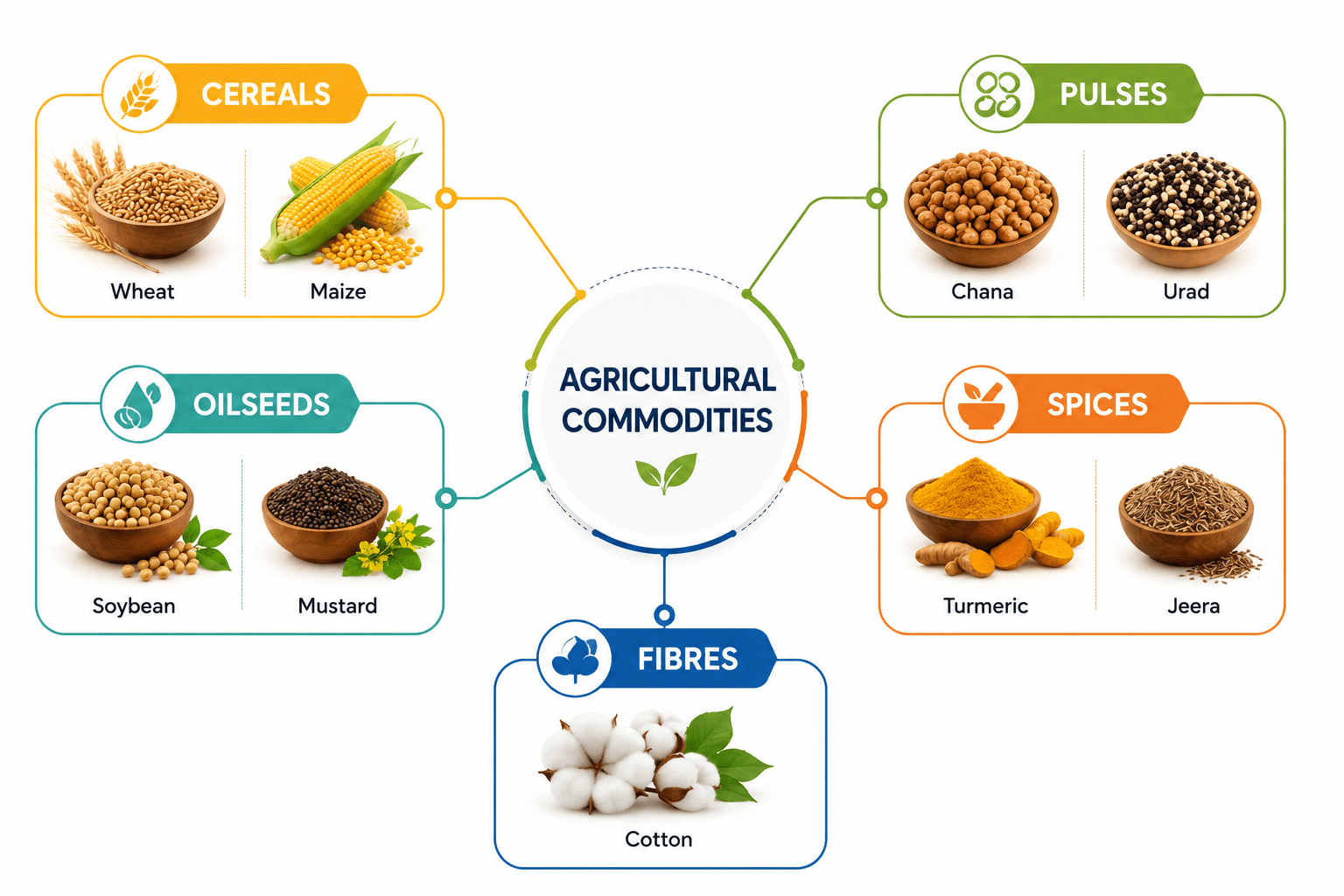
Given India’s strong agricultural base, these commodities are primarily traded on NCDEX.
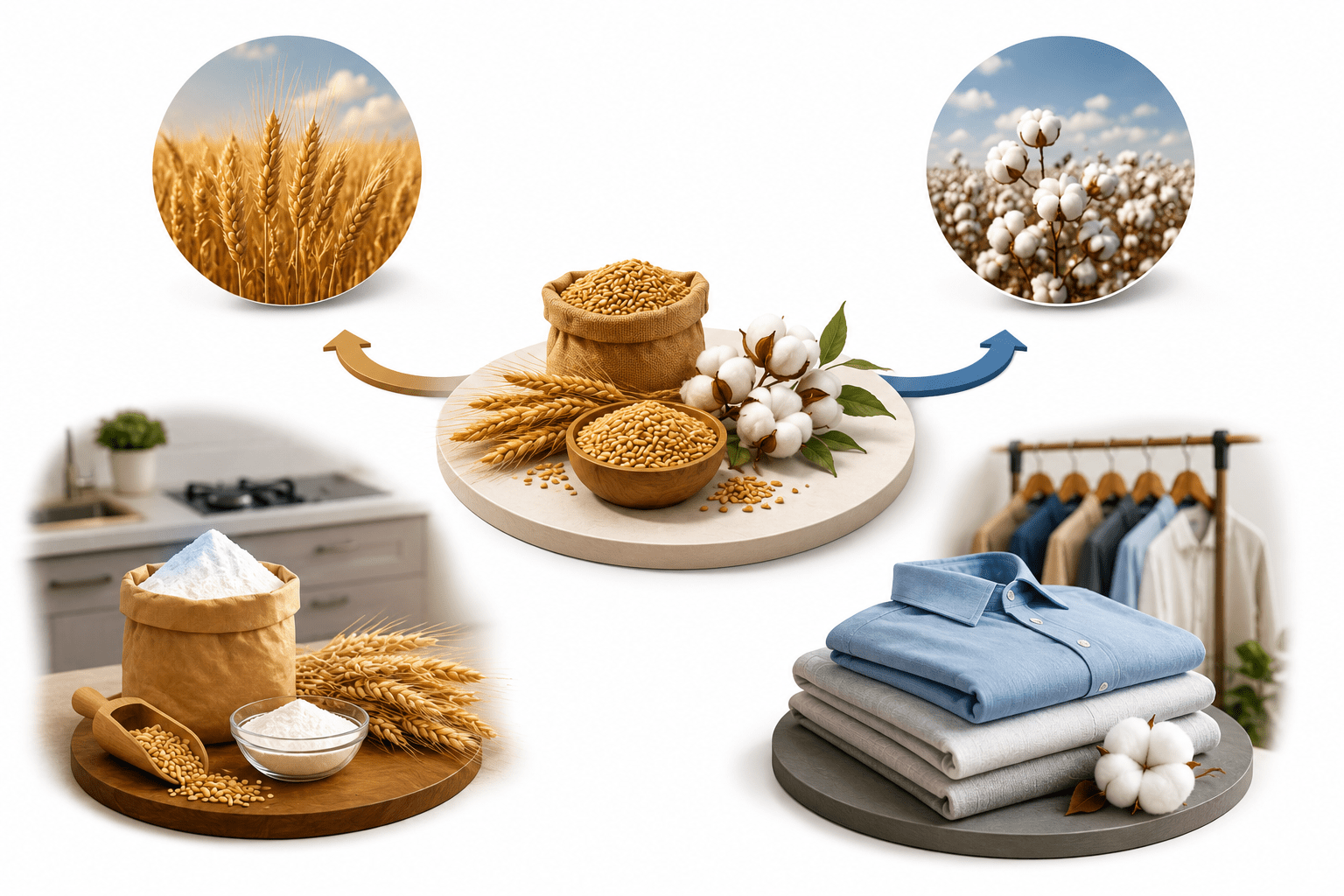
The wheat Anjali buys for her kitchen and the cotton used in her clothes both began as agricultural commodities traded on NCDEX.
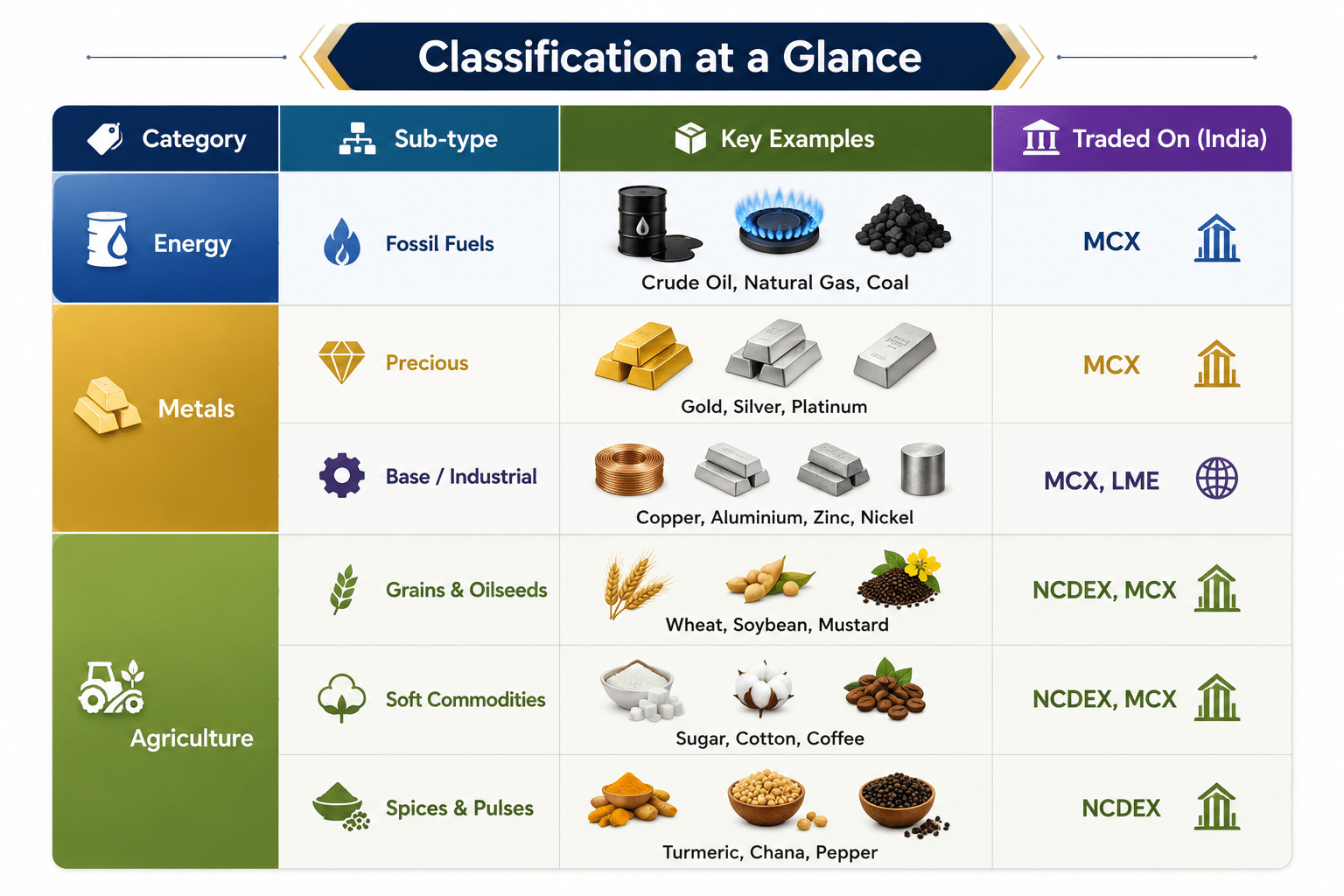
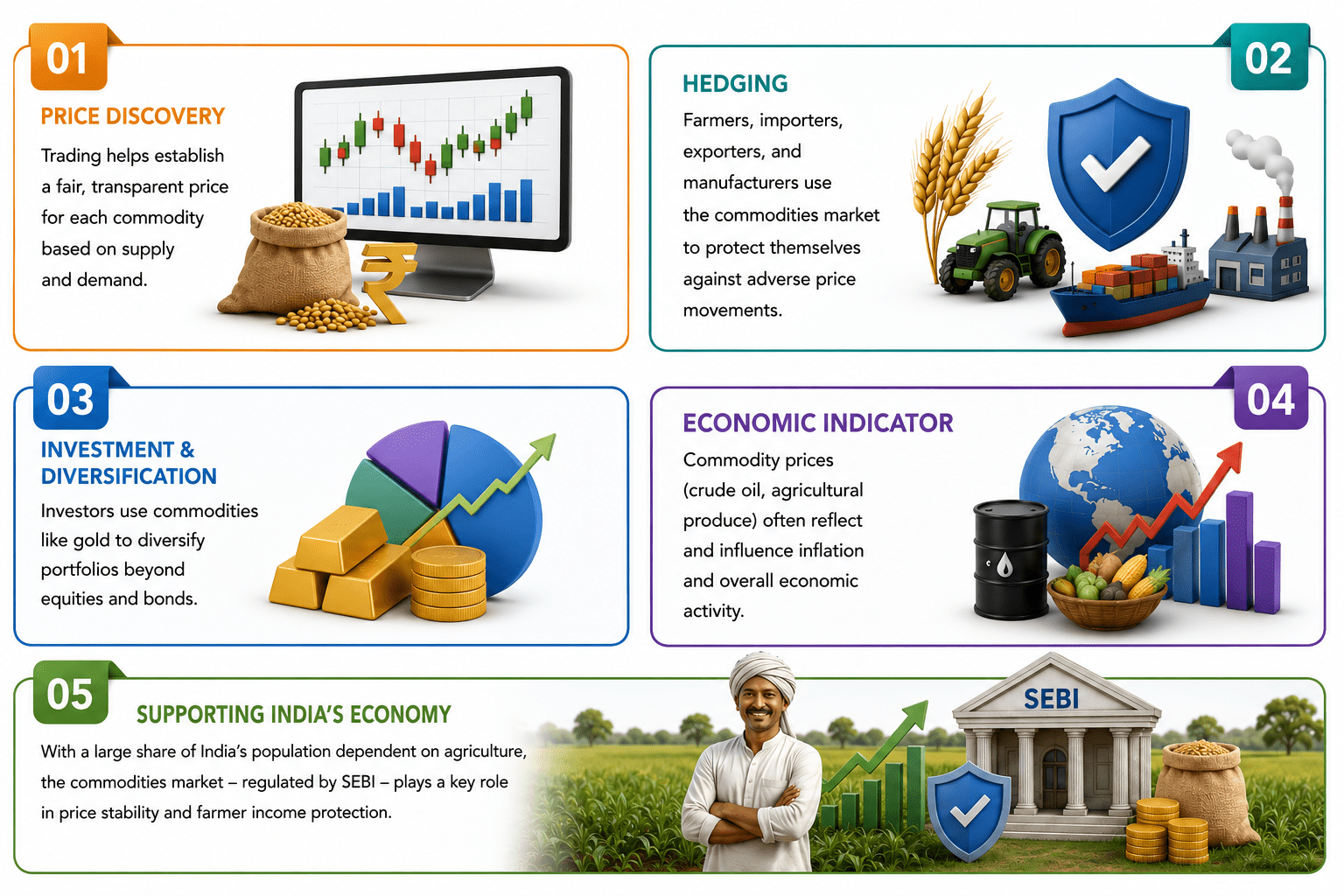
Why Do Commodity Categories Matter?
Understanding these categories matters because each plays a distinct role in the broader commodities market:
Summary
5
Supports trading, risk management, and investment.
4
Soft commodities are farm-grown, perishable products
3
Hard commodities include extracted energy and metals.
2
Grouped by origin and storage
1
Commodities are tradable goods such as gold, crude oil, and wheat
Quiz
On what basis are commodities classified in this module?
A. Price and deman
B. Source of origin and storability
C. Profitability and popularity
D. Government regulations

Quiz-Answer
On what basis are commodities classified in this module?
A. Price and deman
B. Source of origin and storability
C. Profitability and popularity
D. Government regulations