Fund Operations & NAV


Income & expense accruals


Learning Outcome
5
Analyze the overall impact on NAV.
4
Understand their impact on Assets, Liabilities, and NAV.
3
Calculate daily accrual amounts.
2
Differentiate income and expense accruals.
1
Understand daily income and expense accruals.
Income and expense accruals

Income and expenses are recorded in the fund every day, even if the cash has not yet been received or paid. The daily amount is usually calculated as:
Daily Amount= Annual Amount ÷ 365 days
The difference is in how they affect the fund:
-
Income accruals increase the fund's Total Assets.
-
Expense accruals increase the fund's Total Liabilities, which reduces the fund's Net Assets.

1. Interest Income
Interest Income is the interest earned on investments such as bonds, treasury bills, and fixed deposits. It is recorded daily, even if the actual payment has not yet been received, and increases the fund's Total Assets.
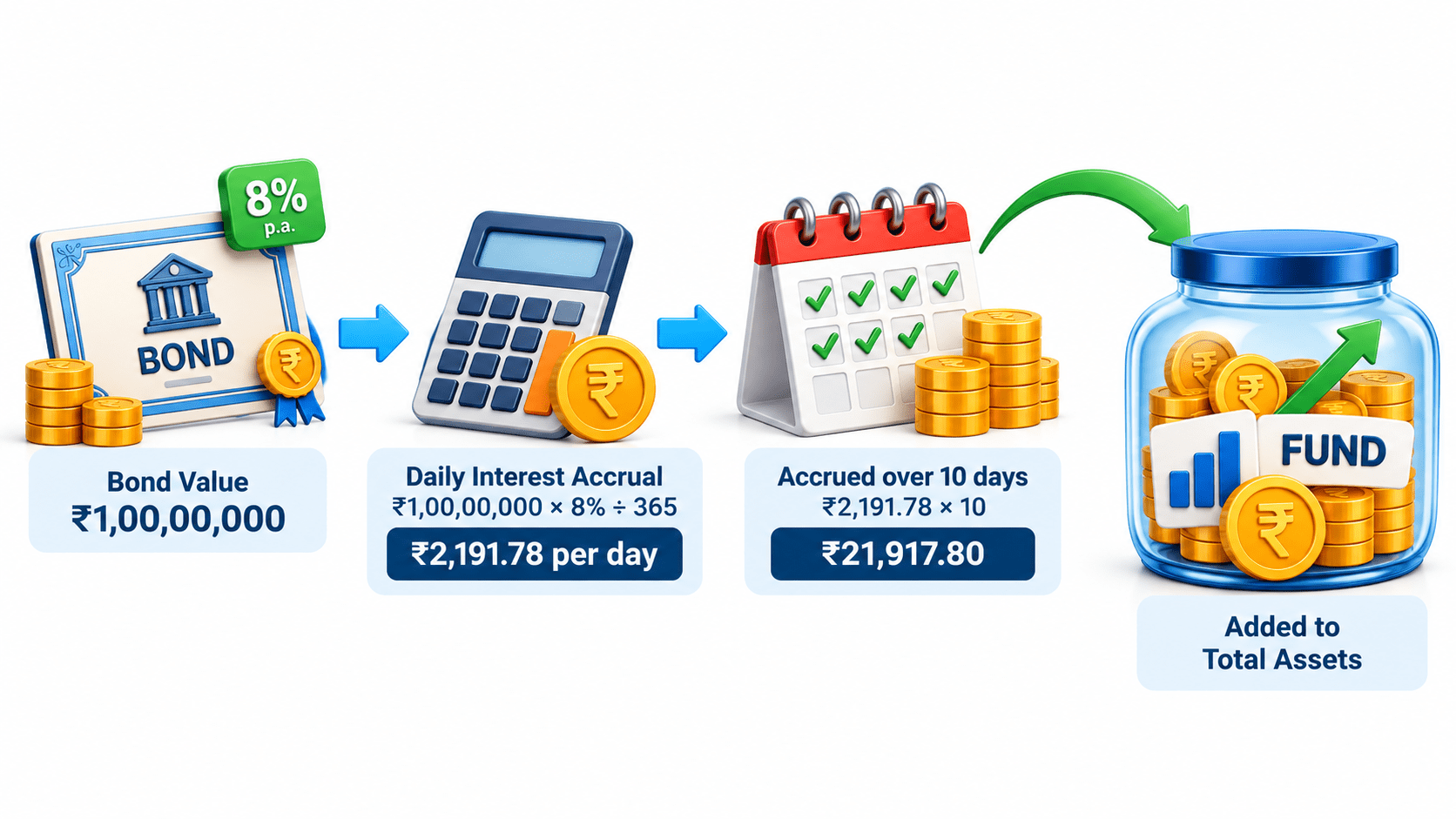
Numerical Eg:

2. Dividend Income
Dividend Income is the dividend earned on equity shares held by the fund. It is recorded when the fund becomes eligible to receive the dividend (on the Record Date), even if the cash is received later.
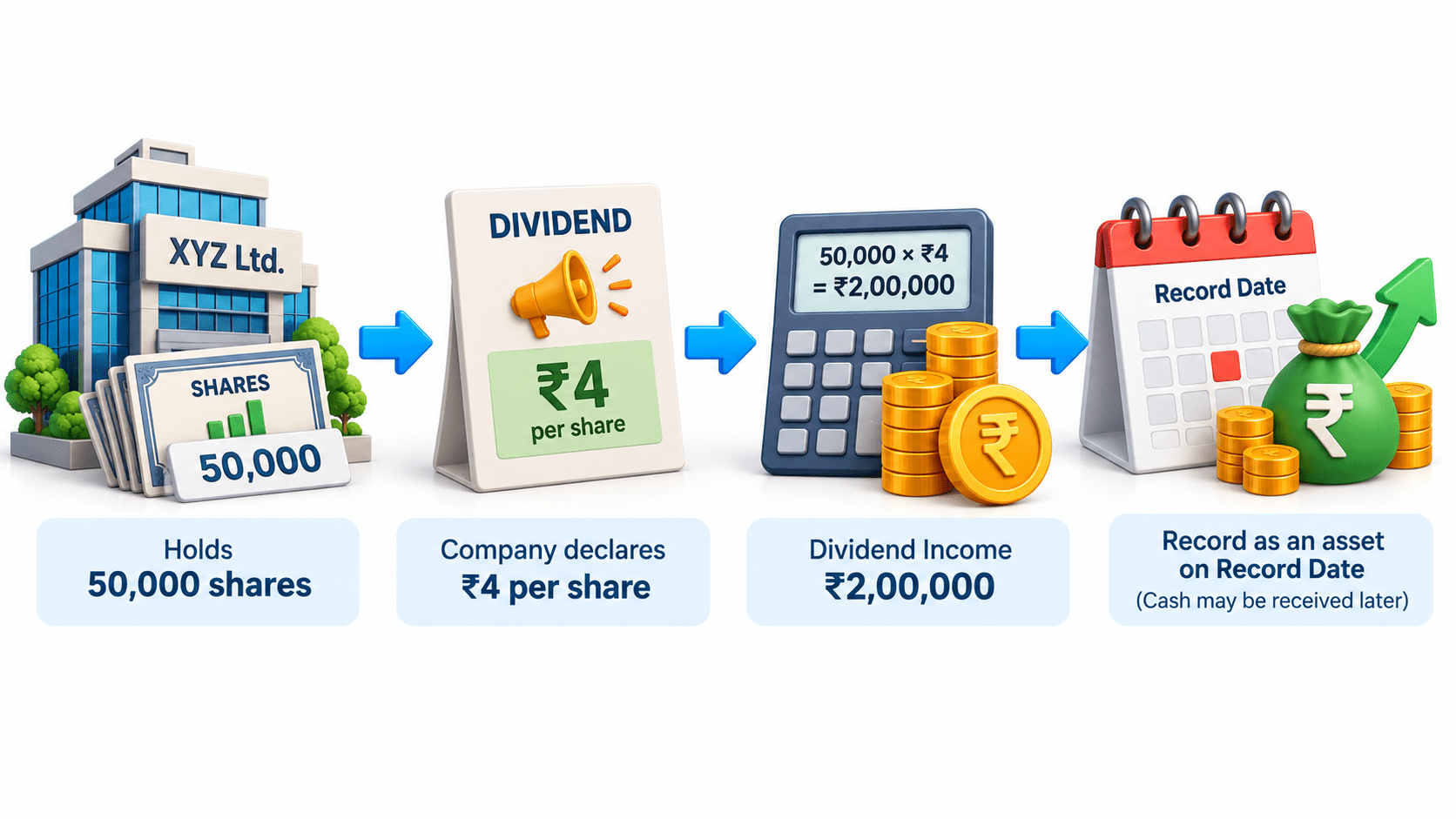
Example:

3. Management Fees
Management Fees are the fees paid to the Asset Management Company (AMC) for managing the fund. They are recorded every day as an expense, even though the actual payment is made later. These fees increase Total Liabilities and reduce the fund's Net Assets and NAV.
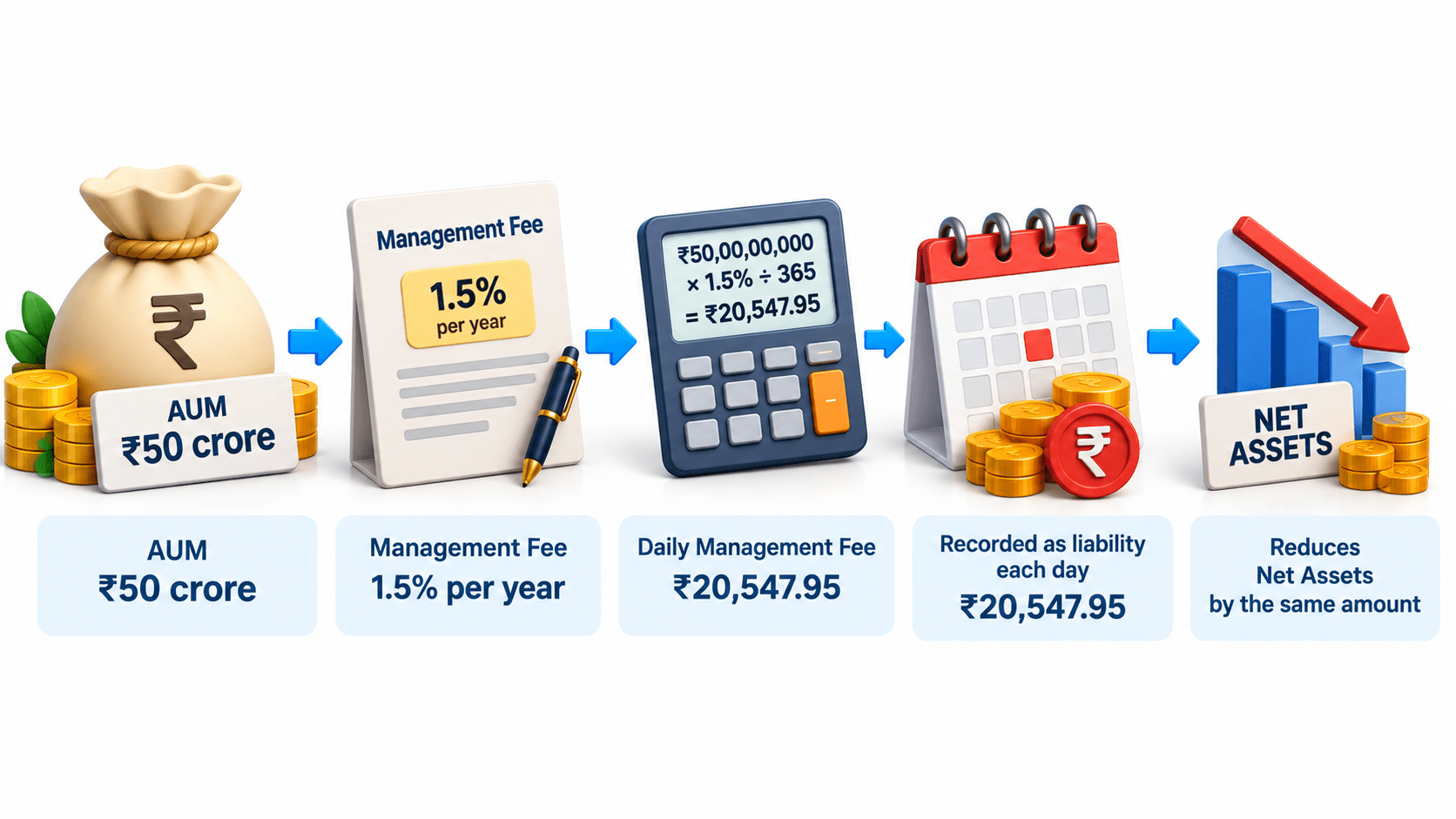
Example:

4. Daily Expense Accruals
Daily Expense Accruals are the total daily expenses of a fund, including management fees, trustee fees, custodian fees, audit fees, RTA fees, and other operating costs. These expenses are recorded every day instead of all at once, so each investor pays a fair share based on how long they hold the fund.
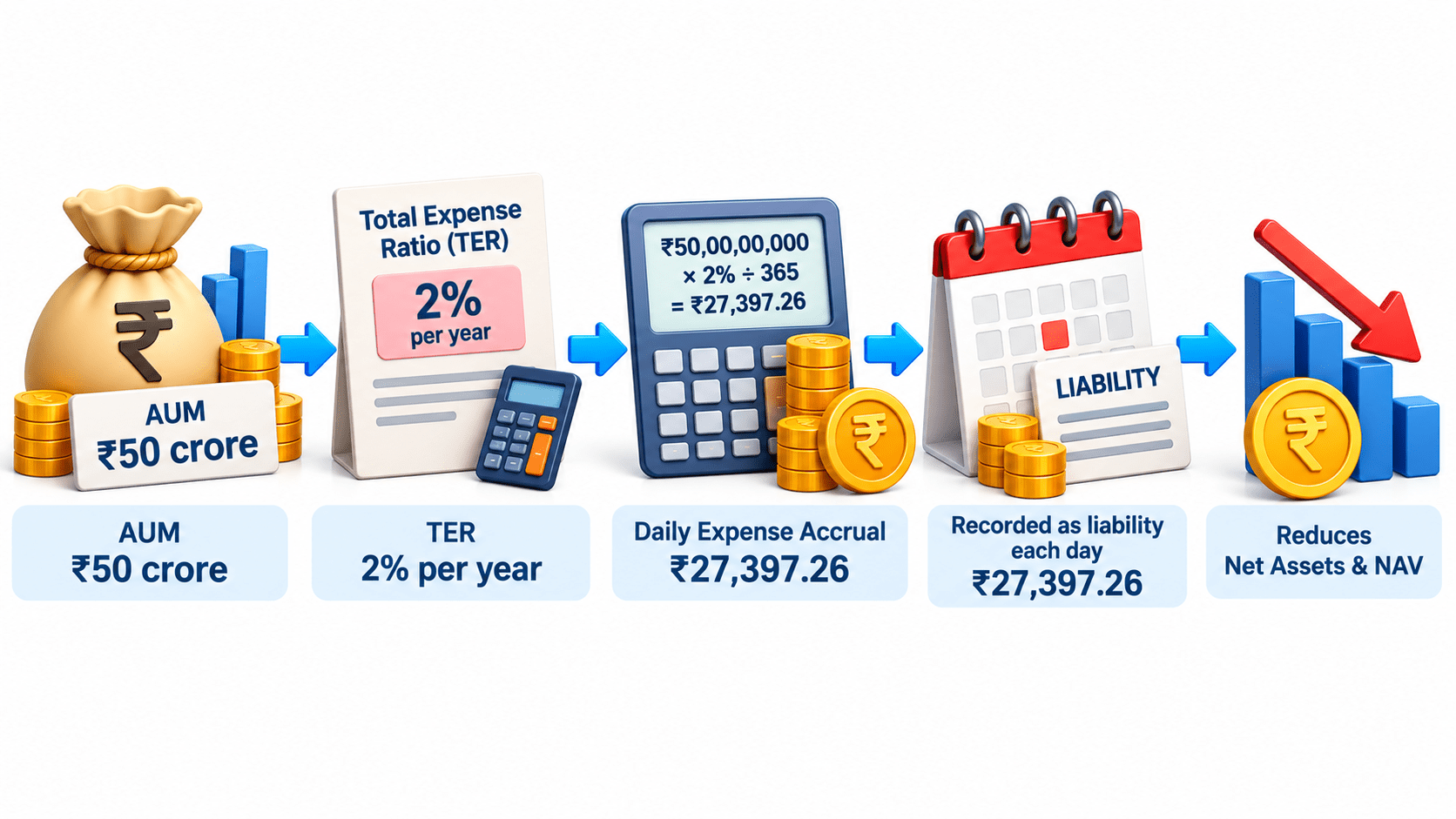
Example:
Combined Impact — A Single Day's NAV
Suppose a fund has:
-
Total Assets: ₹50,00,00,000
-
No other liabilities
-
Outstanding Units: 5,00,00,000
NAV before accrual = ₹10.00 per unit
On one day, the fund records the following:
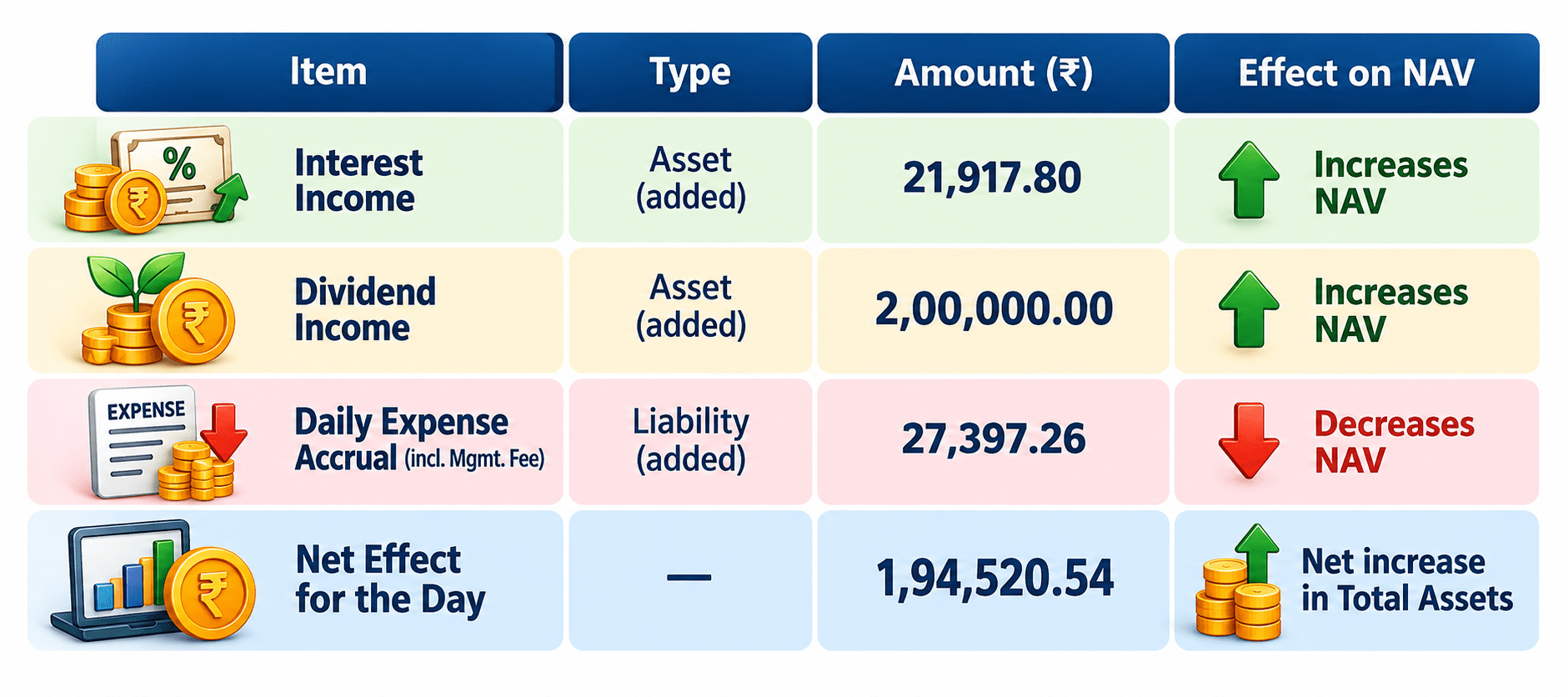
Net Assets after accrual:
₹50,00,00,000 + ₹1,94,520.54 = ₹50,01,94,520.54
Revised NAV:
₹50,01,94,520.54 ÷ 5,00,00,000 = ₹10.00389 per unit
Result: The NAV increases slightly because the day's income is higher than the day's expenses.
Summary
5
NAV changes with daily income and expenses.
4
Daily accrual = Annual Amount ÷ 365.
3
Expense accruals increase liabilities and reduce NAV.
2
Income accruals increase assets and NAV.
1
Record income and expenses daily.
Quiz
Which of the following increases a fund's Total Liabilities?
A. Interest Income
B. Dividend Income
C. Management Fees
D. Bonus Shares

Quiz-Answer
Which of the following increases a fund's Total Liabilities?
A. Interest Income
B. Dividend Income
C. Management Fees
D. Bonus Shares