
Content ITV PRO
This is Itvedant Content department
Detect Threats Based on Abnormal Behavior Instead of Signatures
Business Scenario
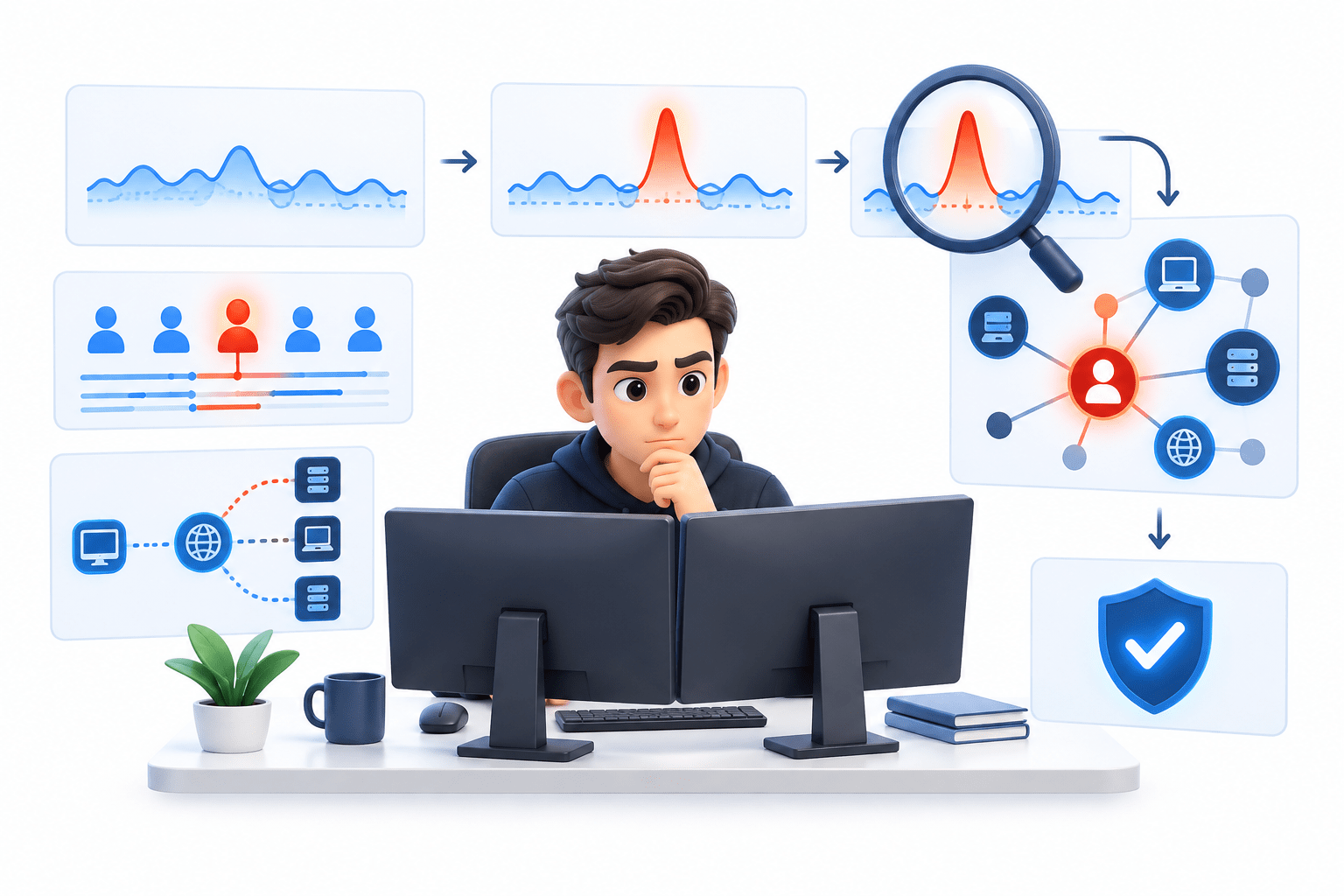
You are a SOC Analyst at CyberSecure Solutions. The organisation wants to detect threats that may not have known signatures.
Your task is to observe normal system behaviour, identify unusual activities, investigate them, and determine whether they could indicate a security threat.
Pre-Lab Preparation
Topic: Incident Response and Investigation
1) Introduction to SIEM tools such as Splunk and Wazuh
2) Alert triaging and investigation process
3) Threat detection techniques
Git Pull
git pull origin branchNameObjective
Create a baseline of normal system activity.
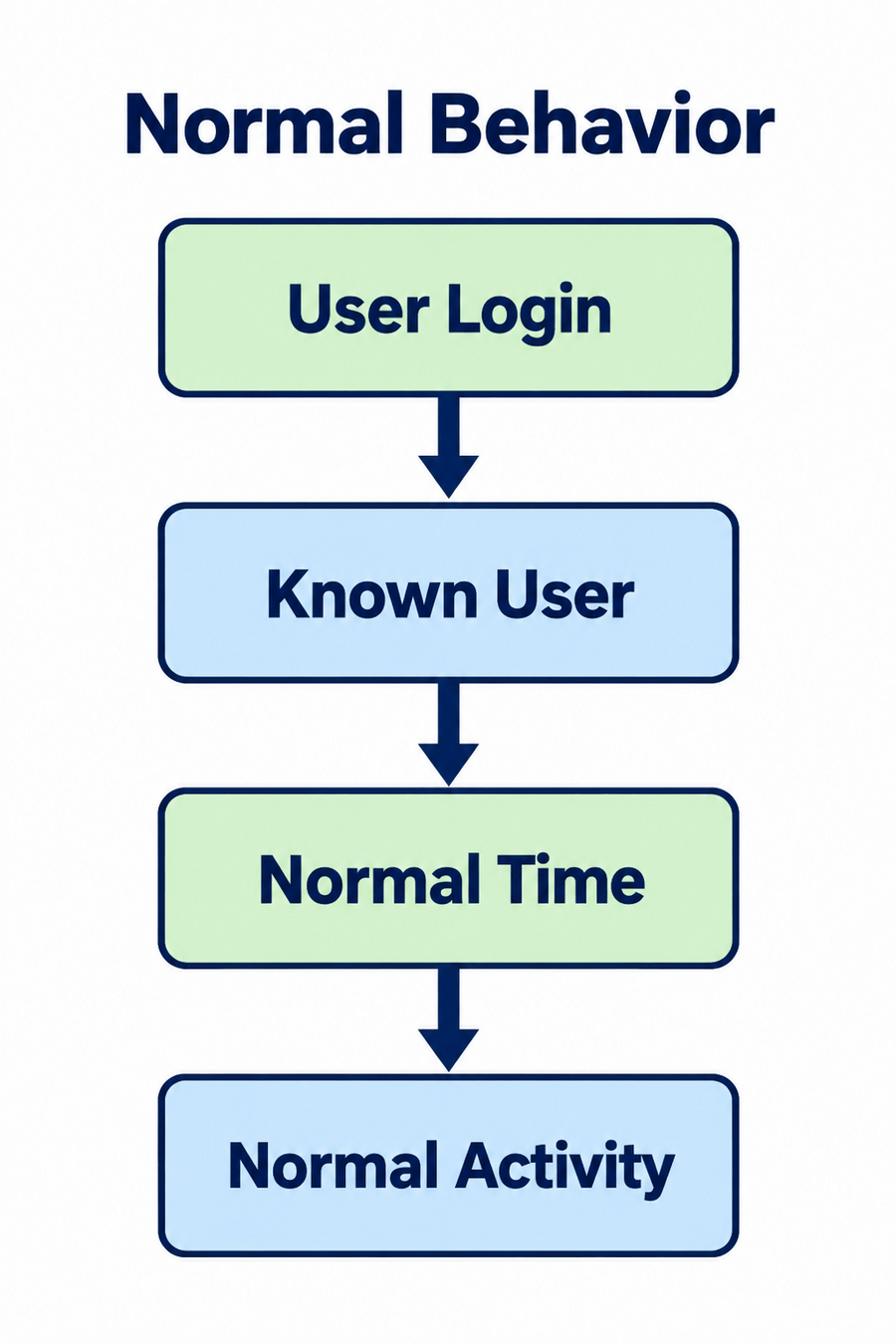
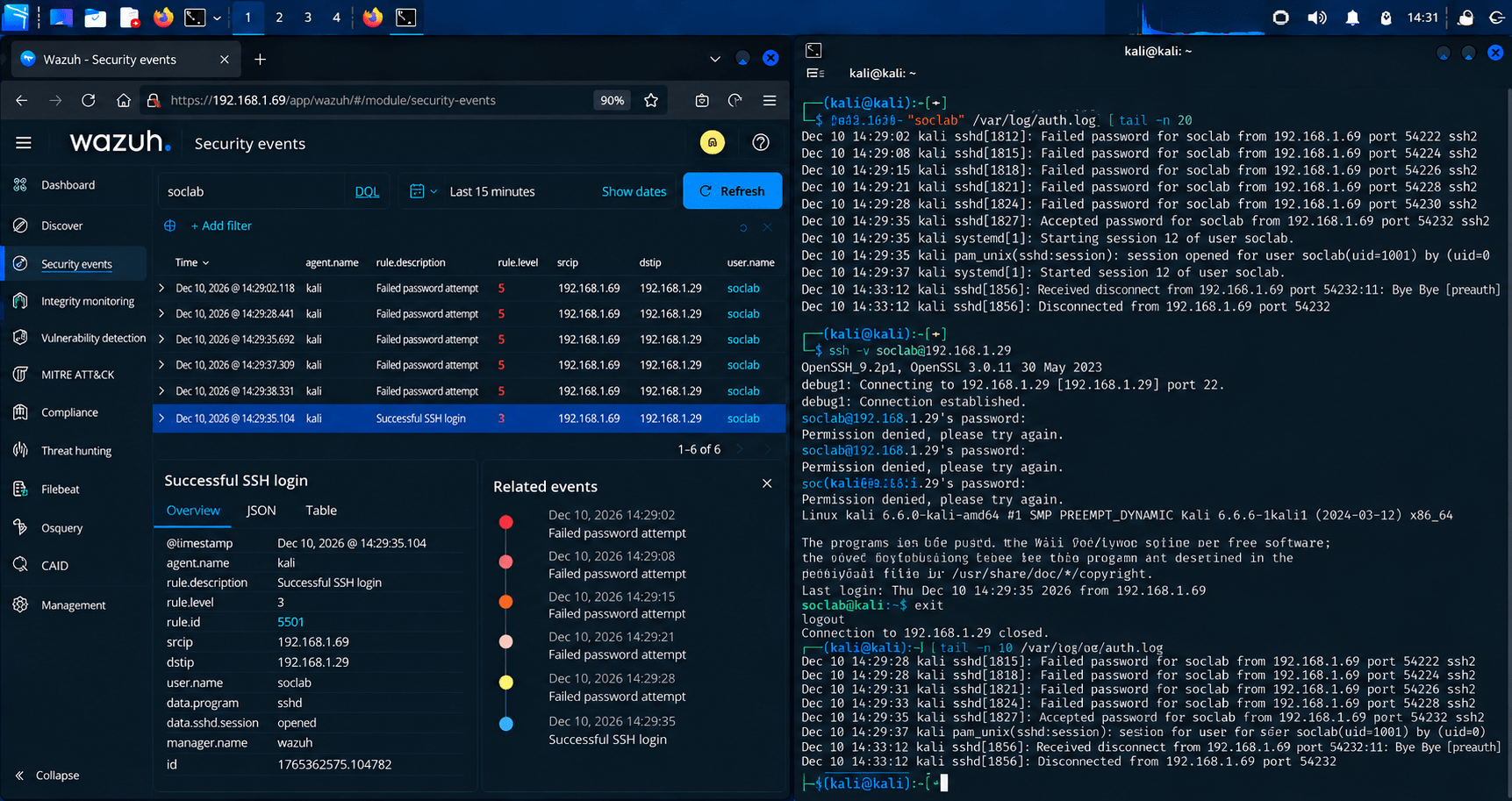
Task 1: Understand Normal Behavior
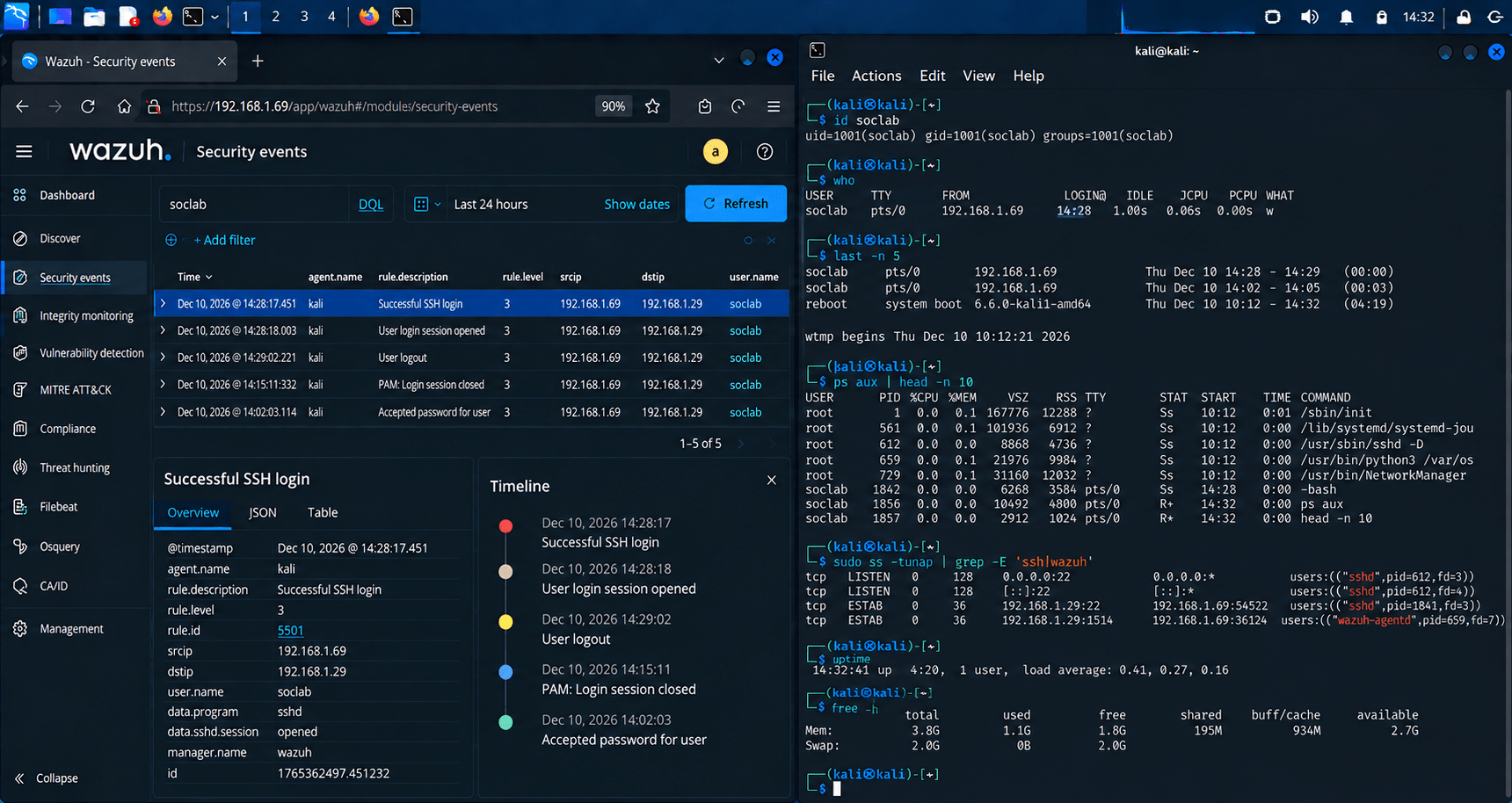
Open the SIEM dashboard.
1
Select the test endpoint.
2
Review normal events over a defined period.
3
Record:
4
Normal login times
Normal users
Normal processes
Normal network activity
Normal resource usage
Normal login times
Normal users
Normal processes
Normal network activity
Normal resource usage
Create a simple baseline.
5
Example
Expected Output
Activity
Students create a basic baseline of normal behaviour.
Objective
Detect activity that differs from the established baseline.
Review the SIEM for activities such as:
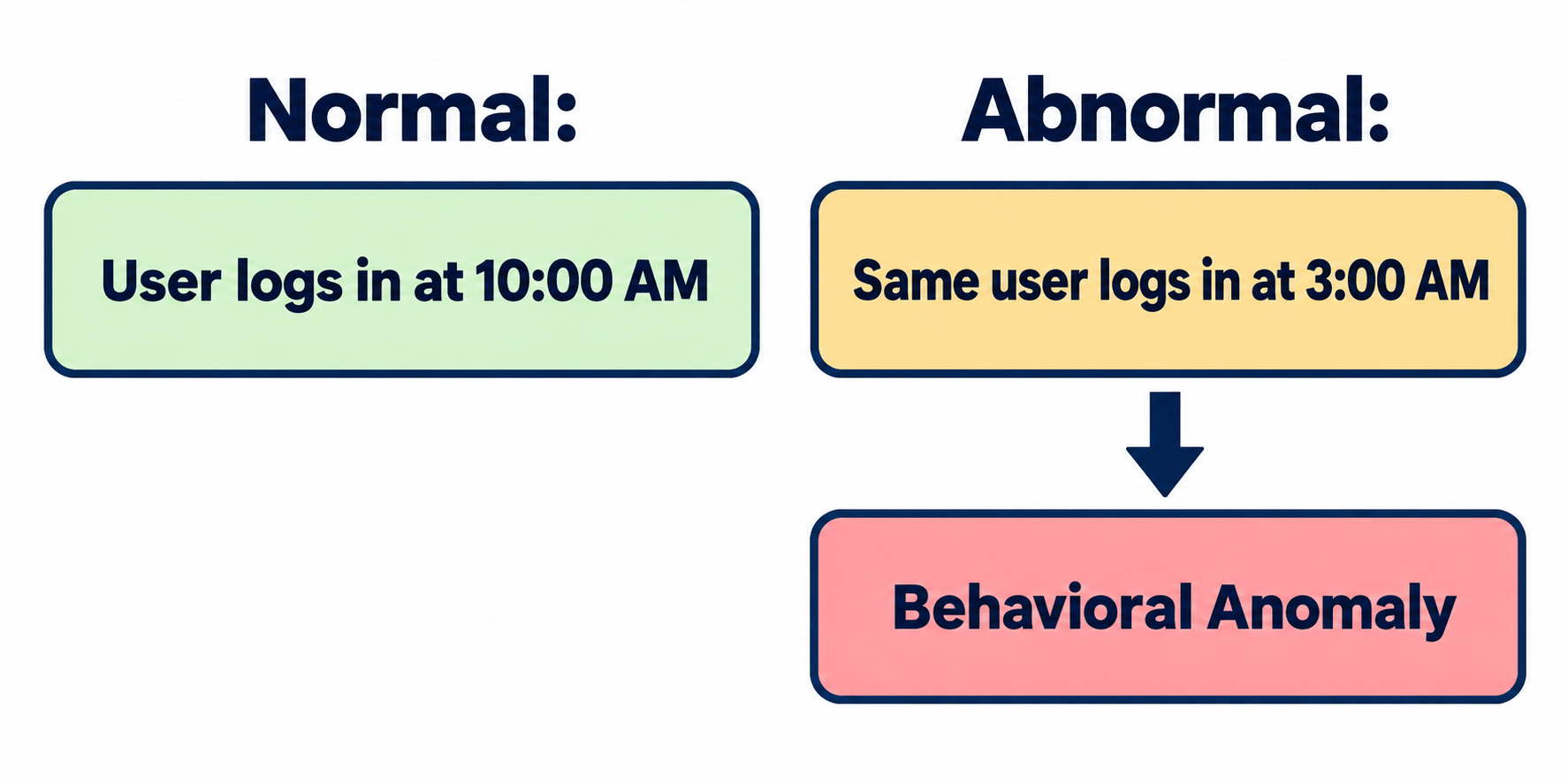
Task 2: Identify Abnormal Behavior
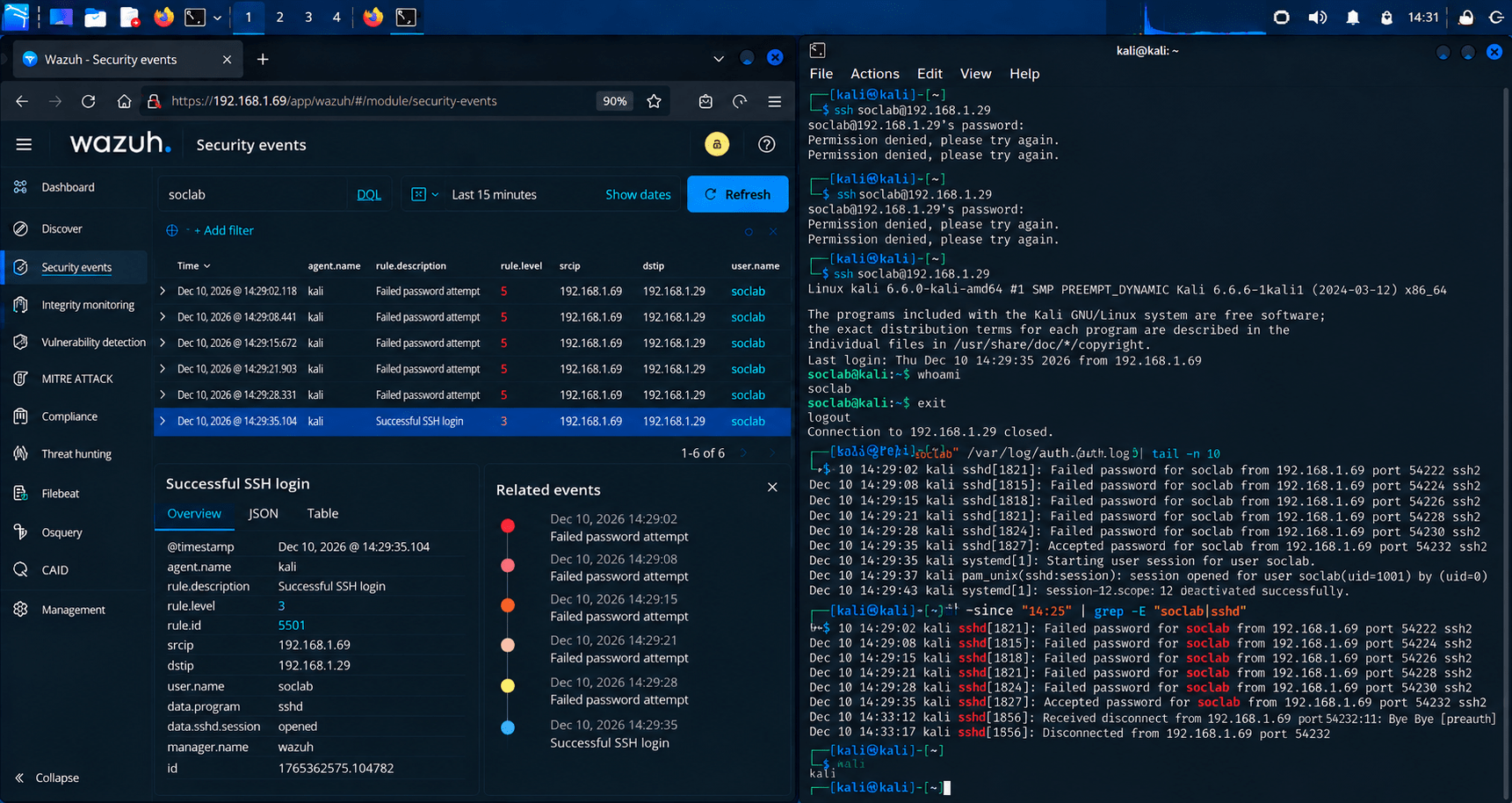
Multiple failed logins.
1
Log in at an unusual time.
2
Unexpected privileged activity.
3
Unknown process execution.
4
Unusual network connections.
5
Sudden large amounts of file activity.
6
Example
Expected Output
Compare the activity with the normal baseline.
Activity
Students identify at least one abnormal behaviour.
Objective
Determine whether the abnormal behaviour represents a potential threat.
Select the suspicious event.
1
Review related logs.
2
Check:
3
Task 3: Investigate the Anomaly
Username
Source IP
Timestamp
Host
Process/activity
Compare it with normal behaviour.
4
Determine whether the activity is:
5
Normal
Suspicious
Potential Incident
Expected Output
Activity
Students provide evidence supporting their decision.
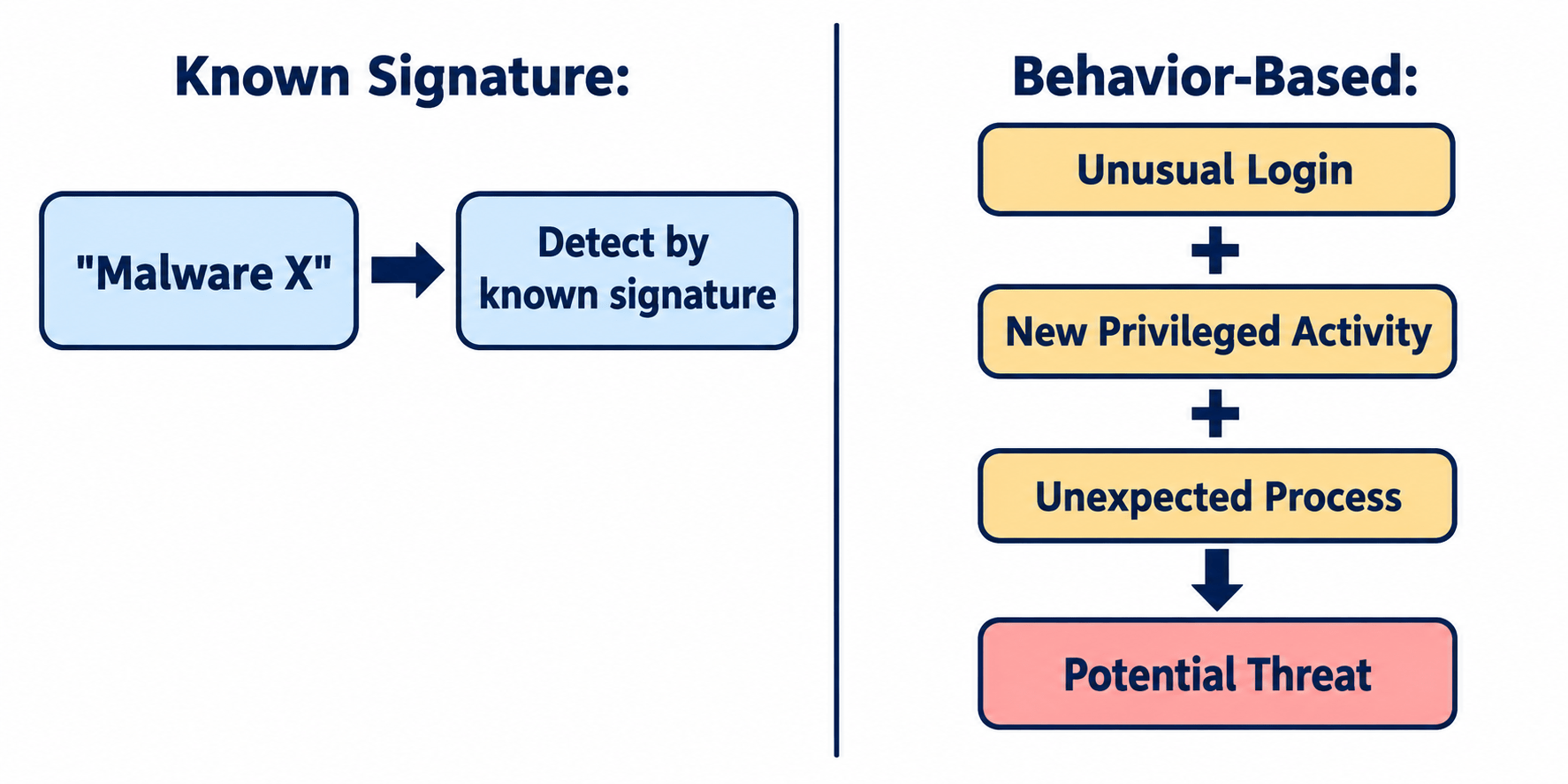
Task 4: Detect Without Using a Signature
Objective
Understand how behavior can reveal threats even when no known signature exists.
Select a suspicious behaviour pattern.
1
Identify the characteristics of the behavior.
2
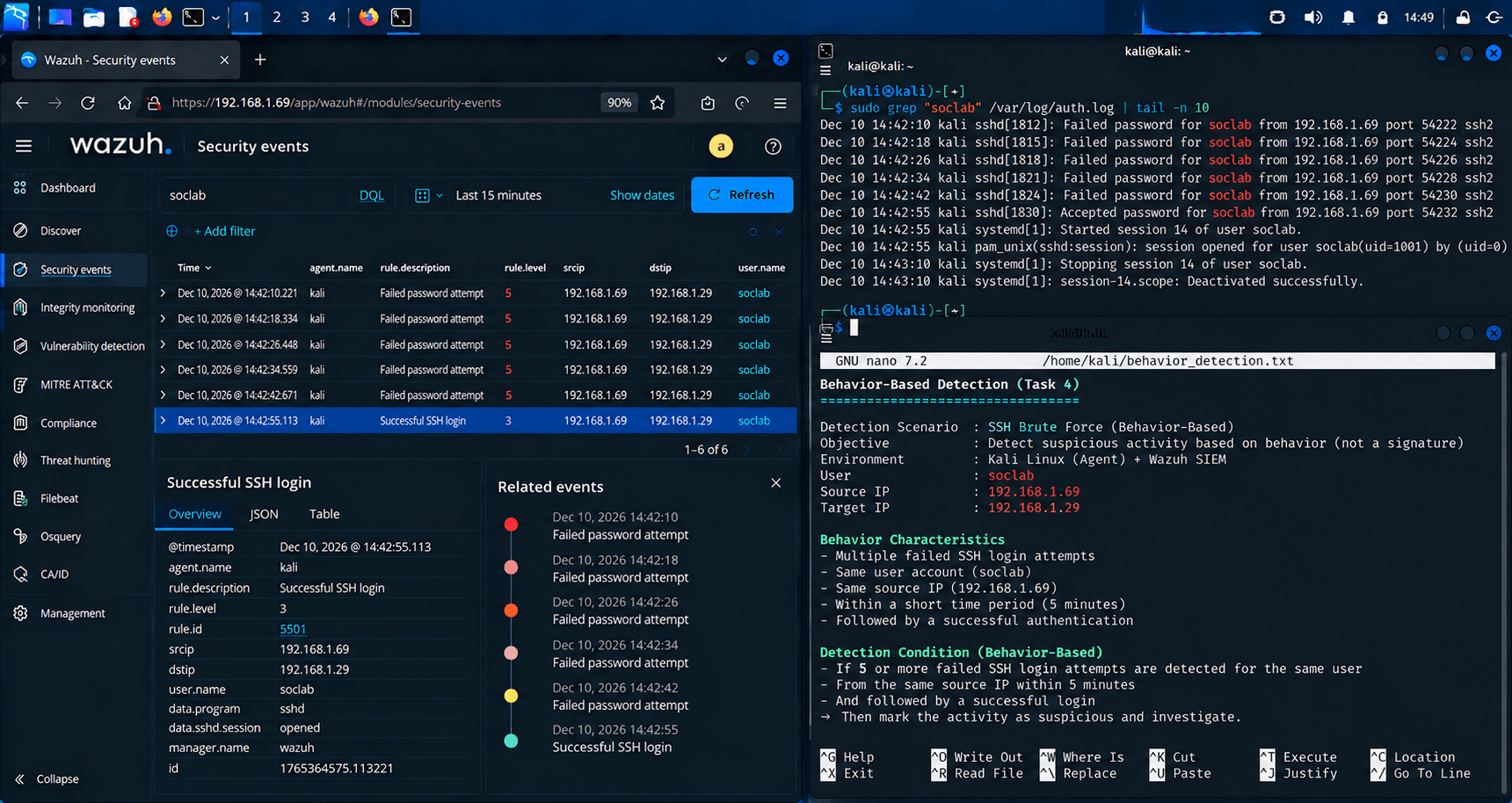
Create a simple detection condition based on behavior.
3
Example
The detection should focus on what happened, rather than the name or signature of known malware.
Expected Output
Activity
Students create a simple behaviour-based detection scenario.
Objective
Respond to a suspicious behavioral anomaly.
Review the severity of the finding.
1
Select an appropriate response in the test environment.
2
For example:
3
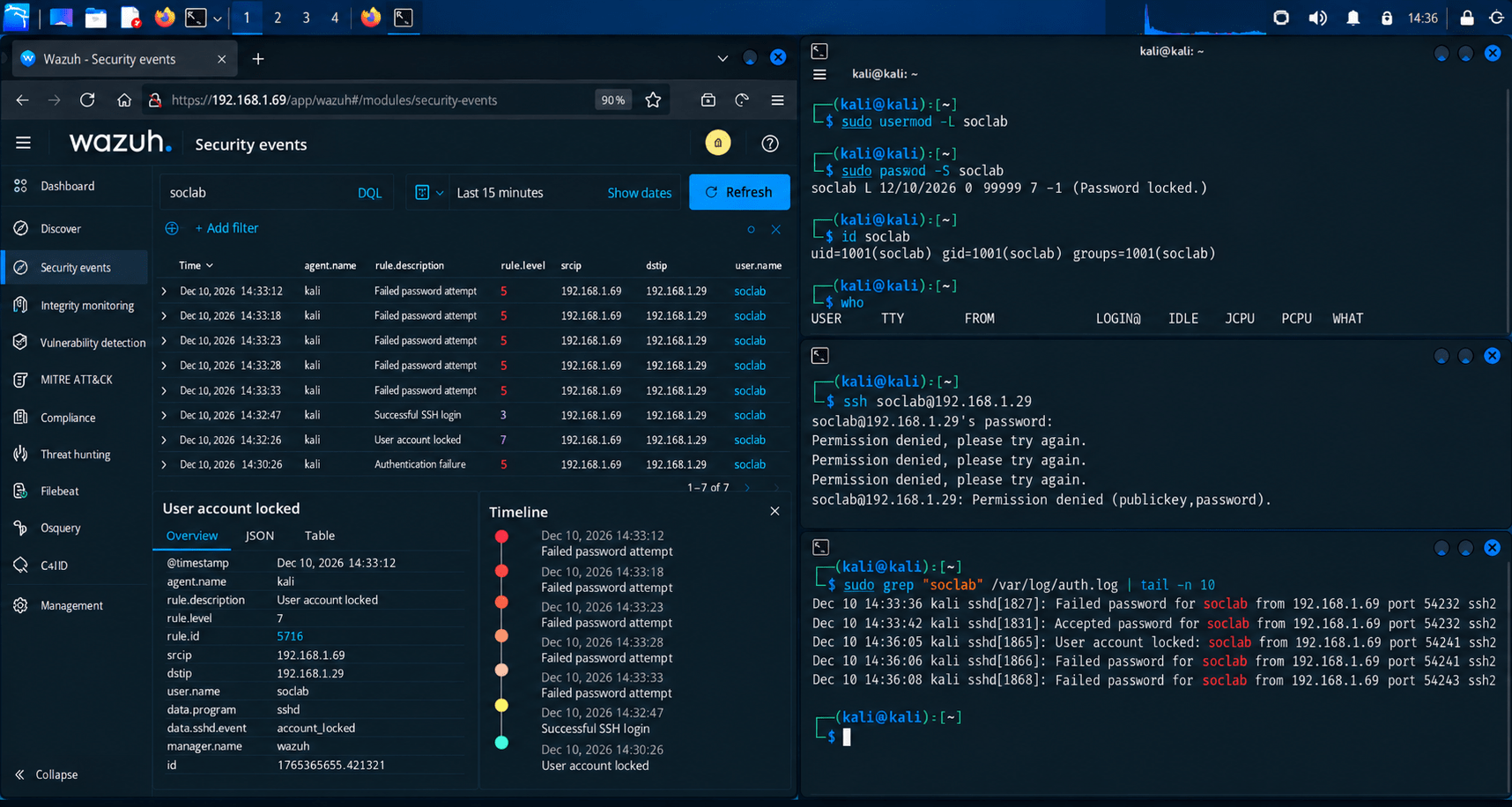
Task 5: Apply a Defensive Response
Disable a test account.
Reset test credentials.
Isolate a test endpoint.
Investigate the suspicious process.
Continue monitoring the system.
4
Verify whether the abnormal behavior stops.
5
Expected Output
Activity
Students demonstrate a basic detect → investigate → respond workflow.
Task 6: Document the Finding
Objective
Create a basic behaviour-based detection report.
Record:
| Field | Example |
|---|---|
| Finding ID | BEHAV-001 |
| Behavior | Unusual Login |
| User | Test User |
| Normal Behavior | Login during working hours |
| Observed Behavior | Login at unusual time |
| Severity | Medium |
| Analysis | Behavior differs from baseline |
| Action | Account investigated |
| Status | Investigating |
| Field | Example |
|---|---|
| Finding ID | BEHAV-001 |
| Behavior | Unusual Login |
| User | Test User |
| Normal Behavior | Login during working hours |
| Observed Behavior | Login at unusual time |
| Severity | Medium |
| Analysis | Behavior differs from baseline |
| Action | Account investigated |
| Status | Investigating |
Example Finding
Finding:
Abnormal User Behaviour
Observation:
A test account performed activity outside its normal
behaviour pattern.
Analysis:
The activity differed from the established baseline
and was investigated using related SIEM events.
Risk:
The behaviour may indicate compromised credentials
or unauthorised activity.
Recommendation:
Continue monitoring the account and investigate
related authentication and endpoint events.
Example Finding
Finding:
Abnormal User Behaviour
Observation:
A test account performed activity outside its normal
behaviour pattern.
Analysis:
The activity differed from the established baseline
and was investigated using related SIEM events.
Risk:
The behaviour may indicate compromised credentials
or unauthorised activity.
Recommendation:
Continue monitoring the account and investigate
related authentication and endpoint events.
Expected Output
Great job!
After completing this lab, students will be able to explain proactive threat hunting, create hunting hypotheses, search logs without relying on alerts, identify suspicious patterns, investigate potential threats, map findings to the MITRE ATT&CK framework, and document threat-hunting activities effectively.
Checkpoint
Git Push
git push origin branchNameNext-Lab Preparation
Topic: Log Management and Analysis
1) Introduction to SIEM tools such as Splunk and Wazuh
2) Alert triaging and investigation process
3) Threat detection techniques
By Content ITV