Equipping Seminar:
Reading and
Praying the Psalms
HIF, March 17, 2018
Introduction
- What is your prayer life like?
Donald Whitney
“I maintain that people— truly born-again, genuinely Christian people— often do not pray simply because they do not feel like it. And the reason they don’t feel like praying is that when they do pray, they tend to say the same old things about the same old things.”
Source: Donald S. Whitney, Praying the Bible (Wheaton, IL: Crossway, 2015), 11.
John Piper
Source: “Should I Use the Bible When I Pray?,”
Desiring God, September 28, 2007,
https://www.desiringgod.org/interviews/should-i-use-the-bible-when-i-pray.
Ephesians 6:18: Pray at all times in the Spirit...
- Praying spontaneously in the power of the Spirit (Eph 2:18)
- Praying the words of the Spirit (Acts 4:25, used of Ps 2:1–2)
Prayerbook of the Bible (Dietrich Bonhoeffer)
“When our will, our whole heart, enters into the prayer of Christ, then we are truly praying. We can pray only in Jesus Christ, with whom we shall also be heard.”
Prayerbook of the Bible (Dietrich Bonhoeffer)
“The child learns to speak because the parent speaks to the child. The child learns the language of the parent. So we learn to speak to God because God has spoken and speaks to us. In the language of the Father in heaven God’s children learn to speak with God. Repeating God’s own words, we begin to pray to God.”
Interpreting Psalm 61
- Genre: What is the poet doing? What is his mood?
- Praise: Speaking highly of God (to God himself, to the community)
- Prayer: Asking for God to do something
- Instruction: Telling the community about God and his ways with us
Interpreting Psalm 61
- Parallelism: How do parallel lines interpret each other?
- Imagery: What pictures does the poet paint for us? How do they help us understand the psalmist’s situation, God and his ways?
- Characters: Who is involved in the psalm? What roles do they play?
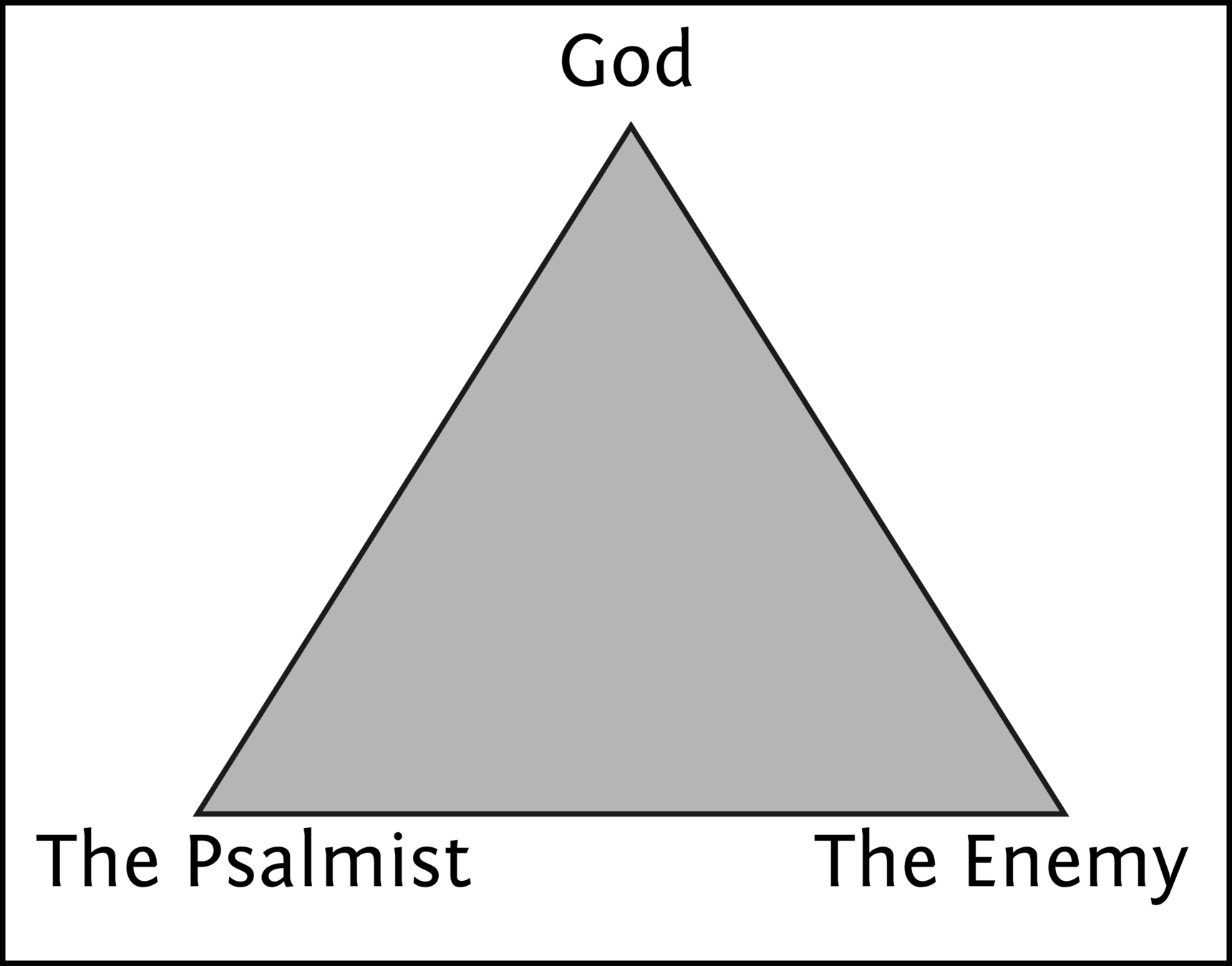
Praying Psalm 61, 62, or 63
How to Pray the Psalms
- Study the word so you understand it.
- Trust God’s Spirit to use his word (Isa 59:21; John 14:26).
- Choose words that are fitting for your situation.
- Pray the word of God for yourself and for others.
- Pray words of the psalms that you can pray.
- Transform words that are not prayers into prayers.
- Let the Word and Spirit guide you into spontaneous prayer.
Practice Praying the Psalms
- Divide into groups of two or three people.
- Take a moment to pray silently based on Psalm 61, 62, or 63.
- Write out a one-sentence prayer.
- I will then prompt you to begin praying out loud together as a group.
deck
By Daniel Owens