... what did I sign up to teach?
Math for Computational Sciences
Prof. James B. Wilson, Dept. Math Colorado State U.
Prof. Dustin Tucker, Dept. Phil. Colorado State U.
Who teaches this course?
Who teaches this course?
- Alexander Hulpke (original creator 2020)
- Steve Benoit (2021+)
- James B. Wilson (re-developed in 2025-2026)
- Math Instructors & Faculty
- Occasionally senior math graduate students in allied fields under supervision
- Now it is YOU! (Let me know and I'll add you as a resource for others). James.Wilson@ColoState.Edu
Who will I teach?
-
Mostly Freshmen & Sophomores.
-
1/4 or so repeating the course after failing once.
-
35+ student, multiple sections
-
1/4 or less prior programming experience (python or Java)
-
Majors (if declared) 1/3 in each
-
CompSci (or AI focus)
-
Data Science
-
Other Science or Math.
-
In person
-
1/2 Working adults across US, 1/2 recent high school grads in Denver suburbs
-
15-20 per section
-
Limited to no experience with an online class
-
Asynchronous participation, 3 hours weekly engagement.
Online
-
2/3 Students timid/embarrassed of what they don't know.
-
1/3 Know it alls who overpower questiosn of others.
-
Students worried they prepared for tech but AI is taking away those jobs.
In person vibe
-
Students can't realistically work together.
-
Most paying for course directly.
-
Most do not seek help until too far lost.
-
Cheating is real, maybe 1/3 of submissions provoke concern.
Online Vibe
-
Encourage groups
-
Study groups,
-
Lab groups.
-
Offer extra credit for nameing people in class.
-
-
Invite AI into the classroom
-
Normalizes the programming background.
-
Practice questions in private.
-
In person Ask
-
Day 1: have a walk throw of
- Where to go for lectures
- How to submit assignments
- Where to locate due dates
- What is accepted for AI use.
- Weekly individual contact with each student
- An e-mail with comments on their work (not generic class blast)
- 10 min meeting once every 2-3 weeks.
- How will you have the time? You don't need to lecture, so 150 mins / 15 = 10 mins a week per student.
The Online Ask
What will I teach?
What will I teach?
It is your course. You can take liberties.
... and yet, we have some goals
... and experience to share.
12 Weekly Topics
+ 3 Excursion & Review Weeks
Deductive (4 +1 weeks)
4-Archetype: Membership and equality make more accurate models.
Bourbaki's Inj/Sur/Bi-jections. Creating subset and Partitions through Functions
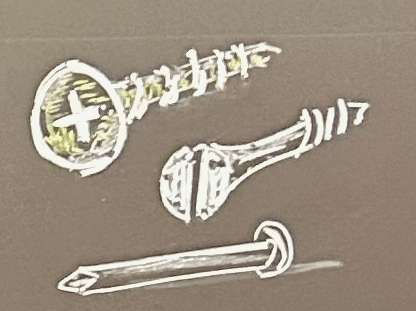
3-Archetype: Fastener need the right type of tool to be used consistently; same with proofs/programs.
Curry-Howard Isomorphism:
With Data types, Proofs = Programs
Tarski's Thesis: Logical Operators are what stays the same after abstraction.
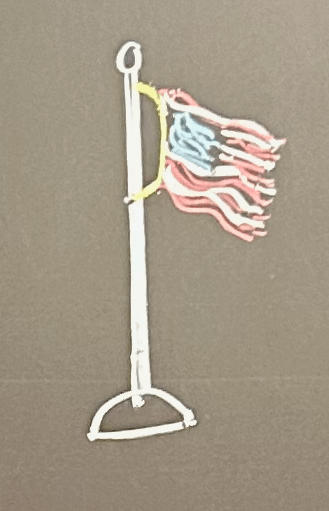
2-Archetype: Winds change, flag poles don't. So explin flag poles before attempting to explaining waving flags.
Francis Bacon & Charles Pierce: The need of Many Logics
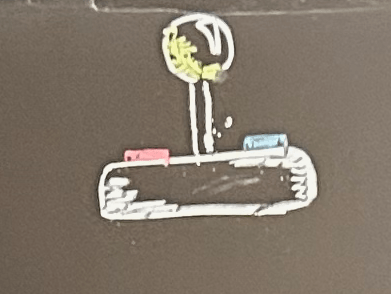
1-Archetype: Rules change in video games, so too in programs, and reasoning.
Inductive (4 +1 weeks)
8-Archetype: To roll a 5 is 1/6, but do roll it as part of a Yatzee is widely lucky.
Pascal-Fermat-Bayes: Probability make abductive logic deductive.
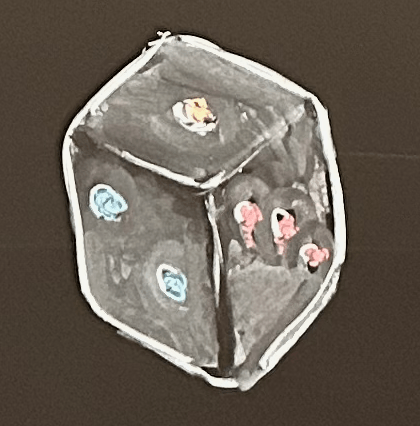
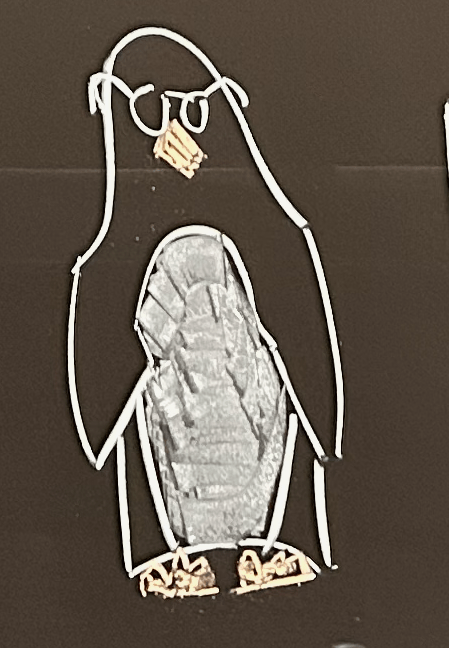
7-Archetype: Birds fly; well not Penguins; unless their transported in a plane...
John Pollock: Defaults are logical if exceptions have priorities and locality.
Cantor's Well-Ordering: The right order puts bounds on the unbounded.
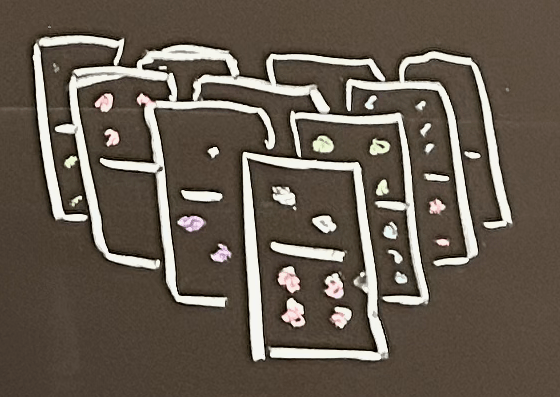
6-Archetype: Dominos fall if the boundary falls, and removing the boundary has a new boundary.
Martin-Lof: Cases and Trees reduce induction to deduction.
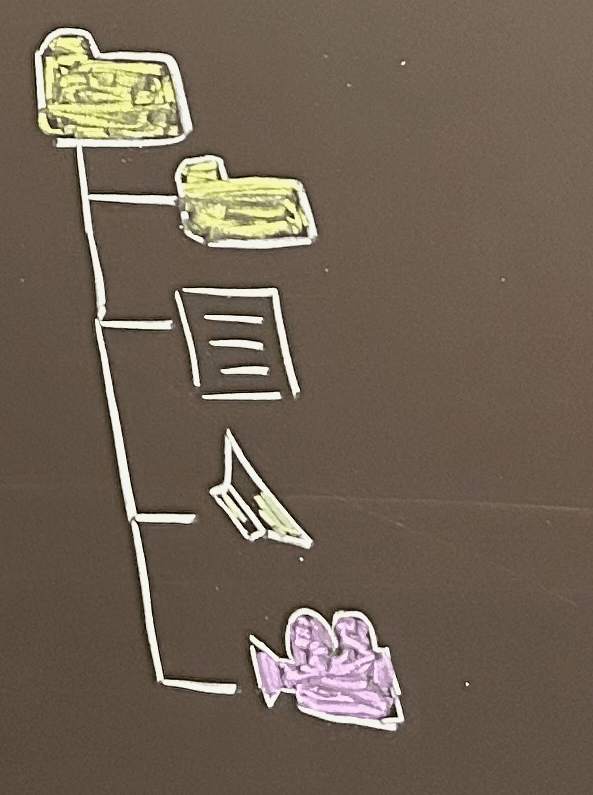
5-Archetype: Files come in cases, text, audio, movies are base cases, folder inductive.
Abductive (4 +1 weeks)
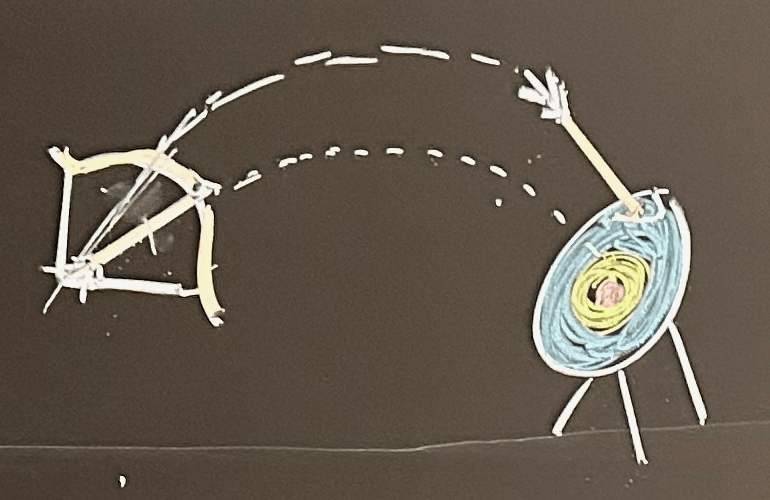
12-Archetype: Adjust your aim as a function of what change you need to hit the target.
Geoffery Hinton: Back propogation for maching learning.
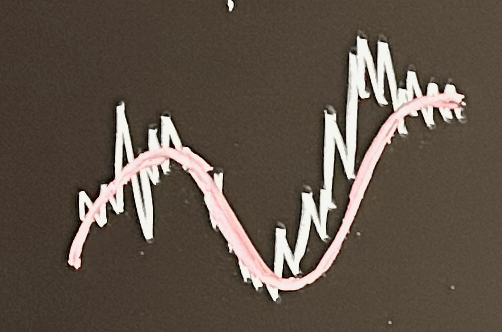
11-Archetype: Stock markets and real data are noisy. Moving average clarifies growth.
Riesz Representation Theorem: All linear features (in Hilbert) are integrals.
Al-Kwarismi's Al-Jabr: If measurement distributes, break it into easier parts.

10-Archetype: If the whole is sum of its parts then you get products (area) and its reciprocal (slope). The Fund. Thm. Calc.
Cauchy Limit: Converge if all but finitely many values equal (within tolerance).

9-Archetype: Taxi on a grid have no short cuts, even if they zig-zag close to diagonal, "close is not always good enough".
How might I teach the course?
Mechanics
-
Weekly assignments*
-
Weekly lab*
-
In person as groups
-
Online as AI-agents
-
-
Week 5
-
Review
-
Add topics *
-
Midterm / Final *
-
*Samples provided, use GPT to help generate new ones or create your own.
Pedogogy
-
Symmetric assignments
-
In class do AND, in homework do OR.
-
Invite AI, but include the transcript, grade that.
-
-
Programming Language Agnostic
-
Feature multiple languages Pseudo-code*
-
Emphasize diagrams
-
-
Summative assessments for online are short projects which include AI interactions.