Research in
History
Prof. Sarah Cohn
3/30/26

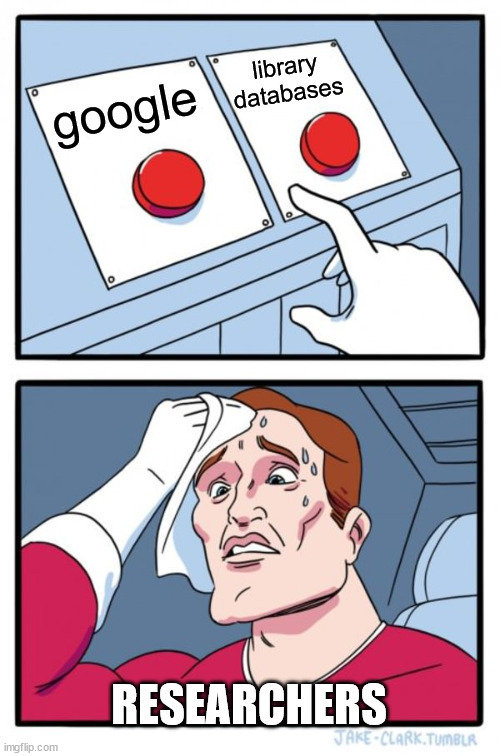
Why Library?
-
One isn't better than the other
-
Different information needs require different places to search.
-
-
The library is a resource for you as CCNY students
-
Utilize all the tools available to you.
-
Librarians are nice and helpful!
-
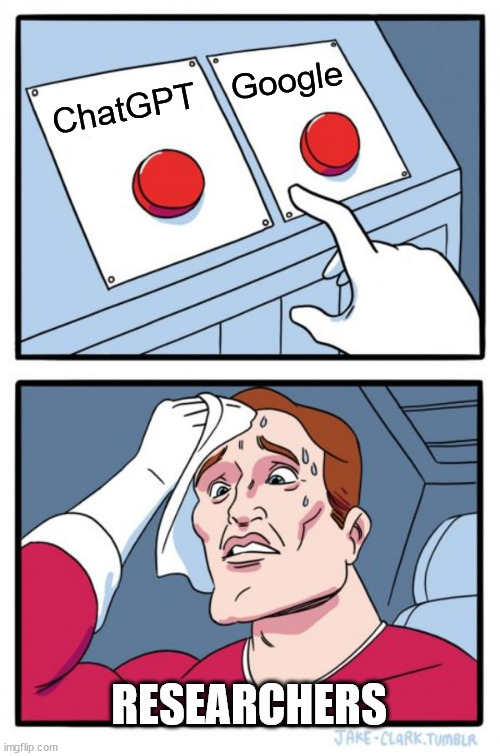
LLMs & Generative AI
-
Fake sources
-
Cognitive offloading
-
What do you give up when you outsource thinking and the process of learning to a machine?
-
-
Howe we learn!
-
Process, problem solving, failure
-
-
Environmental concerns
-
Is it worth it?
-
Searching as (strategic) Exploration
-
Searching for information is often nonlinear and iterative.
-
You might not find the exact 'answer' to your questions.
-
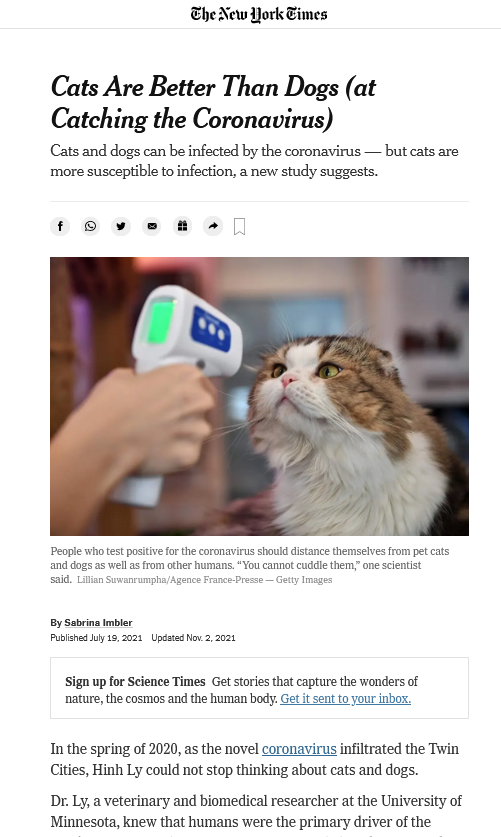
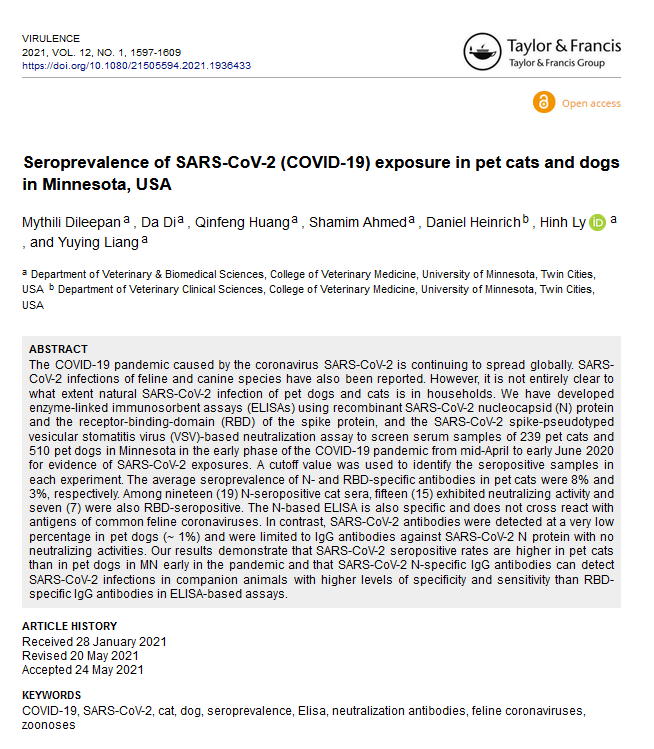
Think of your sources as puzzle pieces, each with their own bit of information or context that work together to provide a complete picture.
Scholarly
Popular
-
Author & Audience
-
by journalists for the general public
-
-
Publication
-
newspaper or magazine
-
-
Content
-
human interest hook, photos, little or no specialized language, background on topic
-
-
Citations
-
links within the text
-
-
Author & Audience
by academics & researchers for other academics & researchers
-
Publication
peer reviewed journal
-
Content
original research, data, findings, theoretical framework, specialized language
-
Citations
Works cited or bibliography
Secondary
Primary
-
Created at the time, or recalled by an eyewitness
-
Provides firsthand accounts
-
Letters, diaries, art, administrative records, photographs, newspapers
-
Analyze and interpret primary sources
-
Provides theory, analysis, critical engagement
-
Scholarly, peer reviewed journal articles, books
-
Summarize and digest the information in primary and secondary sources
- Provides background and general overviews
- Encyclopedias, textbooks
Tertiary
Academic Search Complete
An easy to use multi-disciplinary database. Be sure to add the filter for Peer Reviewed to get scholarly sources.
JSTOR
Scholarly articles and book chapters on a range of topics. Very strong in history, although most of the articles are 5+ years old.
Project Muse
Current and archival scholarly sources on a range of topics with good history coverage.
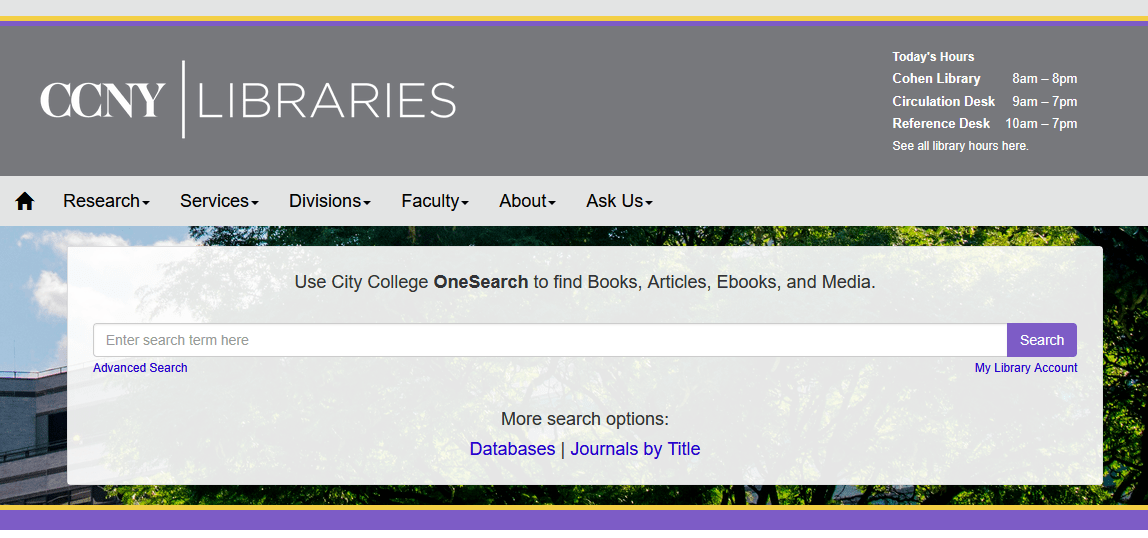
OneSearch
Multi-disciplinary database with books, peer-reviewed journal articles, & media.
library.ccny.cuny.edu
Think about different ways to describe your topic in individual words or phrases.
1.
Identify your key words
Combine 2 or more search terms, adding any relevant filters.
2.
Build a search & test it out
Do the results look promising, interesting, or relevant? If not, change a search term and try again.
Repeat until you're seeing relevant articles.
3.
Evaluate the results & change the search as needed