Modeling stellar spectra with unsupervised machine learning generative models
@TingAstro
Yuan-Sen Ting
Australian National University
Jo Ciuca (Astro-3D Fellow, ANU)
Yuan-Sen Ting (me, ANU)
Science team :
Fabio Albertelli
Jakub Misiek
Animation team :

Disclaimer : We reserve all rights to the video productions in this talks. The videos should not be used or adapted in any way without the consent of the authors (Yuan-Sen Ting, Jakub Misiek, Fabio Albertelli)
Why machine learning + spectroscopy ?
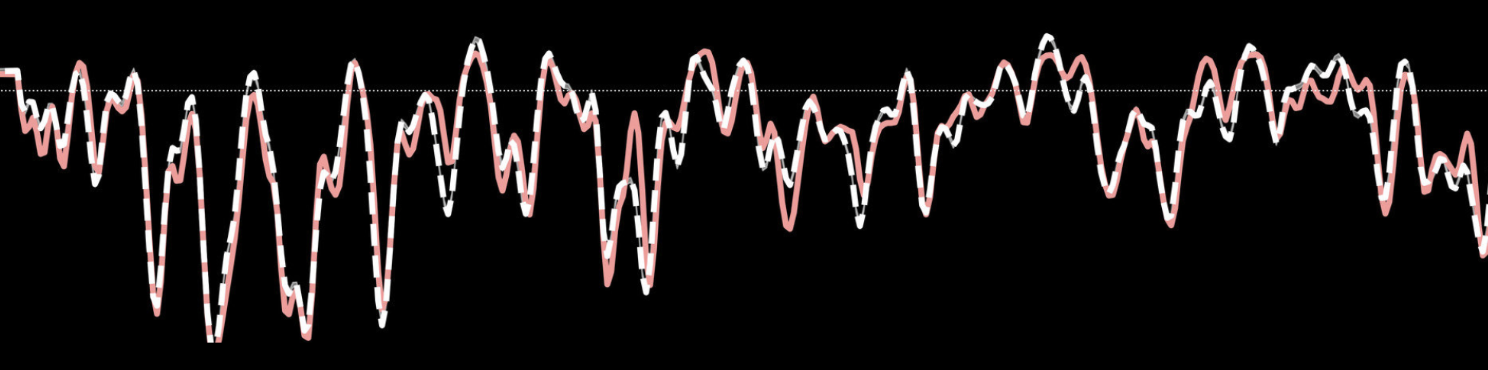
Typically ~10,000 pixels
= Image Net
~ O(10,000) pixels
20-50 labels
= multi-class labels
Temperature, gravity, stellar ages, evolutionary stages, chemical abundances
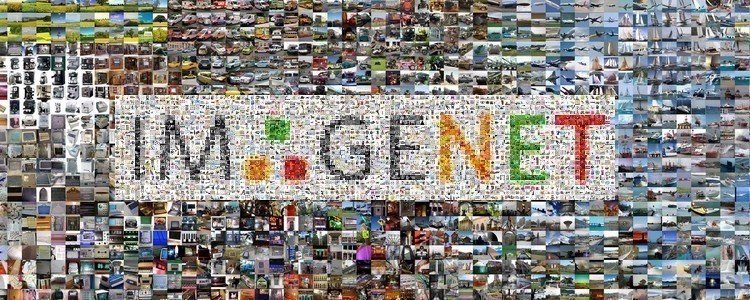
Most ML spectroscopy study has been focusing on supervised learning
Input
labels / spectra
Output
labels / spectra
Magic happens
Spectra
Chemical composition
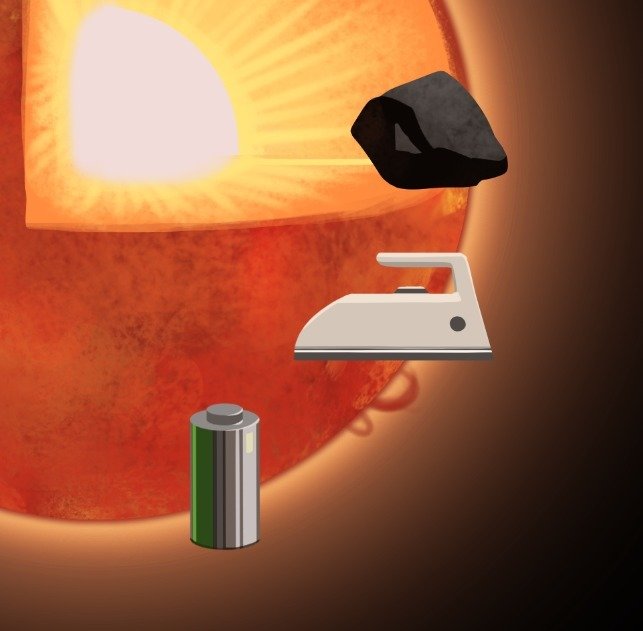
The danger of inferring abundances from supervised learning
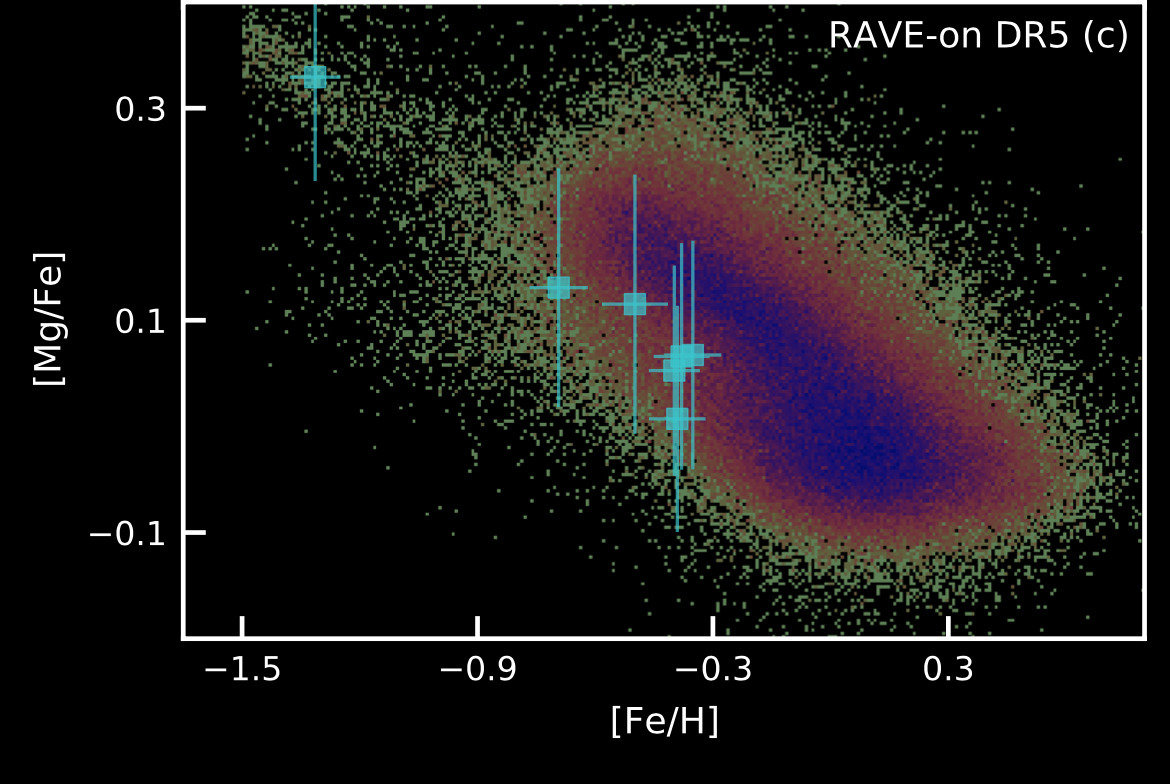
RAVE-on, data-driven abundances
Nyx (accreted dwarf system ??)
Zucker+ 21
[Fe/H]
[Mg/Fe]
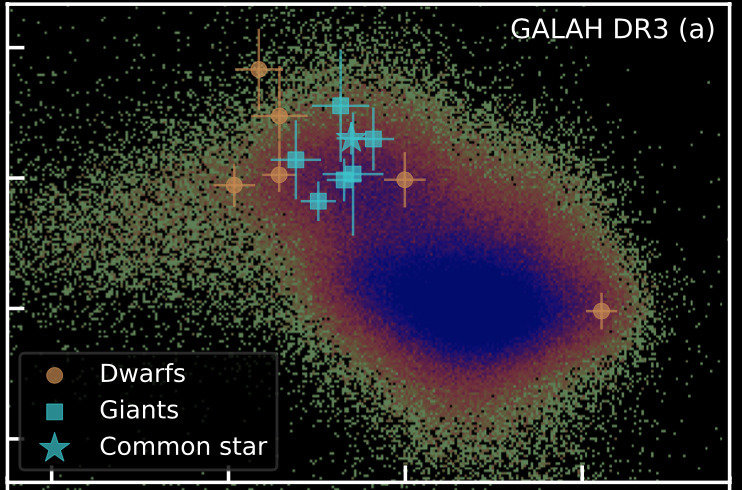
Galah high-res "ab initio" measurements
Not so fast !
-1.5
-1.5
-0.9
-0.3
0.3
-1.5
-0.9
-0.3
0.3
[Fe/H]
Correlation is not causality
[Fe/H]
[Mg/Fe]
log g
spectrum
Correlation is not causality
[Fe/H]
[Mg/Fe]
log g
spectrum
distance
Selection
function
Chemical evolution
Measurement?
Correlation is not causality
[Fe/H]
[Mg/Fe]
log g
spectrum
distance
Selection
function
Chemical evolution
or indirect inference ?
Unsupervised machine learning - generative models
Generative models : two "dreamed up" human faces
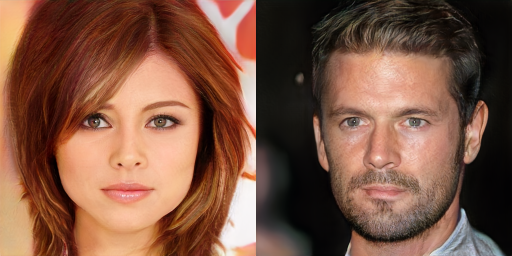
Karras+ 18
this person does not exist.com
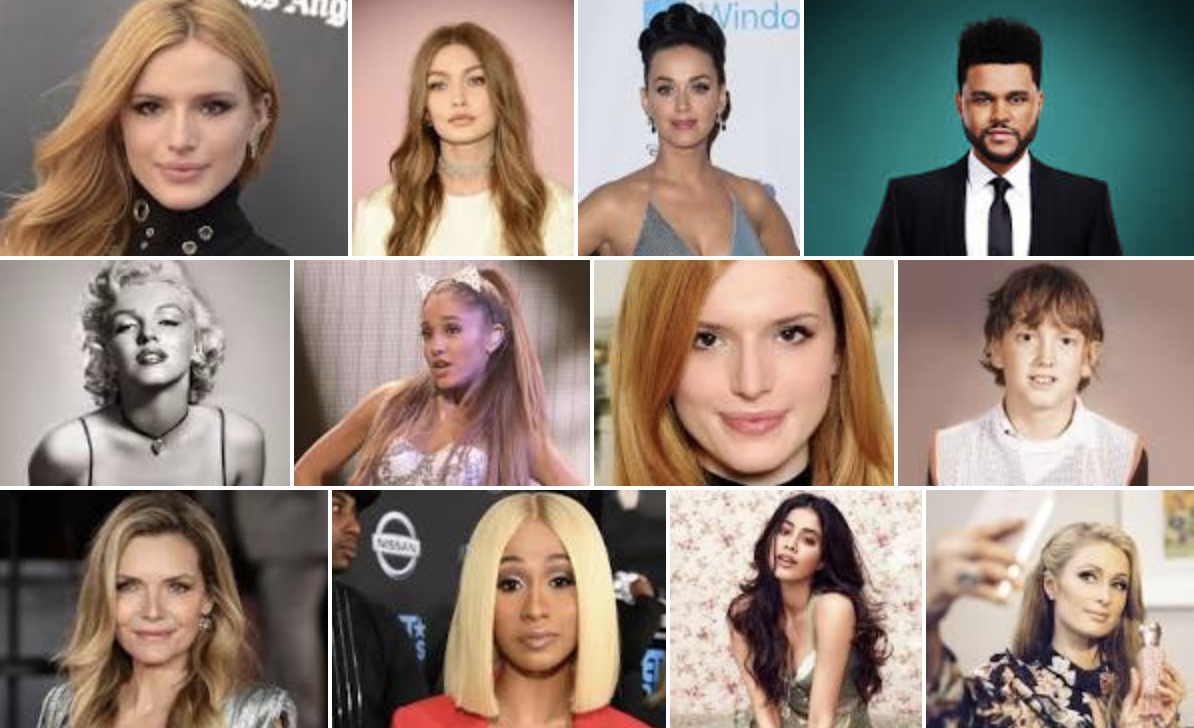
Generative models : training with unlabelled data set
Real human
Fake human
All rights reserved - Y.-S. Ting, J. Misiek, F. Albertelli
x
Generative models : a high-dimensional density estimation problem
\{ x_i \}
p(x)
: human face
Ensemble
Distribution
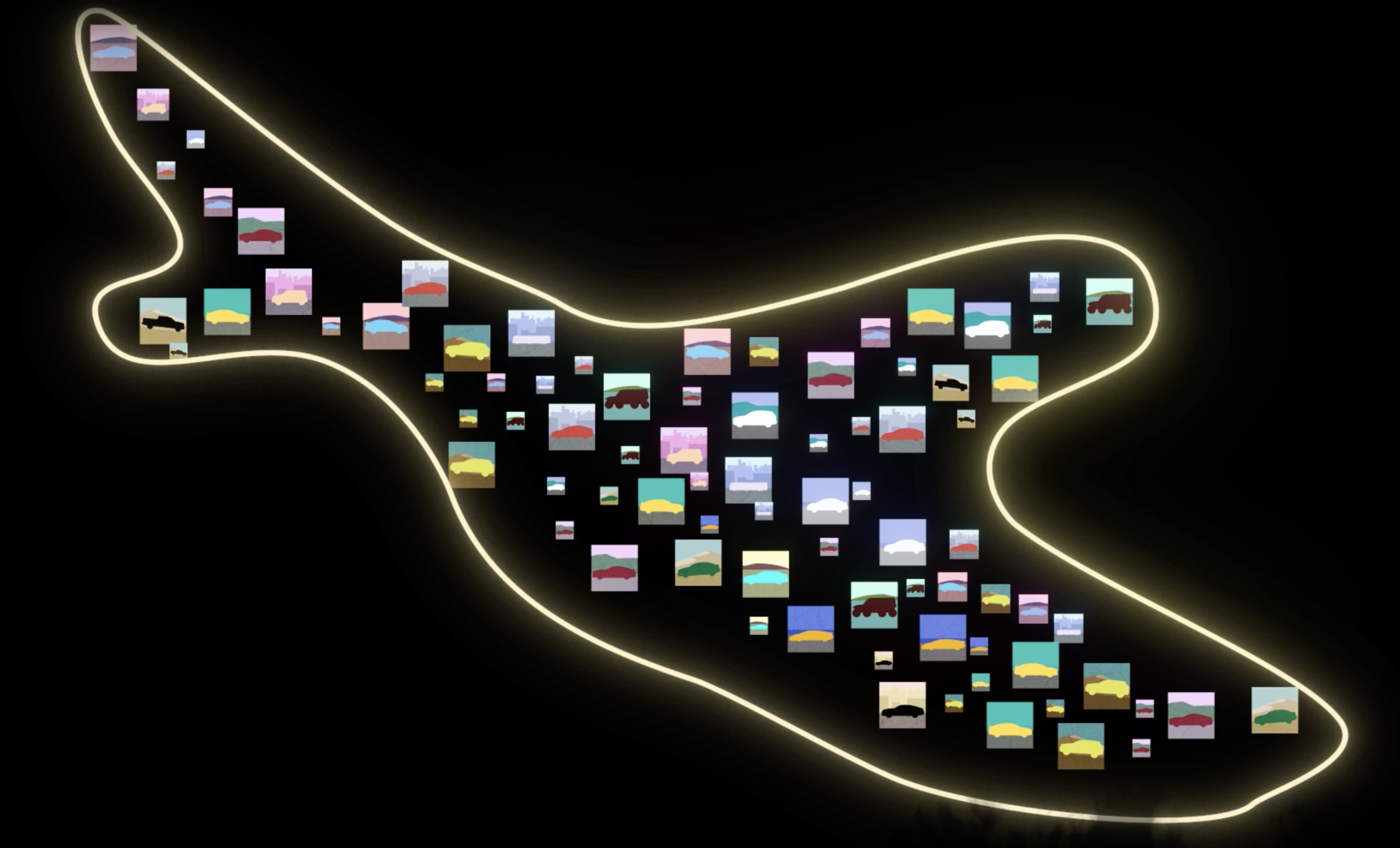
Drawing the "contour" in a high-dimensional image space
~10,000 dimensions
All rights reserved - Y.-S. Ting, J. Misiek, F. Albertelli
~10,000 dimensions
Drawing the "contour" in a high-dimensional image space
Generating samples within the "contour"
All rights reserved - Y.-S. Ting, J. Misiek, F. Albertelli
Classical methods like gaussian mixture models will not do the jobs
~10,000 dimensions
p(x)
Not all unsupervised generative models are suitable for sciences
Why not Generative Adversarial Networks ( GAN )
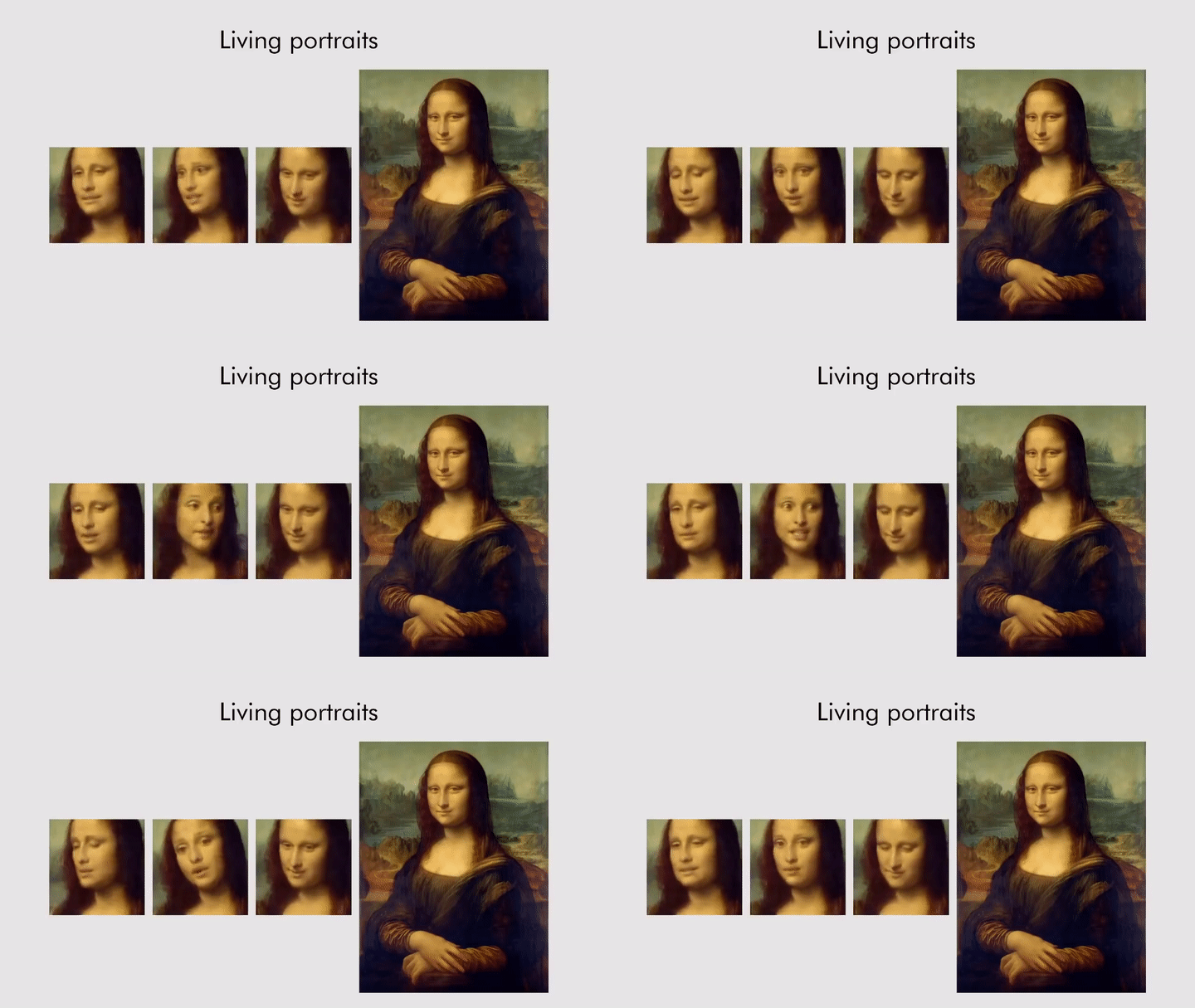
Zakharov+ 19
Training data set: real human
Generator
( machine 1)
All rights reserved - Y.-S. Ting, J. Misiek, F. Albertelli
Discriminator
( machine 2 )
All rights reserved - Y.-S. Ting, J. Misiek, F. Albertelli
Generator ( machine 1 )
Discriminator ( machine 2 )

All rights reserved - Y.-S. Ting, J. Misiek, F. Albertelli
All rights reserved - Y.-S. Ting, J. Misiek, F. Albertelli
Lack of diversity
GAN generates "good looking" results but suffer from mode dropping
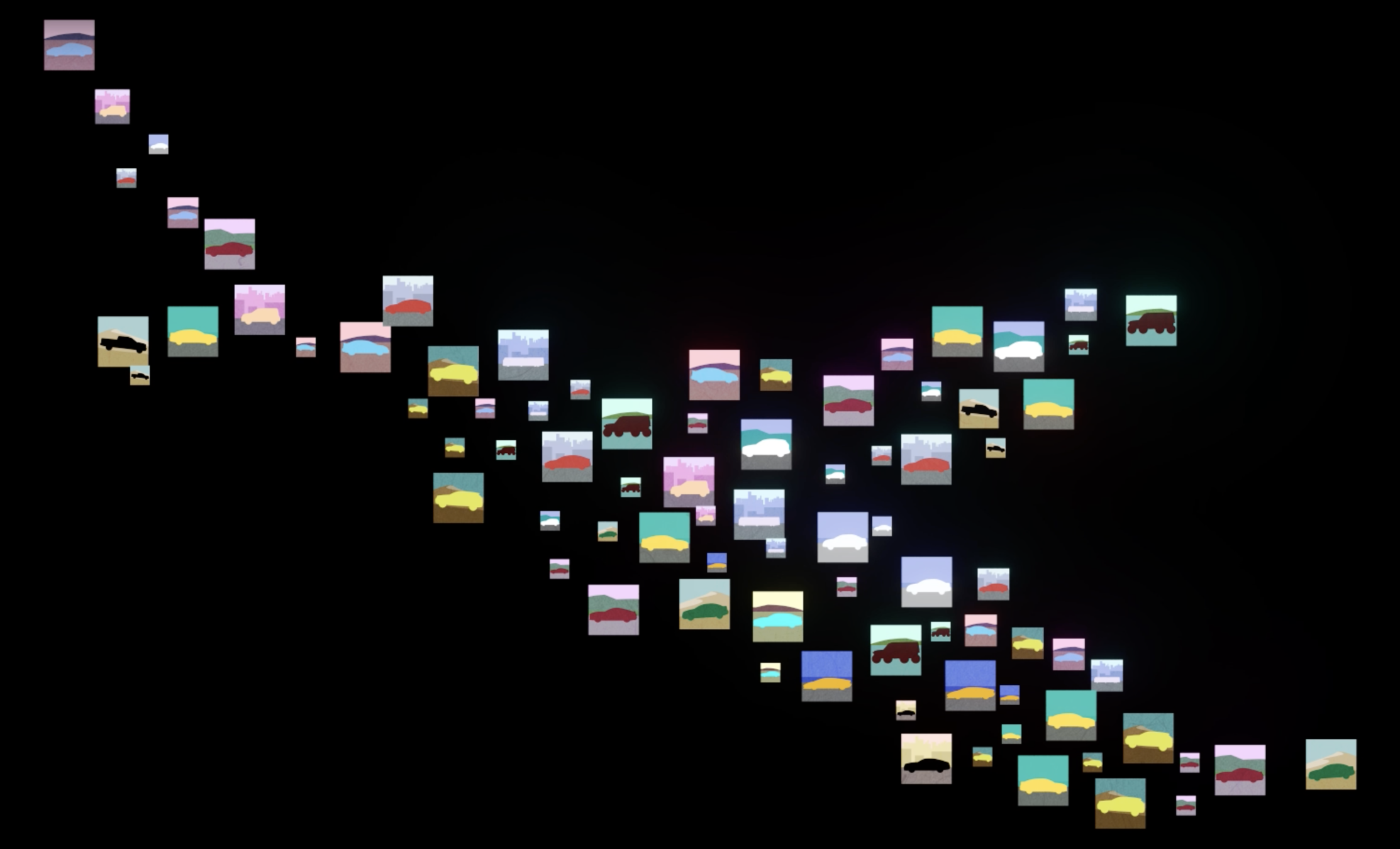
Normalizing Flows
see YST & Weinberg 21
Ciuca & YST, in prep.
Adopting neural networks as a change of variables
Neural Network
All rights reserved - Y.-S. Ting, J. Misiek, F. Albertelli
(1) Invertibility
All rights reserved - Y.-S. Ting, J. Misiek, F. Albertelli
Normalizing flows : neural networks that satisfy two criteria
(2) Jacobian can be calculated easily
2
1
Jacobian = Area 2 / Area 1
All rights reserved - Y.-S. Ting, J. Misiek, F. Albertelli
Normalizing flows : neural networks that satisfy two criteria
GAN
Normalizing Flows
~10,000 dimensions
Applications of unsupervised machine learning
( 1 ) Outliers detection
A statistical robust way to extract spectral outliers
All rights reserved - Y.-S. Ting, J. Misiek, F. Albertelli
p( {\rm spectra} ) \gg 1
p({\rm spectra}) \ll 1
Normal spectra
Baby Yoda spectra
p\,({\rm spectra})
Baby Yoda model created by NestaEric on Sketchfab, licensed under CCB BY
Detecting spectral outliers without the need of analyzing spectra
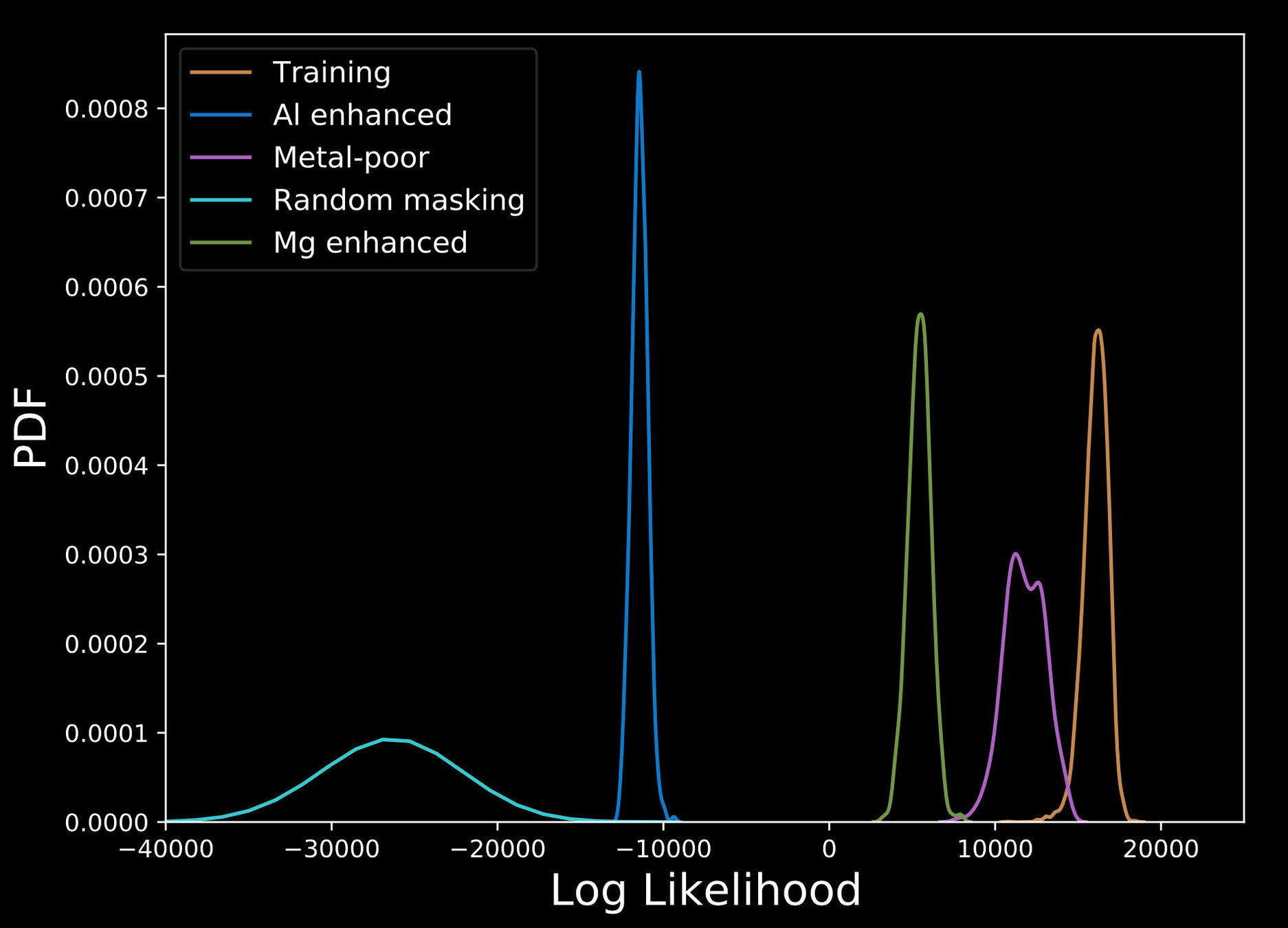
Mock APOGEE Test
Ciuca & Ting, In prep.
-40,000
-20,000
0
20000
Log Likelihood, log p(x)
Probability Density
Normal spectra
Core of the distribution
Periphery
Metal-poor
Extreme magnesium
Extreme aluminium
Random masking
Applications of unsupervised machine learning
( 2 ) Finding correlation between pixels
Modeling the conditional distribution of APOGEE spectra
p\,({\rm spectra} | \, {\rm Teff , logg} \, )
All rights reserved - Y.-S. Ting, J. Misiek, F. Albertelli
p\,({\rm spectra})
Energy Level
All rights reserved - Y.-S. Ting, J. Misiek, F. Albertelli
p\,(x_i | {\rm Teff}, {\rm logg})
{\rm Corr} (x_i, x_j)
Recovering missing atomic features via the empirical correlations
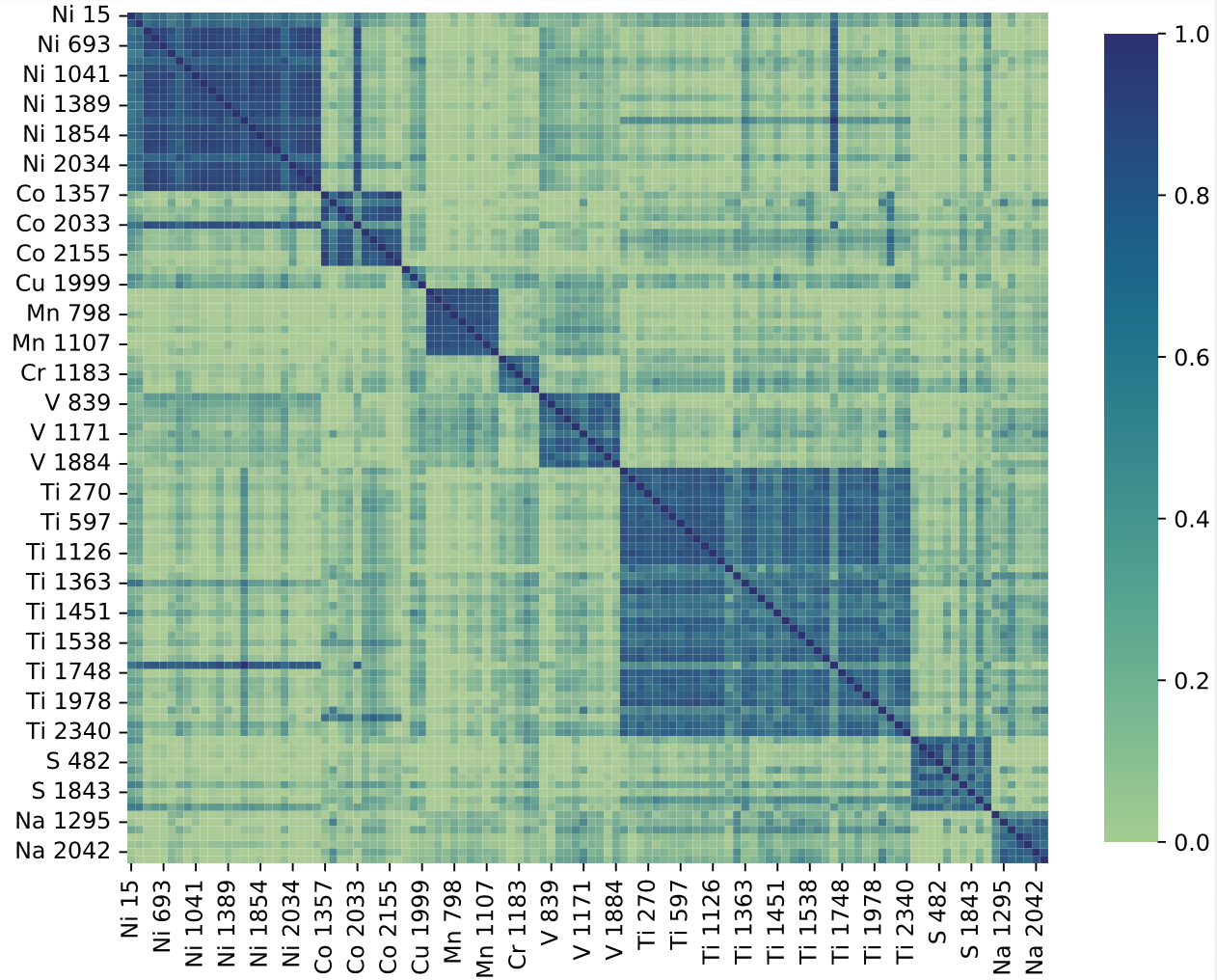
Ciuca & Ting, In prep.
Mock APOGEE Test
Ni
Co
Cu
Mn
Cr
V
Ti
S
Na
Ni
Co
Cu
Mn
Cr
V
Ti
S
Na
1.0
0.8
0.6
0.4
0.2
0.0
Correlation
Applications of unsupervised machine learning
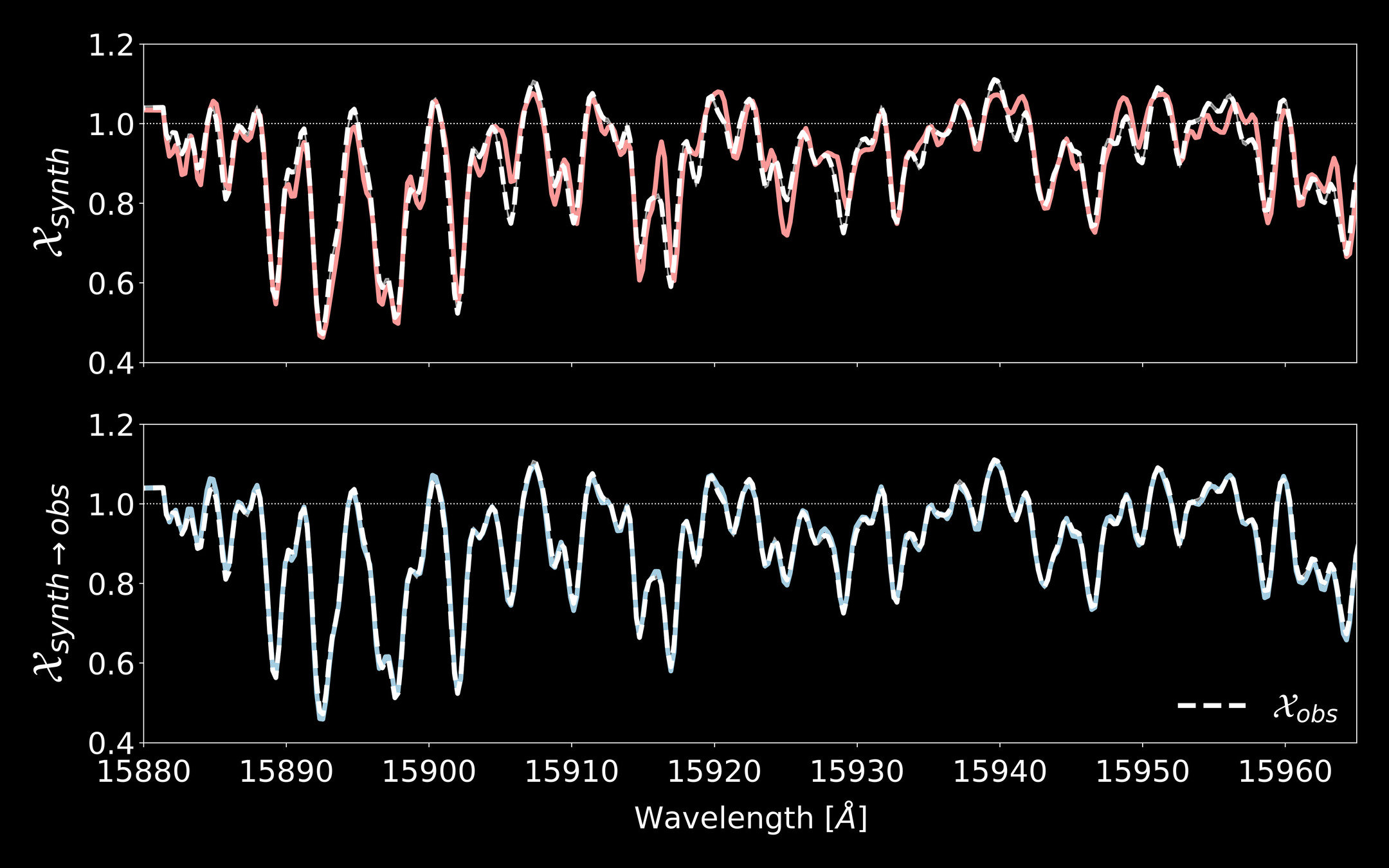
( 3 ) Bridging the gap between theory and data
Synthetic spectral models are imperfect
0.5
15900
15940
Best-fit model
Normalized Spectrum
Observation
Wavelength [A]
Fitting an observed stellar spectrum
15920
15960
15880
1.0
APOGEE spectra
Overcoming model imperfections using domain adaptation
Observed spectra
Synthetic spectra
"Observed spectra"
"Synthetic spectra"
Overcoming model imperfections using domain adaptation
Domain adaptation : finding commonalities + merging the distributions
All rights reserved - Y.-S. Ting, J. Misiek, F. Albertelli
Closing the synthetic-observation gap with Cycle-StarNet
0.5
1.0
0.5
1.0
15900
15950
Observation
Old model
Normalized Spectrum
Cycle-StarNet calibrated
Wavelength [A]
, YST, Fabbro+ 2021
O'Briain
Observation
Summary :
Supervised (data-driven) machine learning is subjected many caveats due to the need of unbiased stellar labels
Unsupervised machine learning performs statistical robust density estimations in high dimensional spaces ( 1,000 - 10,000 D)
For sciences, normalizing flows are much more robust than GAN
We used unsupervised ML to ( 1 ) perform outliers detection,
( 2 ) study high-order moments and ( 3 ) autocalibrate models
Normalizing Flow
By Yuan-Sen Ting