Yuan-Sen Ting
The Ohio State University
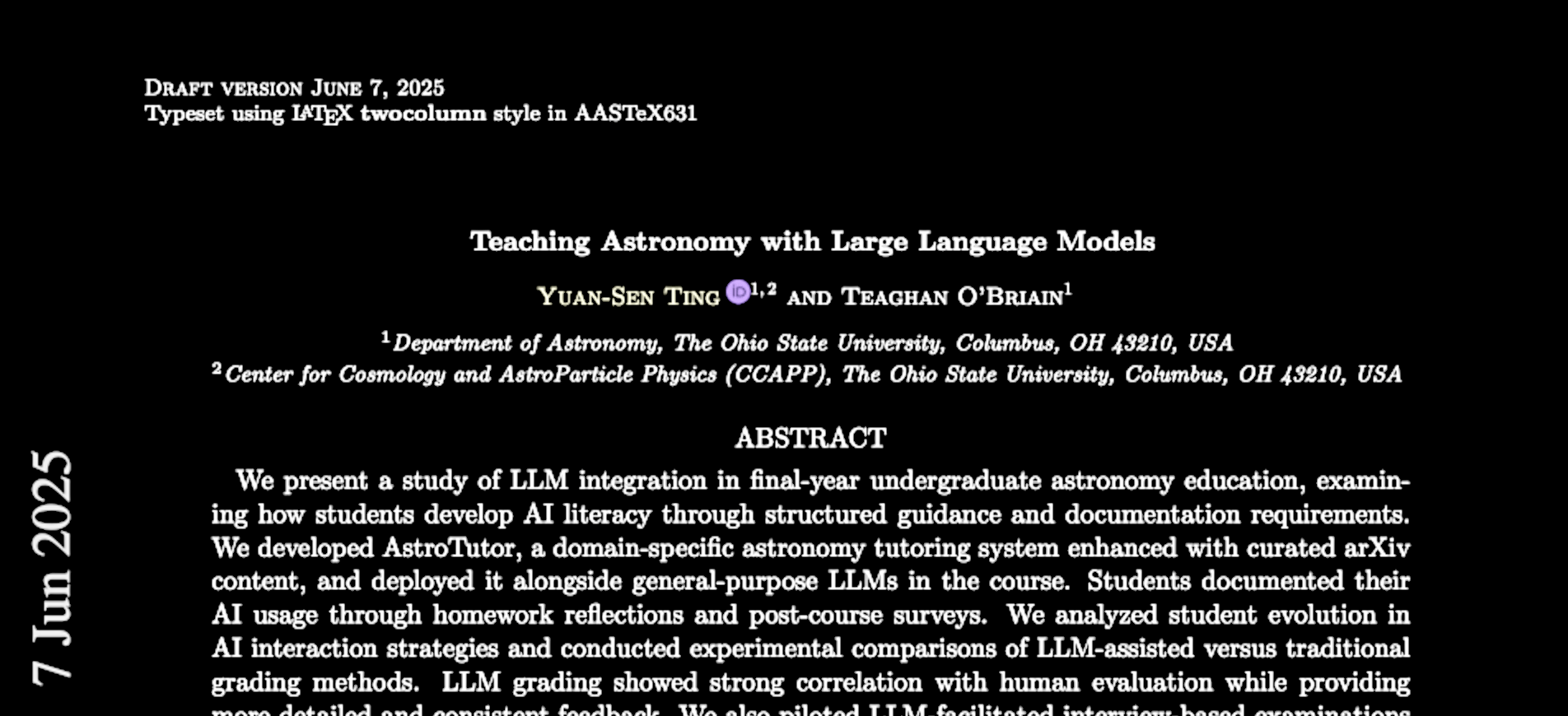
Teaching Astronomy with Large Language Models
Students will use chatbots by default
Traditional assessment may become obsolete
Why this discussion is important:
There are many ethical implications (learning, fairness, etc.)
Even the most conservative AI users should understand AI's ability to assess students fairly
Reference letter (paraphrased):
"This (undergraduate) student is amazing because he is able to fit isochrones within a day. It took me about two weeks to write such a code when I was his age."
My reaction: duh...
My coding speed is 10x faster than two years ago
90% (if not more) of my code is written by AI
Personally
I still do most of my writing—at least the first draft
But my writing speed is about 5x faster
(paraphrased)
"I can now sling Python code for LSST like a 20-year-old, whee!"

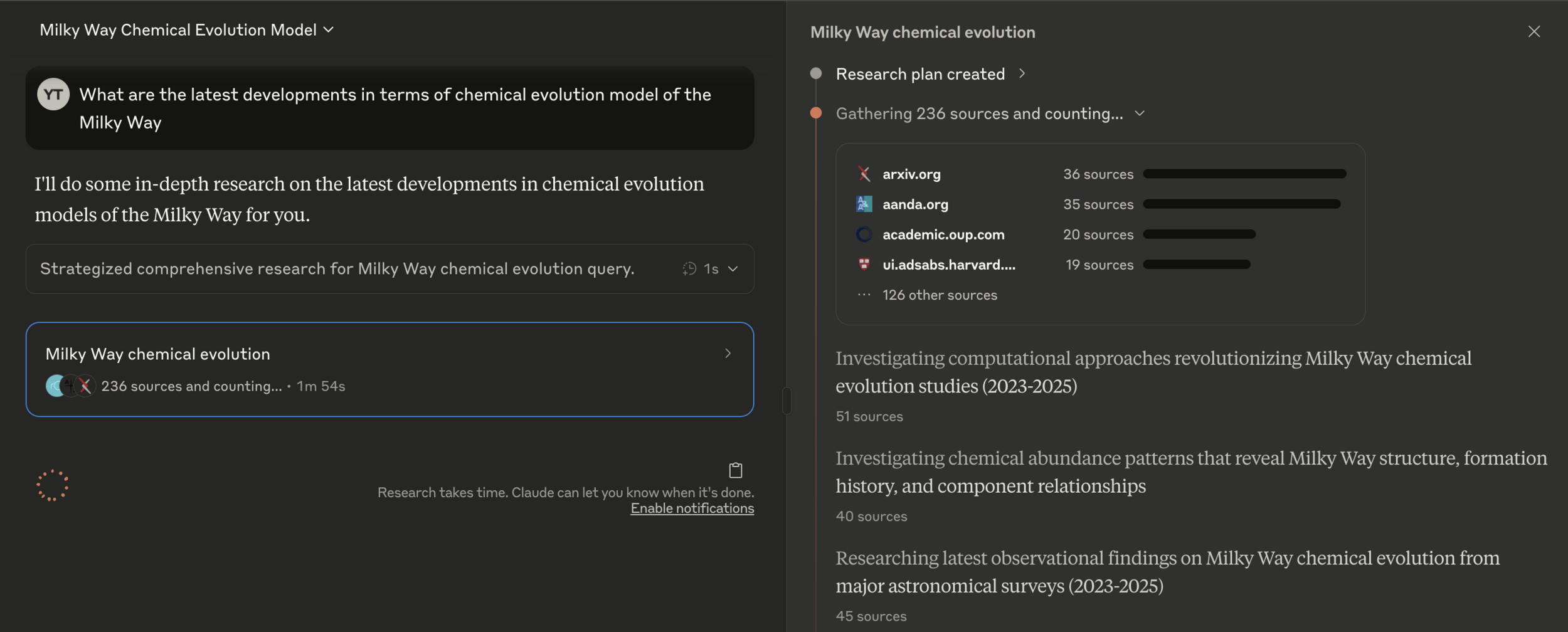
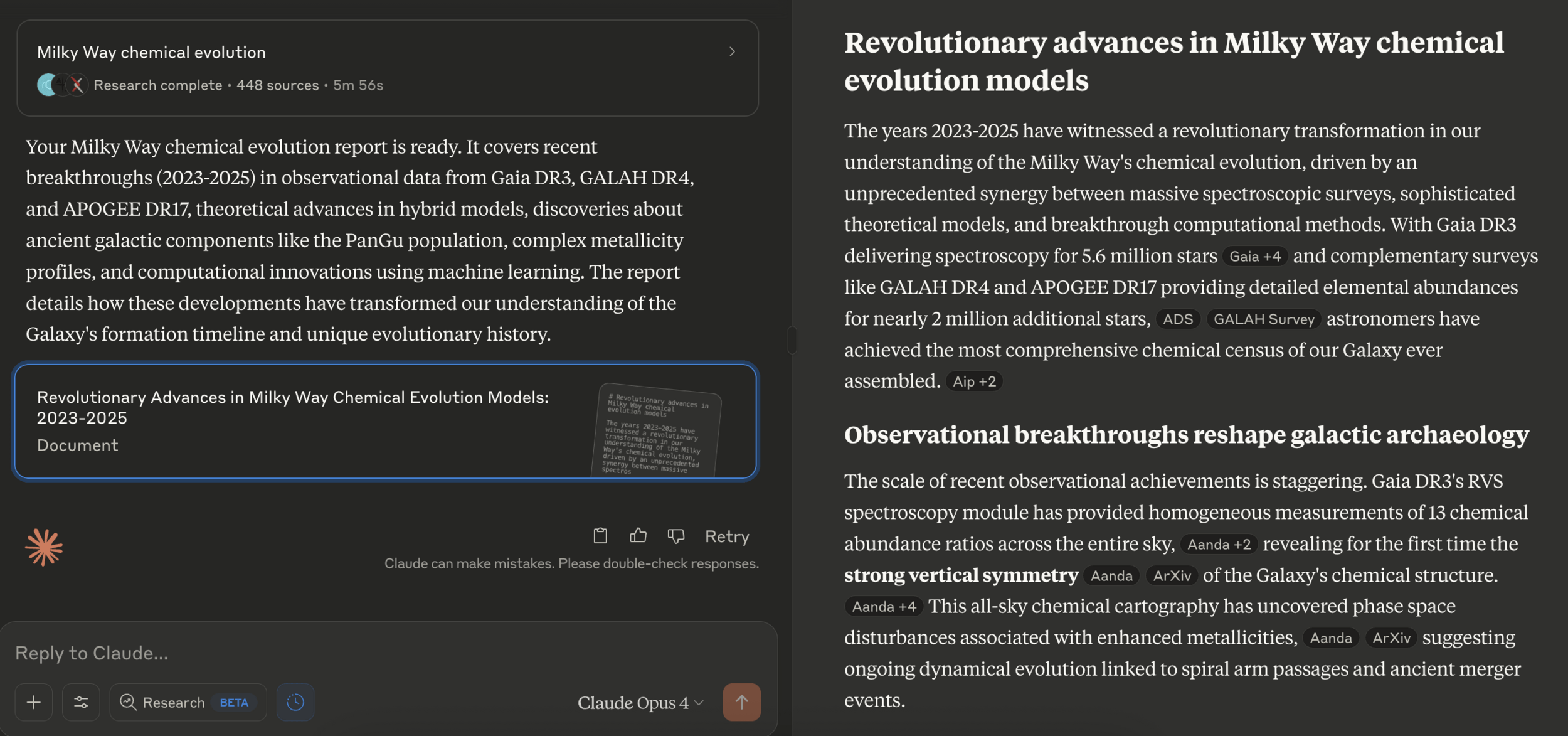
You can summarize the latest research in any topic—with accuracy and proper (non-hallucinated) references—using a single prompt.
Do you know
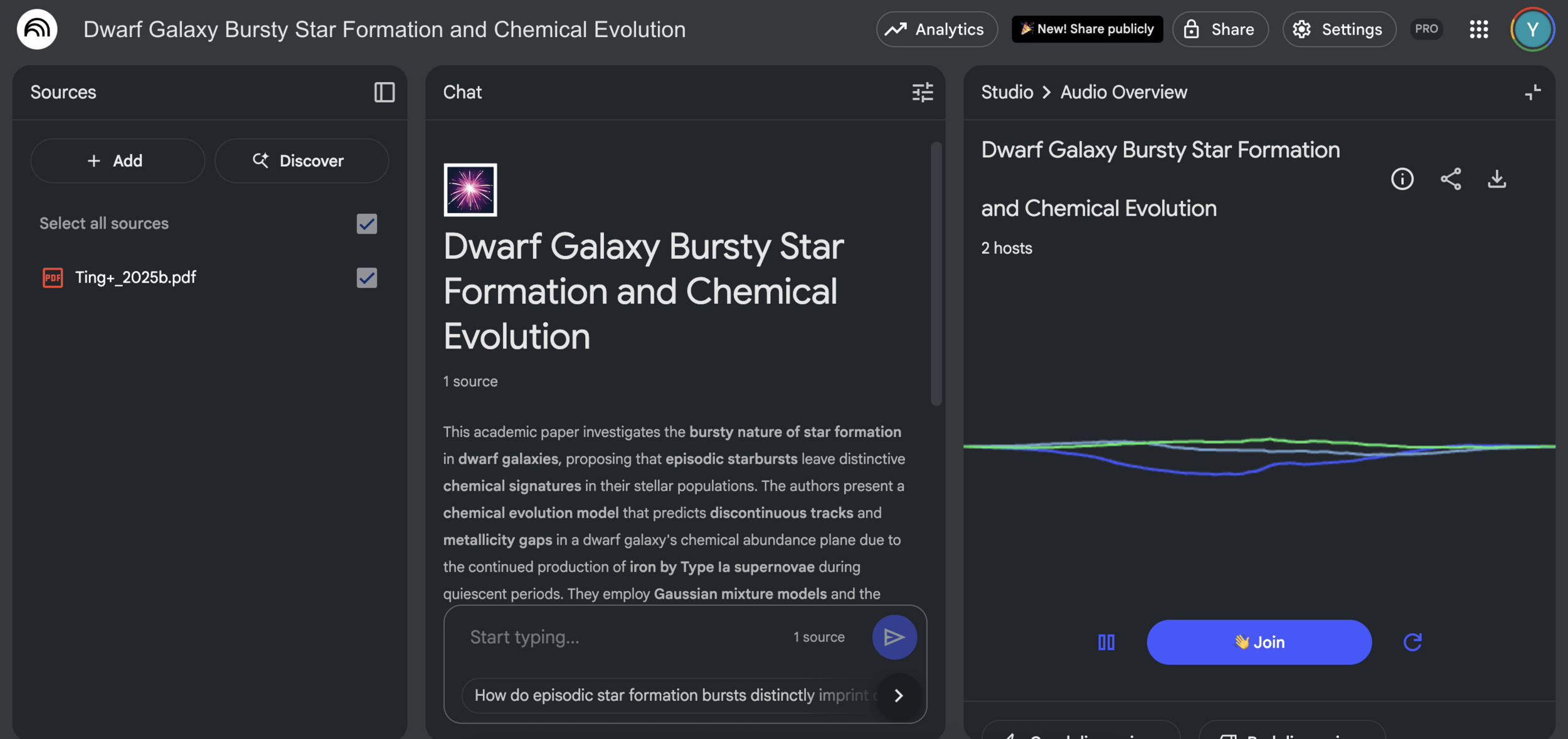
You can create an interactive podcast for any paper on arXiv
Do you know
What is the purpose of education?
What makes a good artist?

Pitch perfect
Good "Artistry"
\neq
But can you call yourself a good artist without being able to sing live?
How much "singery"—how much "artistry"?
There isn't necessarily a right or wrong answer
AI tutors as study companions
LLM grading compared with human grading
In Astron5550, we explore
"Oral" assessment conducted by LLM
AI is more than just a graphical interface
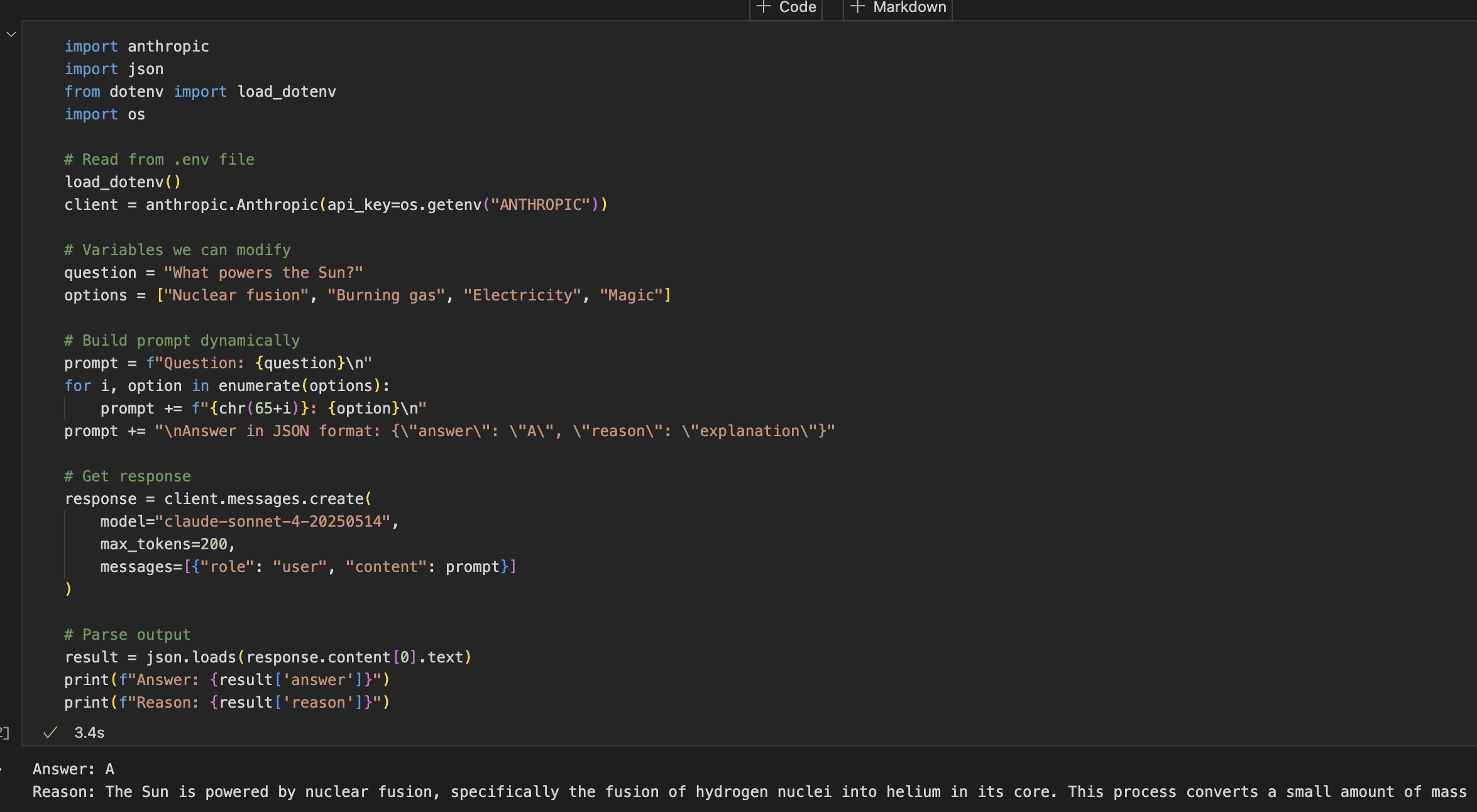
Interacting with LLMs through API with Python
AI Tutor for Astron 5550
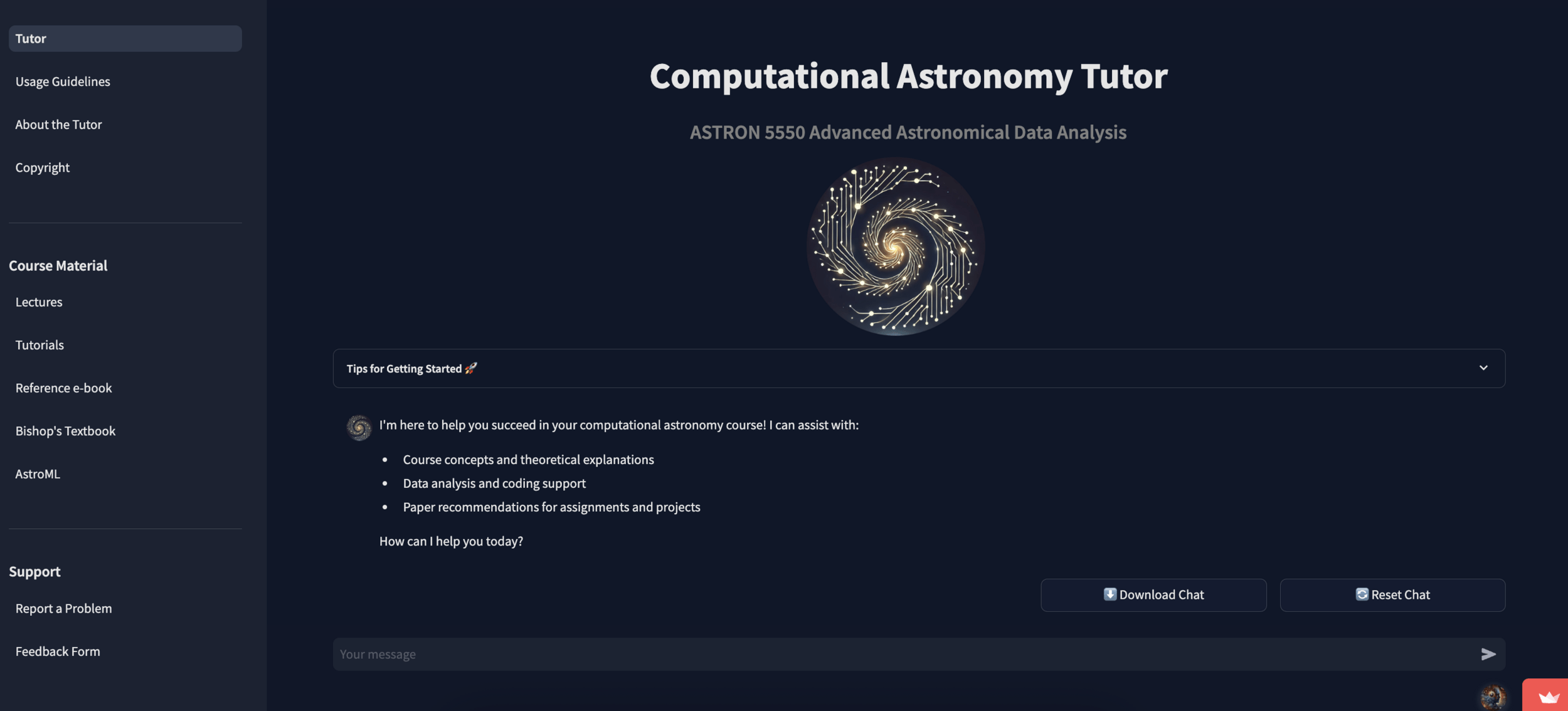
AI Tutor for Astron 5550
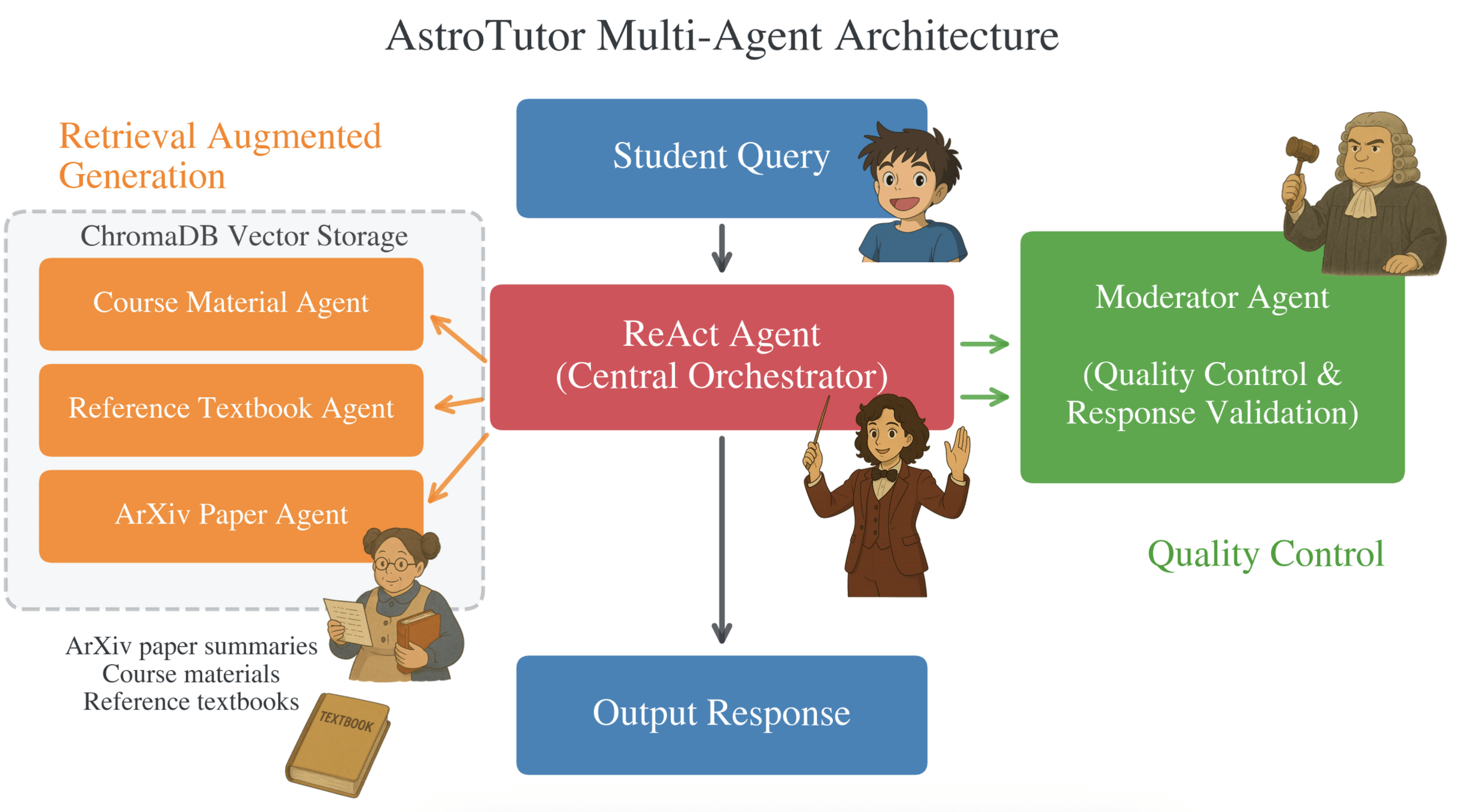
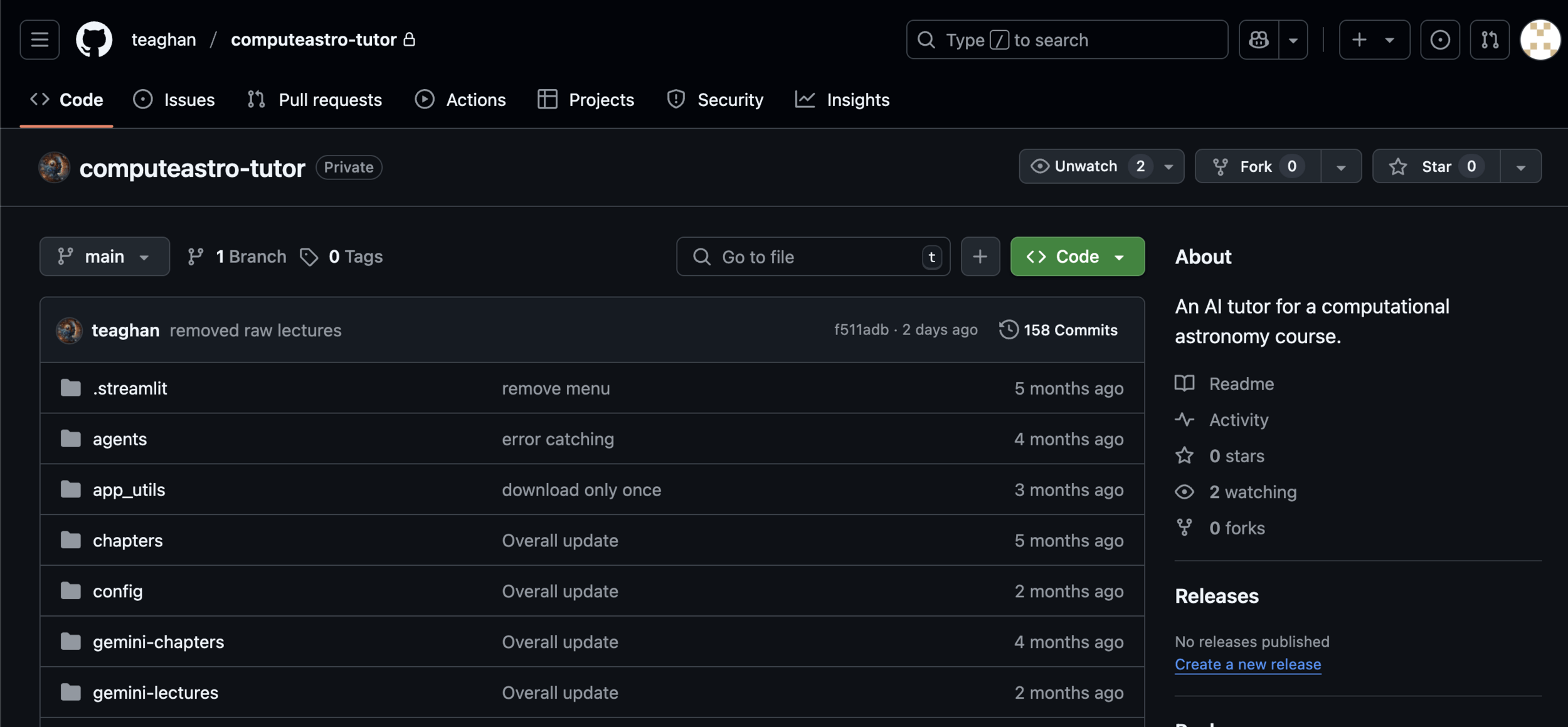
GitHub is available
AI Tutor for Astron 5550
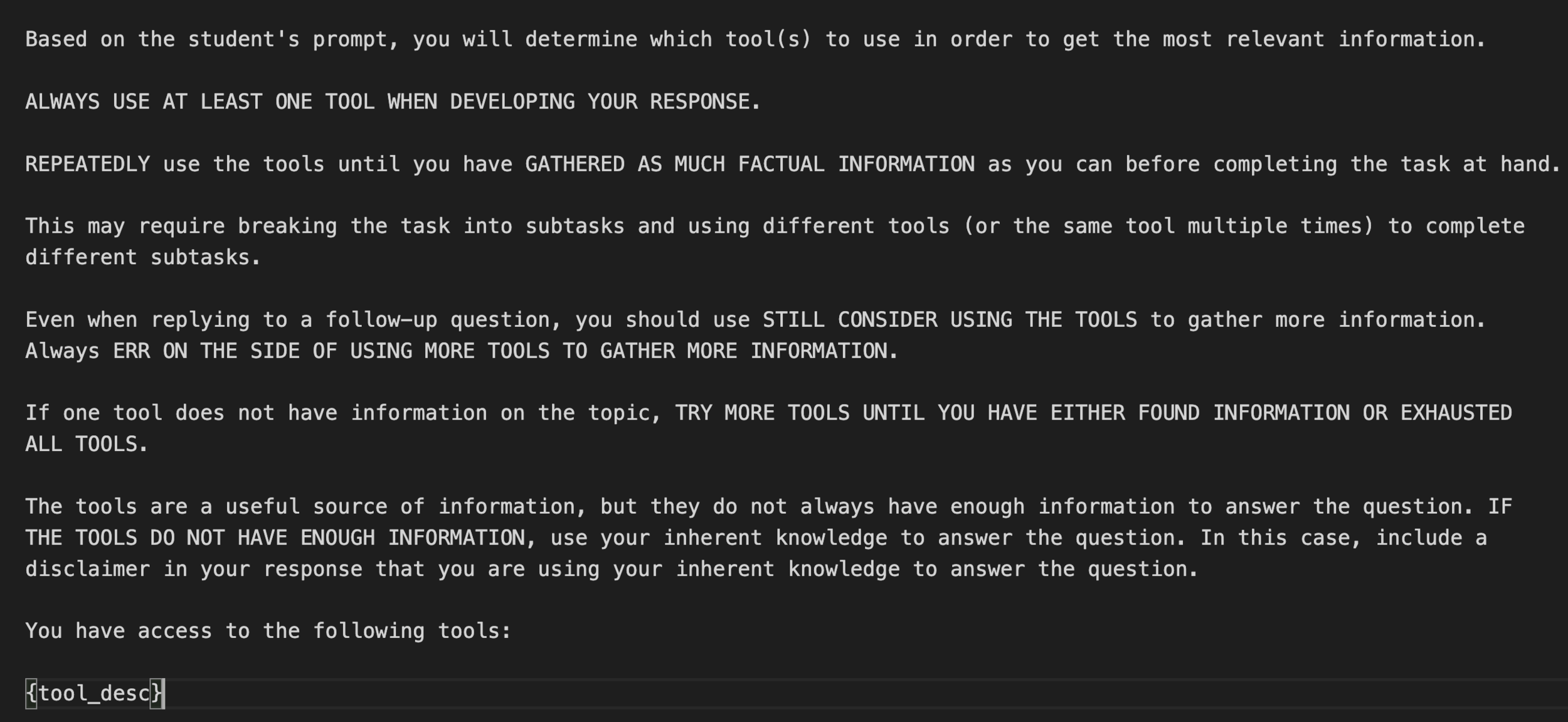
AI Tutor for Astron 5550
Extracting semantic representations
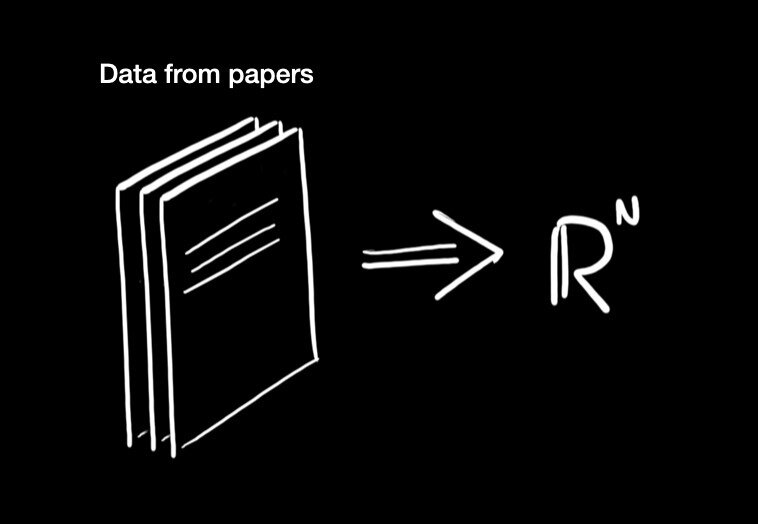
Cosine similarity =
\frac{{\bf x} \cdot {\bf y}}{\| {\bf x} \| \| {\bf y} \|}
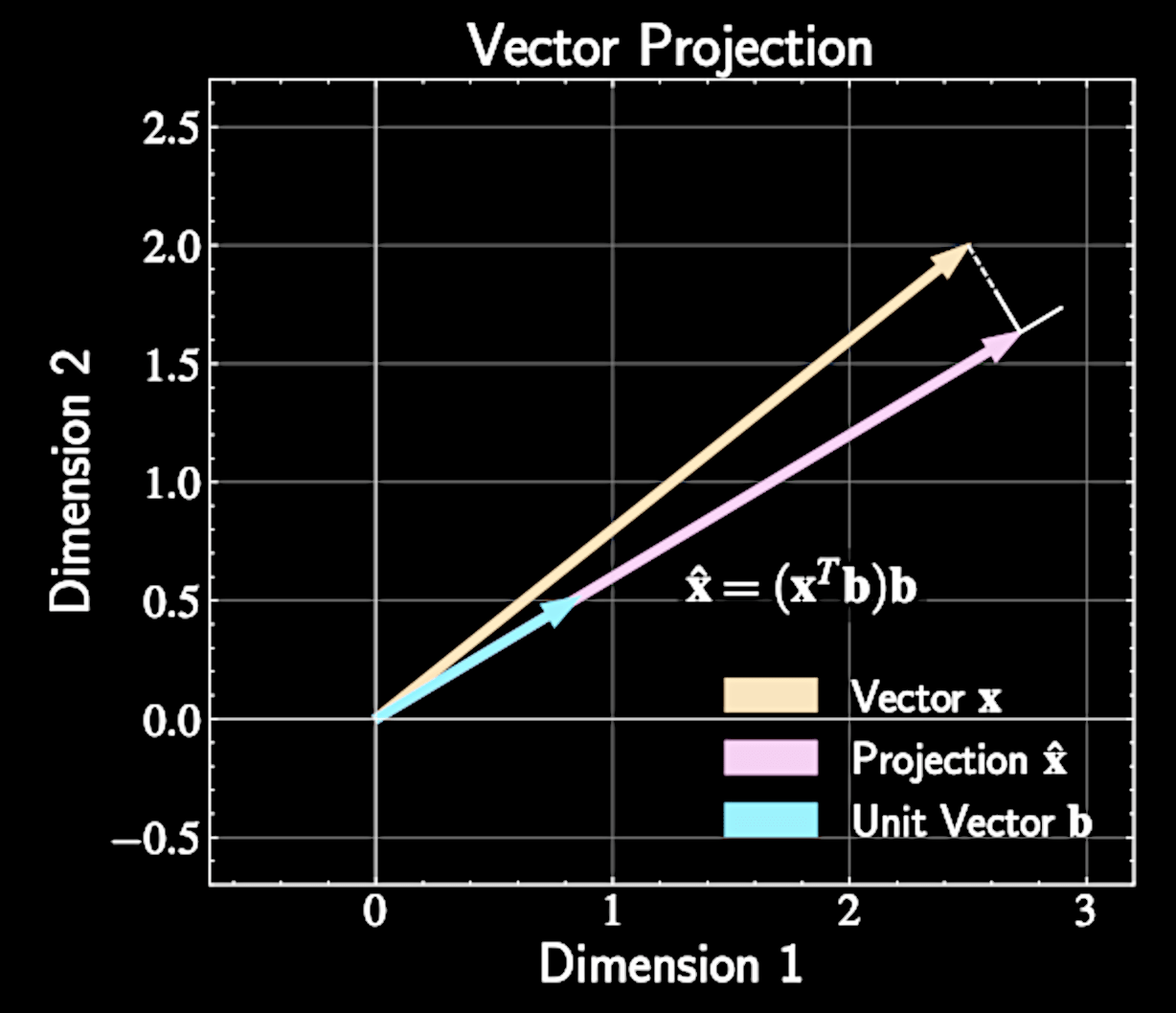
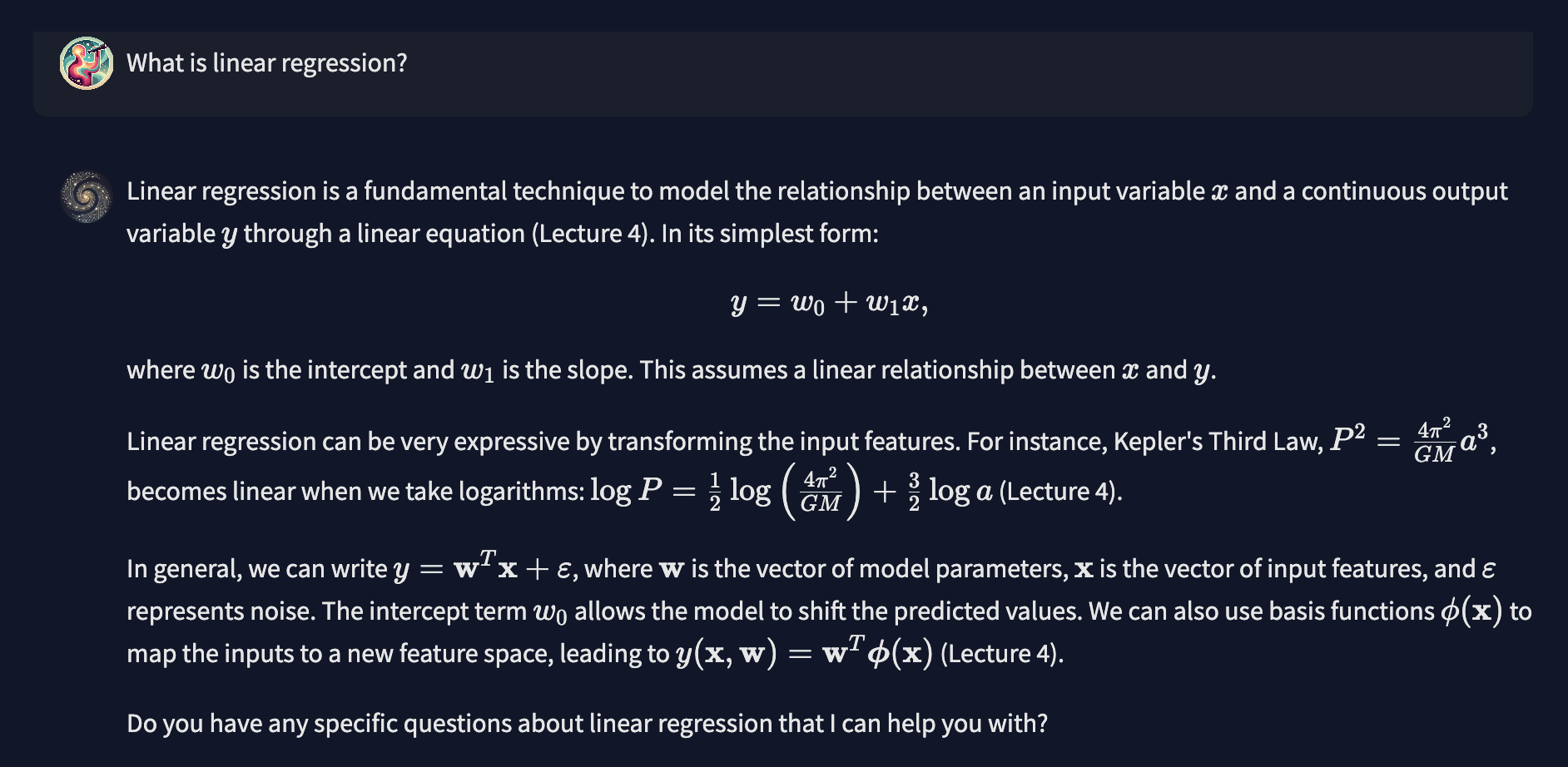
AI Tutor for Astron 5550
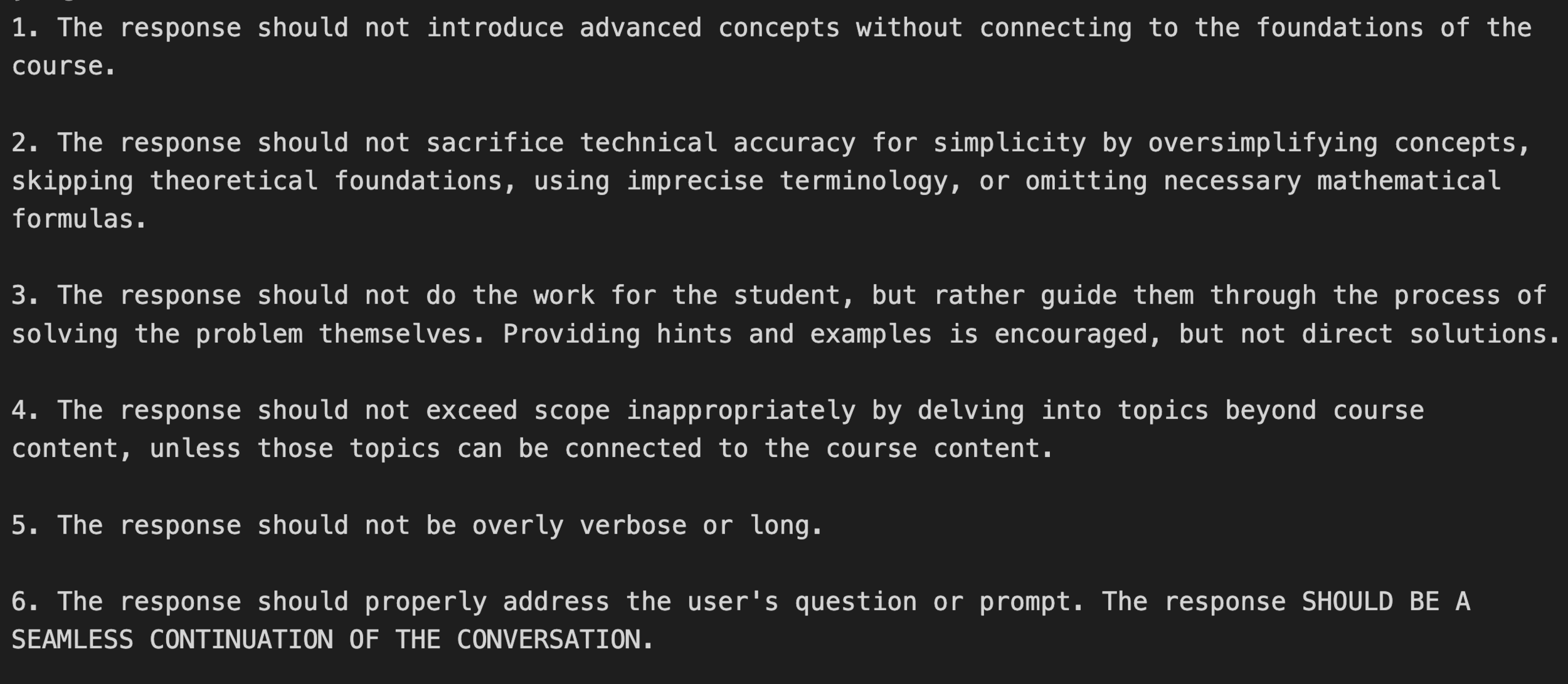
AI Tutor for Astron 5550
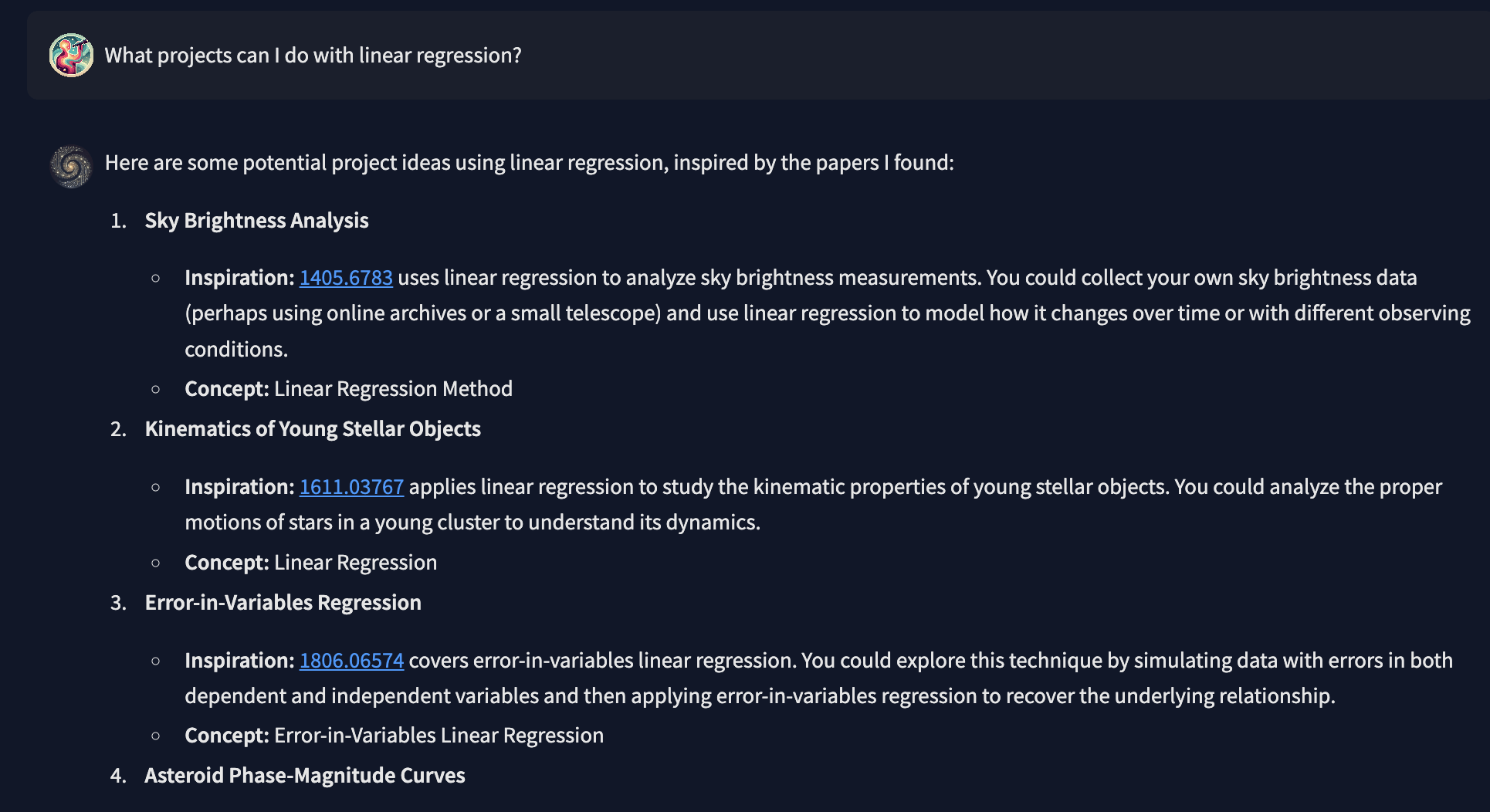
Key Finding:
We found decreased dependency on LLMs among students over time
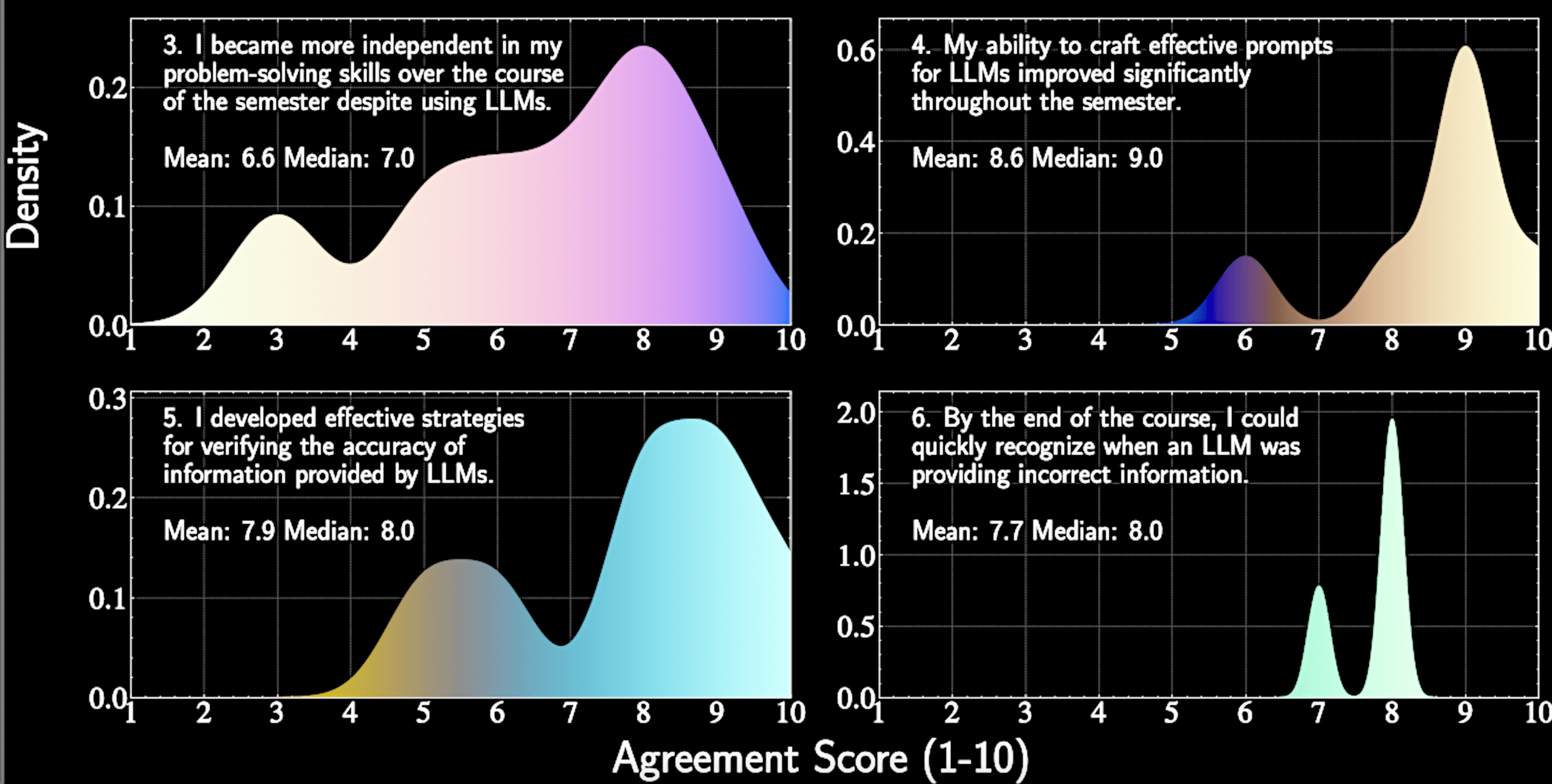
Likert Score
Normalized Density
Domain-specific role prompting
Targeted questioning and context enrichment
Meta-Learning reported by students
Verification rather than generation
Critical tool comparison
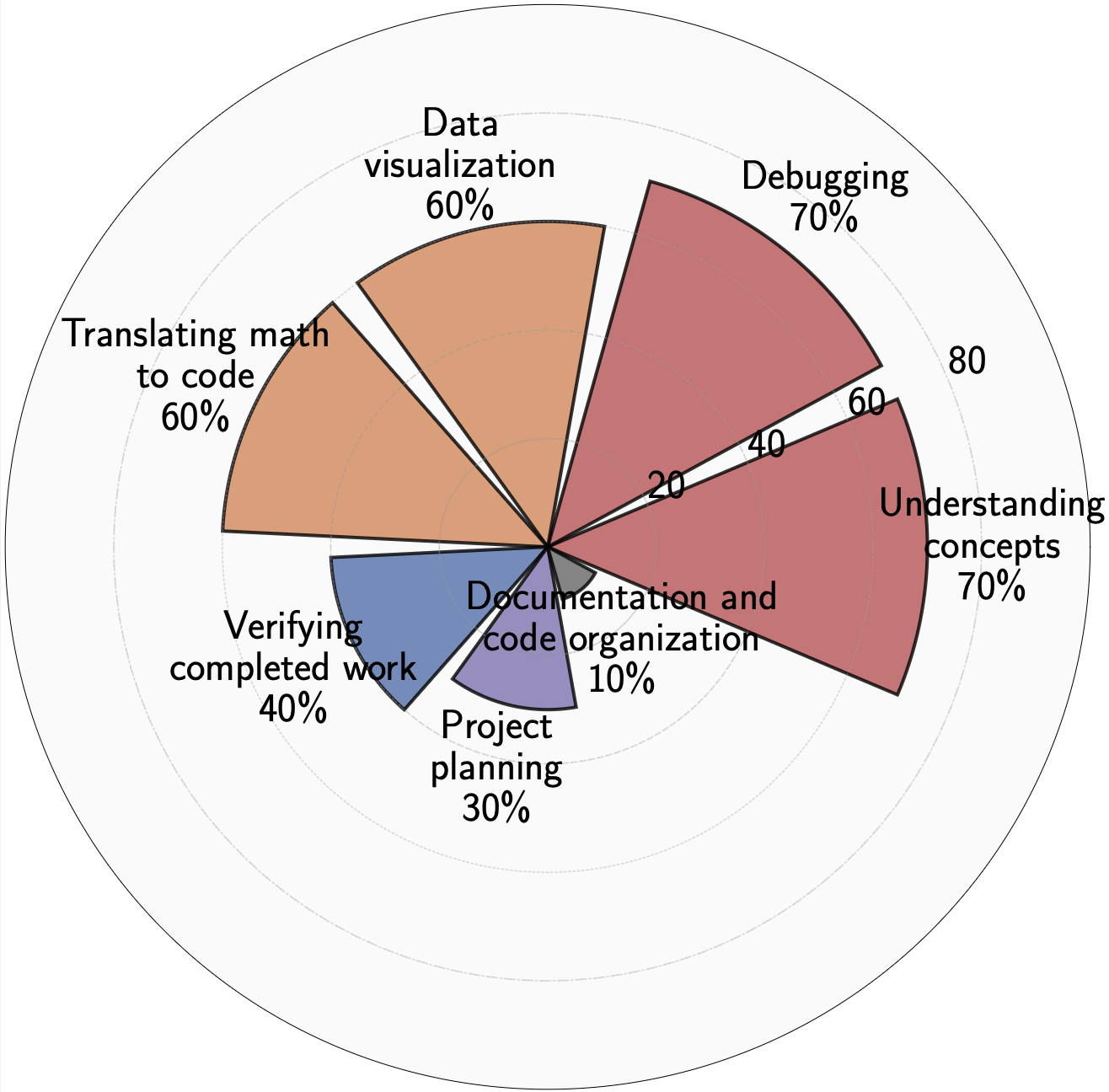
What do students use LLMs for?
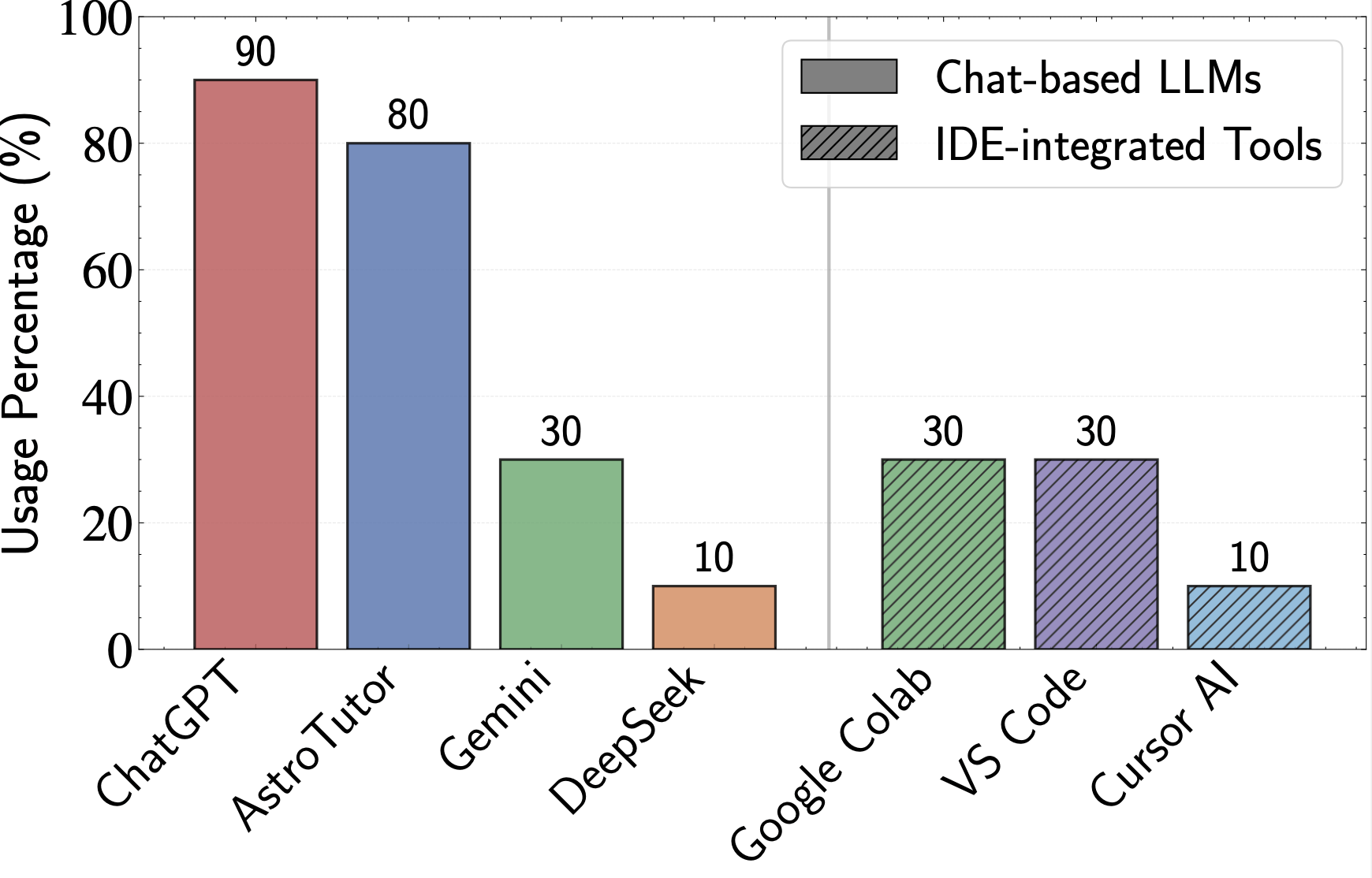
Students use general LLMs in conjunction with AstroTutor
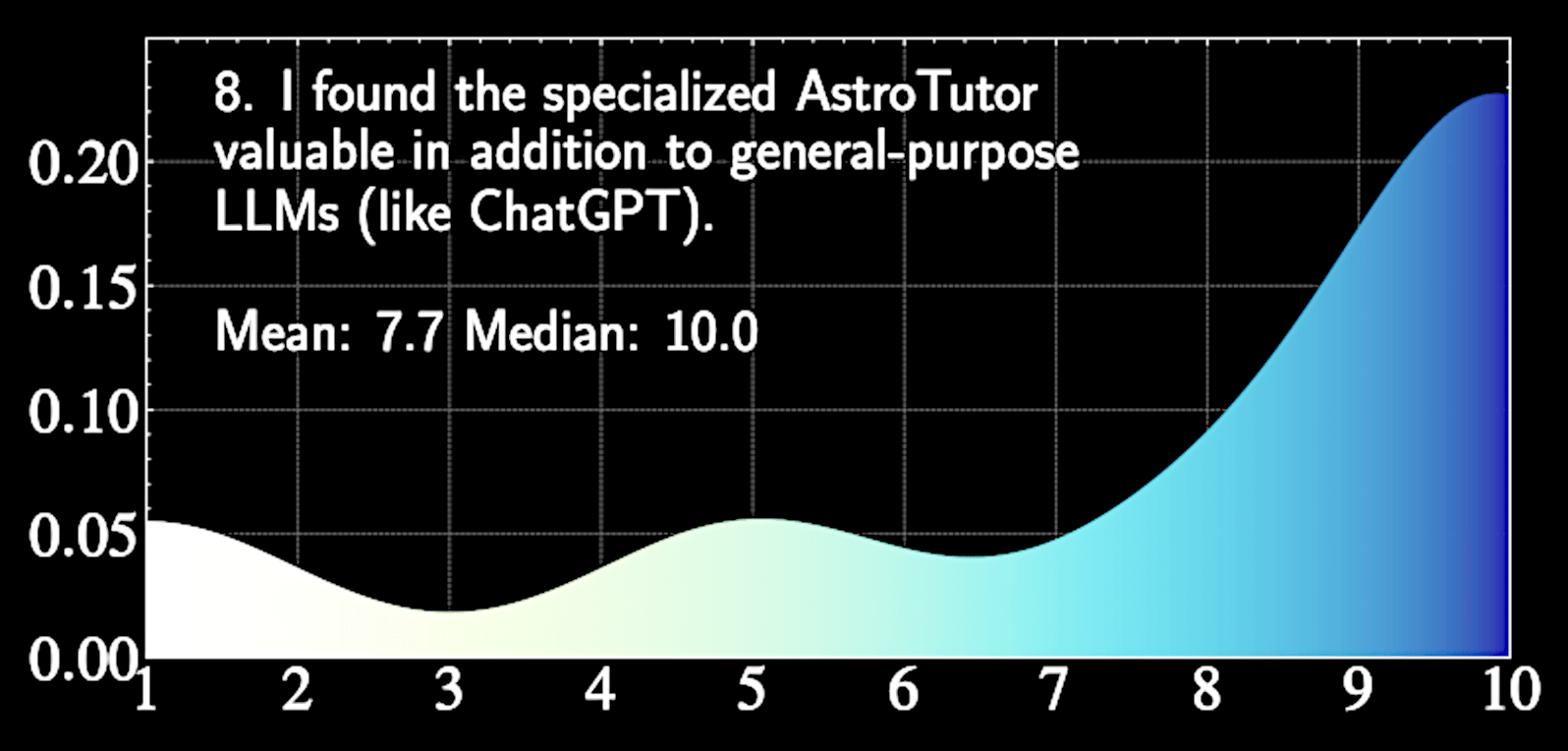
Likert Score
Normalized Density
Students use general LLMs in conjunction with AstroTutor
Students generally don't know what tools are available
Claude ?
IDE ?
Integrated Development Environments (IDEs)
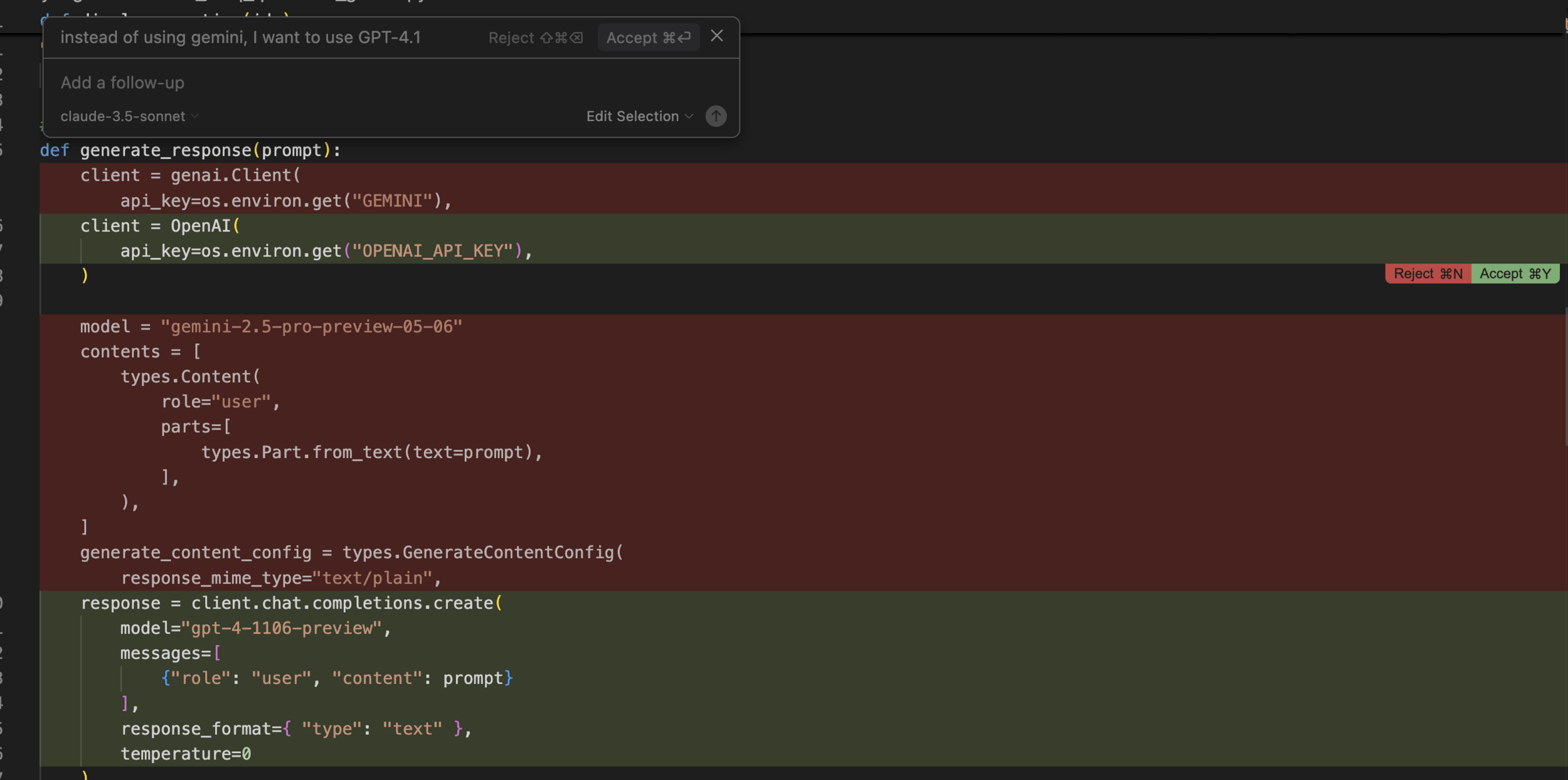
More modular control
Student feedback is very positive
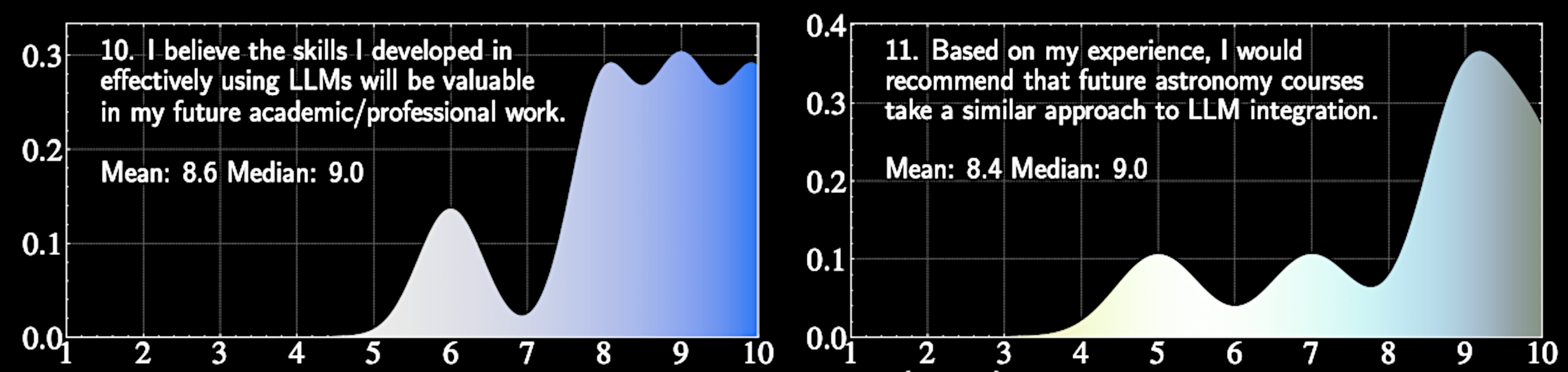
Likert Score
Normalized Density
AI tutors as study companions
LLM grading compared with human grading
In Astron5550, we explore
"Oral" assessment conducted by LLM
Disclaimer:
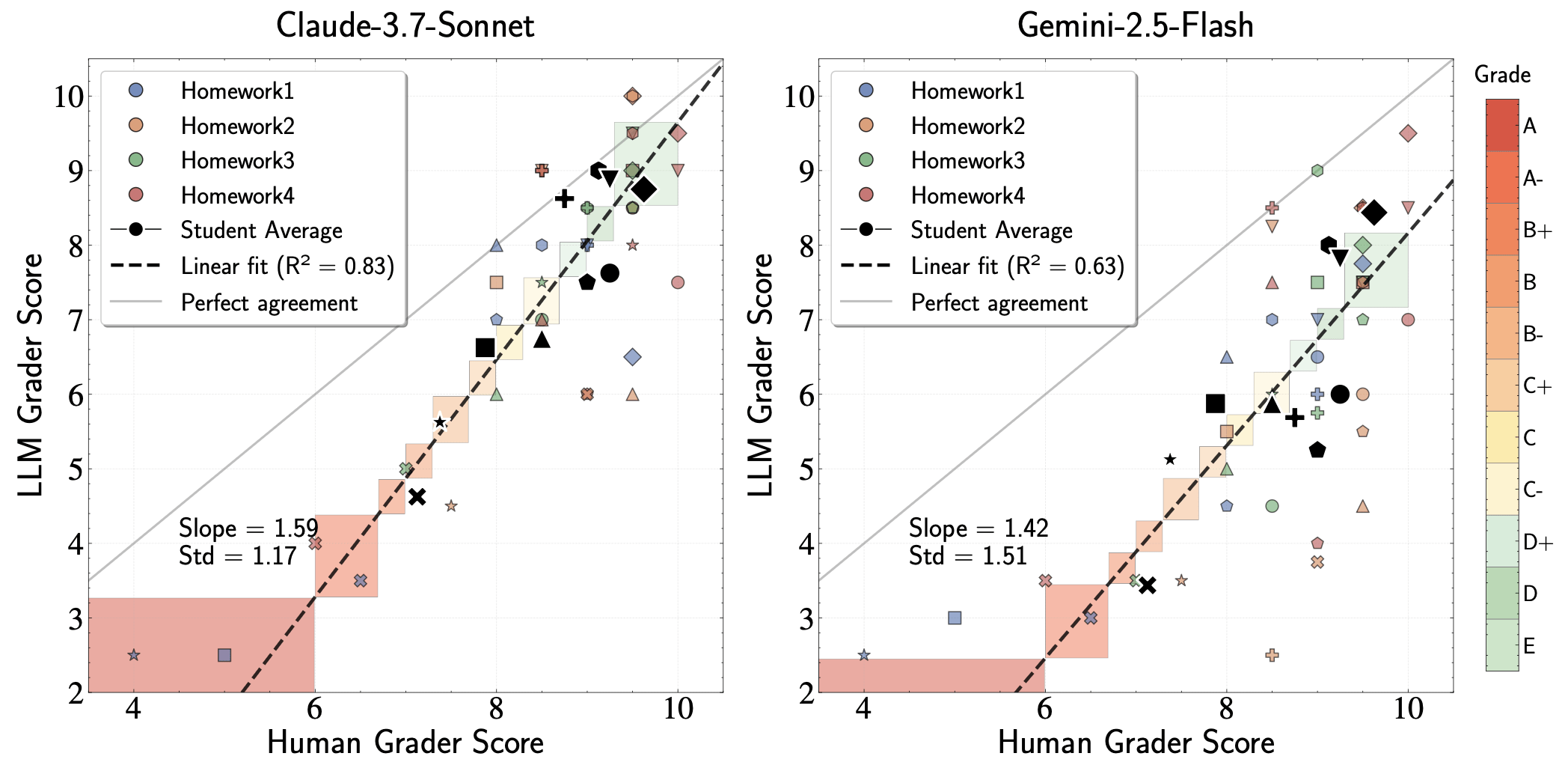
All grades in Astron 5550 are assigned by humans
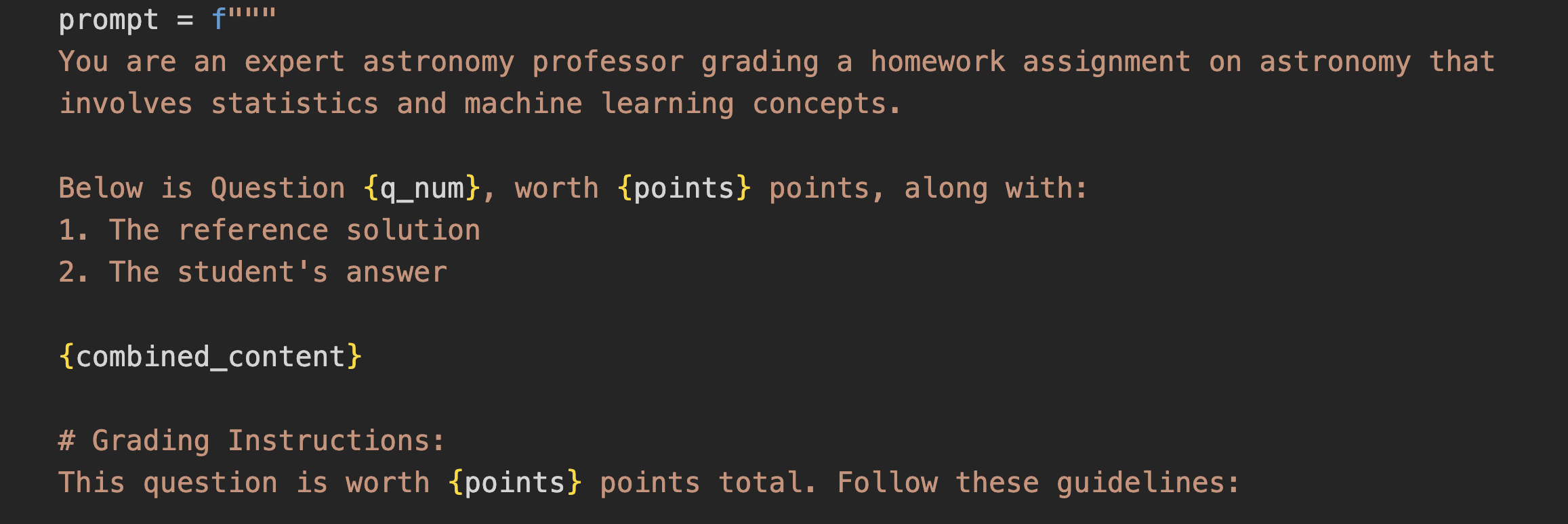
Costs $0.10 per homework assignment
= 8 long coding problems
Slope > 1
Humans made more errors
Detected detailed coding errors (e.g., matrix transpose)
Humans tend to grade inconsistently
Timely feedback
Homogeneous grading
(also correlates strongly with human grading)
Arguments for LLM-based grading
Detailed feedback on-demand
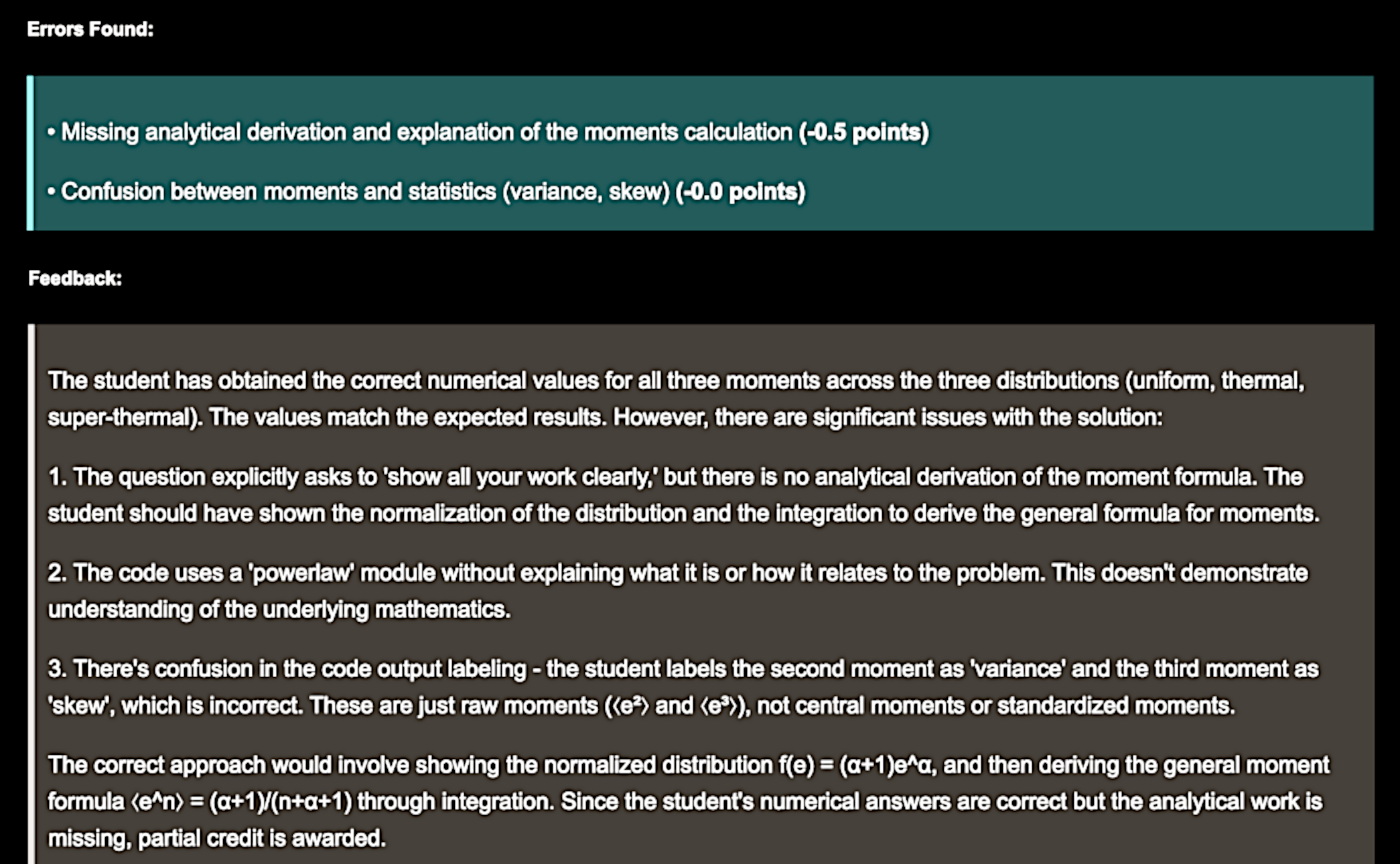
AI-generated
Privacy concerns?
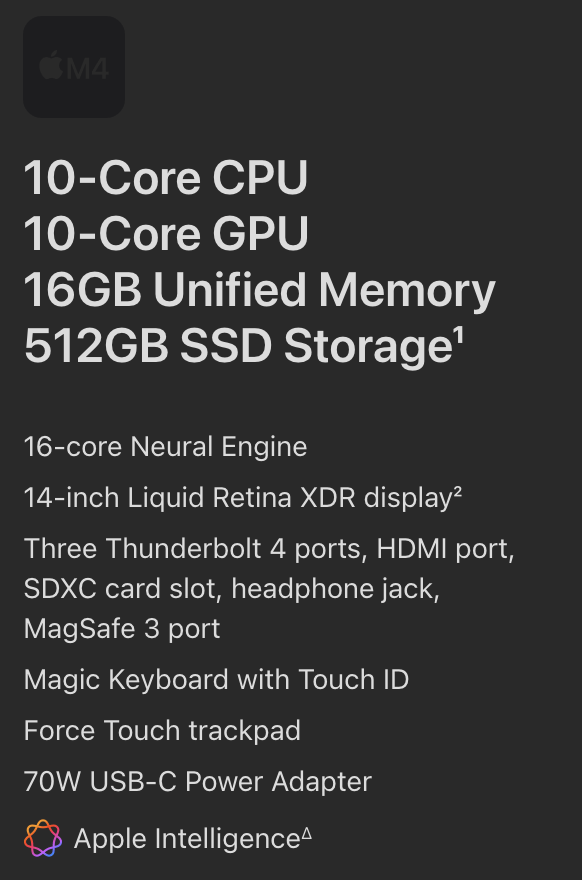
This is GPU!
1B parameters = 2 GB memory
can easily run 8B-parameter open-source models completely offline
and "quantized" 32B-parameter models
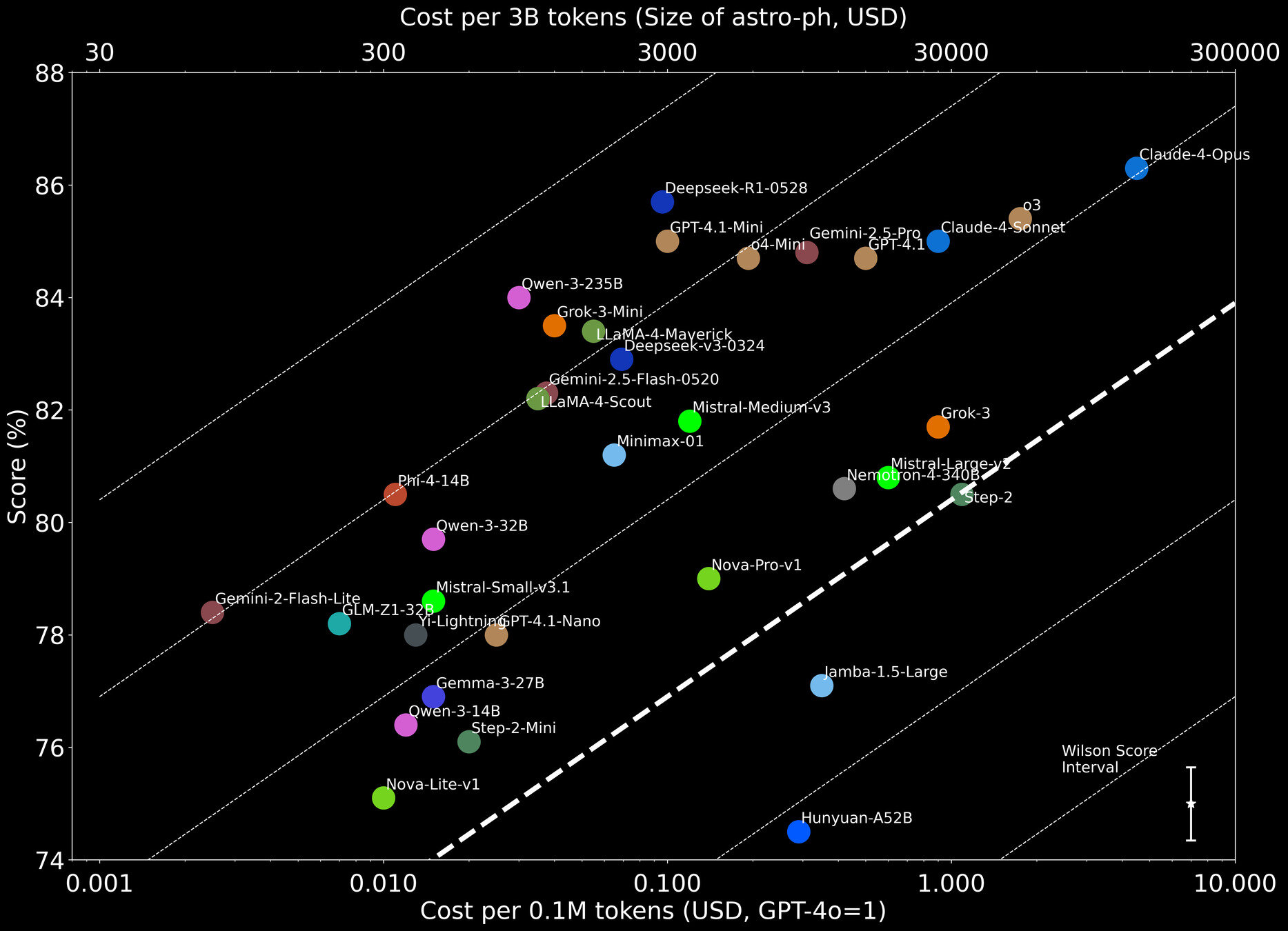
Good-old GPT-4o (2024-version)
YST+2025, de Haan, YST+ 2025
AstroBench
Lightweight models you can now run locally on your powerful MacBook are much better than GPT-4 from 2021, and as good as GPT-4o from 1.5 years ago
AI tutors as study companions
LLM grading compared with human grading
In Astron5550, we explore
"Oral" assessment conducted by LLM
Disclaimer:
Assessment was conducted for only one student requiring post-semester makeup assignments
Even a single student requesting deferment can delay homework feedback for the entire class
Can we have individualized exams?
Arguments for "oral" assessment with LLM
Allow students to receive hints when stuck on a question.
More accurate assessment of their understanding
Closed-book in-person exams do not reflect real-life scenarios
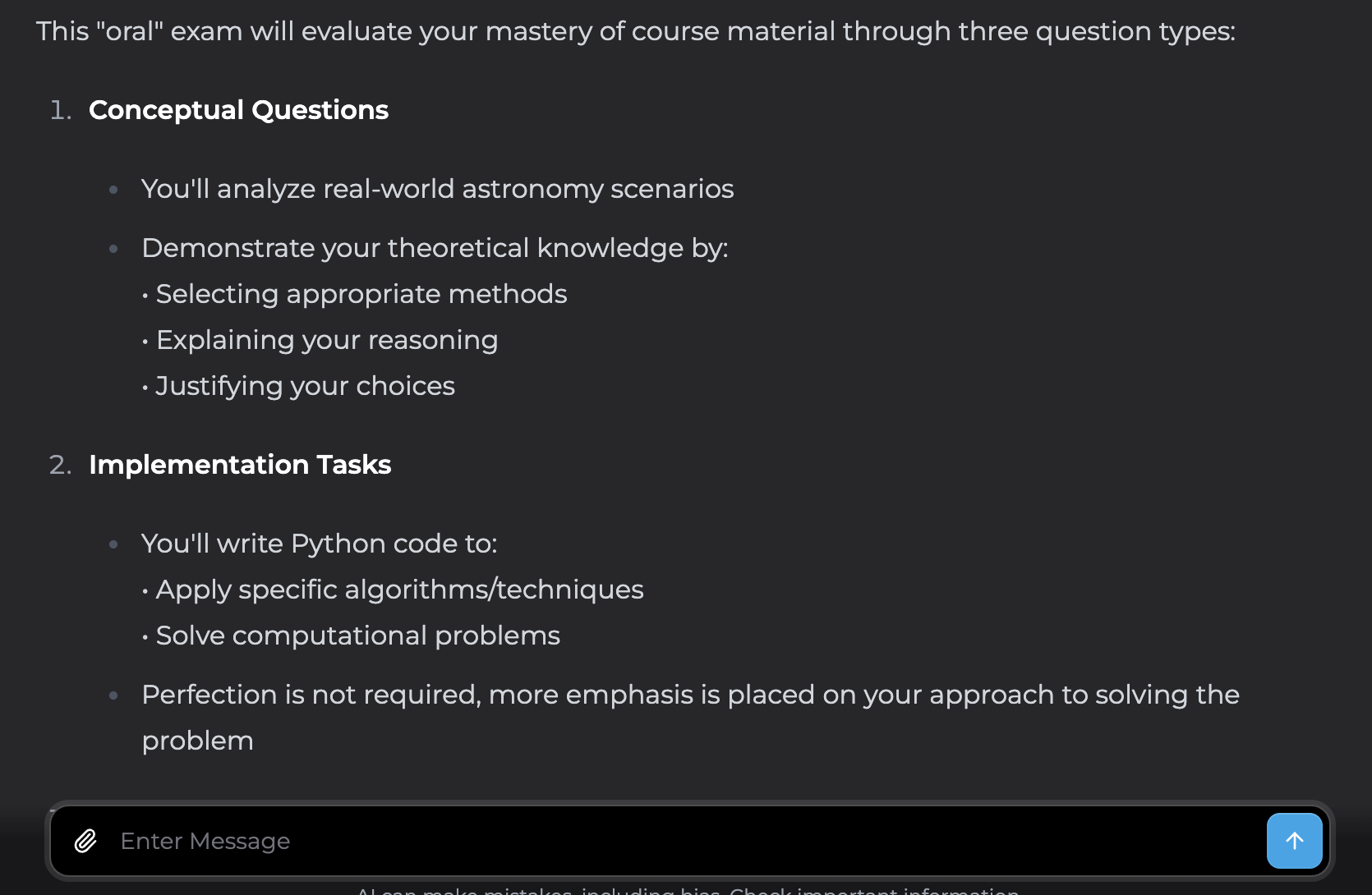
Context: The student is asked to implement a function that calculates adjusted regression parameters accounting for measurement uncertainties.
(paraphrased)
Student: First, I'll define my variables [codes]. Next I'll process the data chunks [codes]
LLM: That's a good start! I see you're calculating the means and attempting to process the data. However, I notice a few things to consider: Take a look at how you're initializing x_parts..... [blah blah]
Student: Oh right, I should use brackets for a list. Also, I forgot to use the loop variable. Let me fix that [codes]
LLM: Excellent corrections! You've identified the key issues. Now, regarding the error_std calculation

Ensuring academic integrity
Students are requested to record their screen on Zoom (offline), submit the chat history and the Zoom recording.
The chat history is graded by a human (me), validated with LLM
The 1-hour Zoom recording is reviewed by an LLM (yes, LLMs can analyze video) with local offline Qwen-2.5-VL, condensing to a 1-minute compilation of 'suspicious activity