



















Content ITV PRO
This is Itvedant Content department
Learning Outcome
5
Support risk management and compliance.
4
Document and report compliance issues.
3
Know stakeholder roles and responsibilities.
2
Identify cases requiring escalation.
1
Understand AML escalation and reporting.
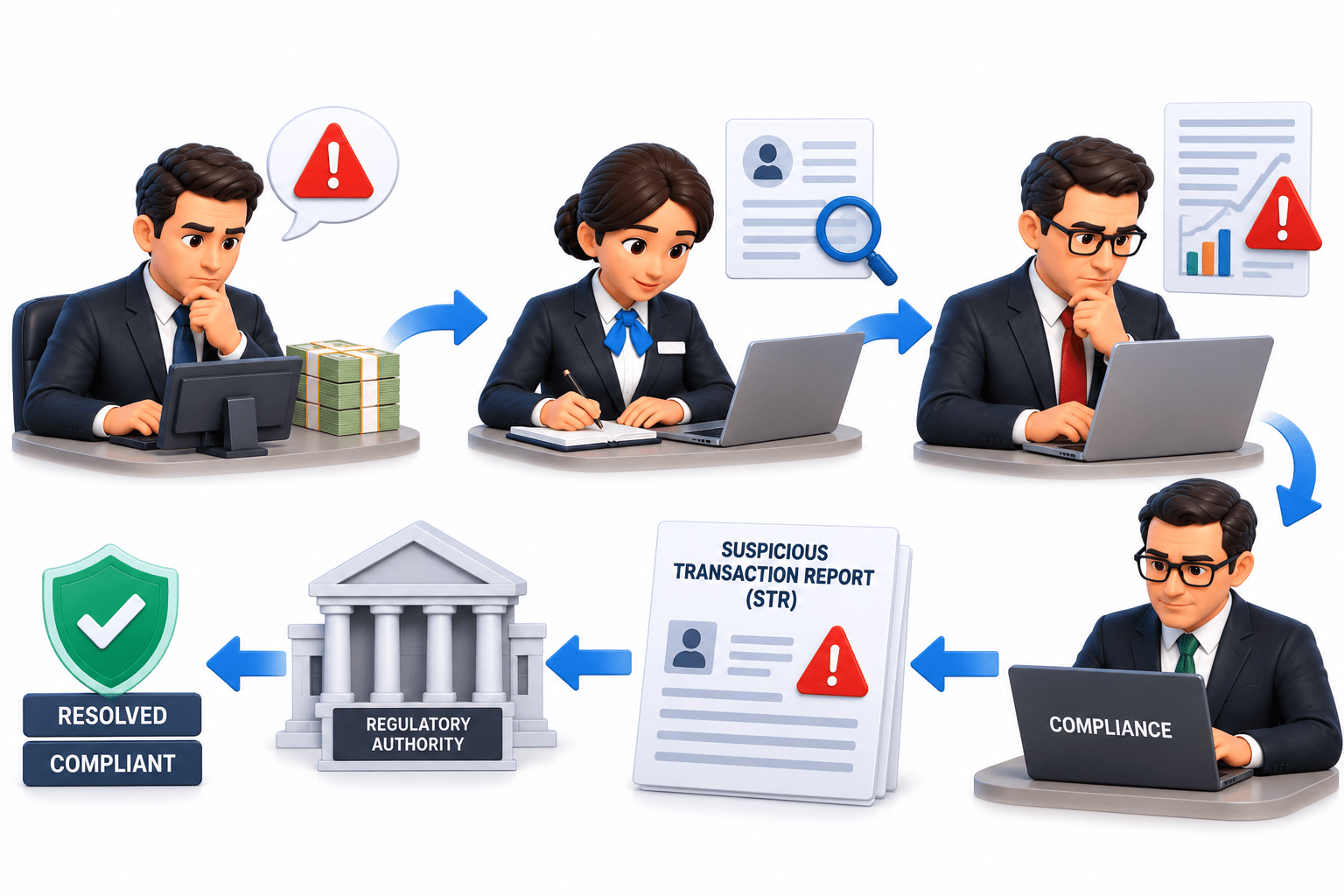
Customer requests a routine cash withdrawal.
Bank teller processes the normal transaction.
Another customer requests an unusually large withdrawal.
Teller identifies it as suspicious and refers it to the branch manager.
Manager reviews the transaction and checks the risk level.
High-risk cases are escalated to higher authorities.
Additional review ensures safe and compliant banking.
Transition from Analogy to Technical Concept
Similarly, high-risk cases are escalated to the appropriate authorities for review and decision-making.
Likewise, escalation and reporting ensure compliance concerns are reviewed before action is taken.
This reflects how organizations manage risks through a structured escalation and reporting process.
Similarly, issues beyond an employee's authority are escalated for appropriate review.
In the same way, escalation and reporting ensure informed and compliant decision-making.
Internal Escalation
What is Internal Escalation?
Internal escalation is the process of referring compliance concerns or high-risk cases to higher authorities within the organization when they cannot be resolved at the operational level.
Key Points:
Used when issues exceed an employee's authority or expertise.
Triggered by incomplete KYC, sanctions matches, adverse media, or suspicious customer behavior.
Cases are escalated to supervisors, Compliance Officers, AML teams, or senior management.
Ensures timely review and informed decision-making.
Prevents high-risk customers from being onboarded without proper approval.
Suspicious Transaction Report (STR)
What is an STR?
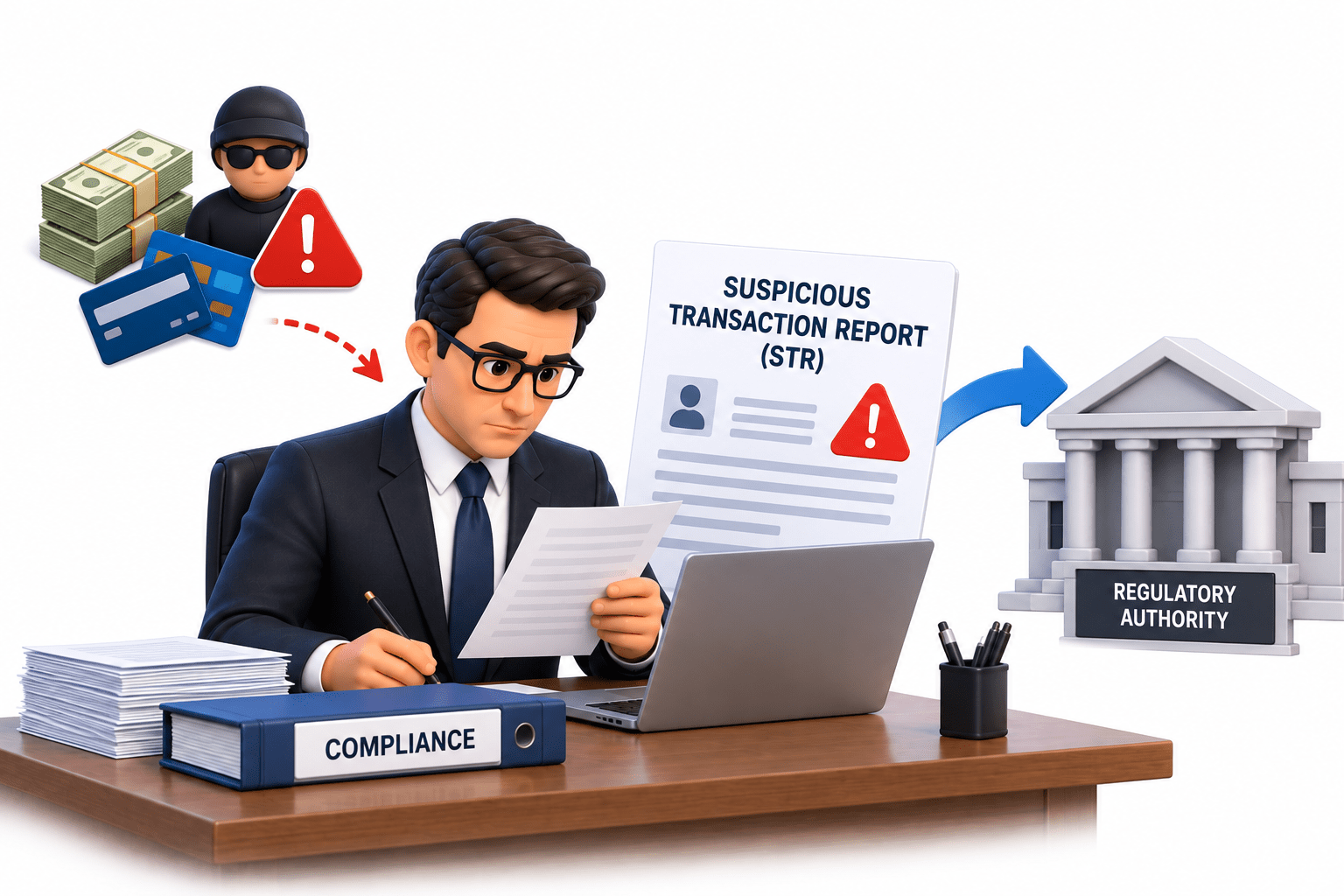
A Suspicious Transaction Report (STR) is an official report prepared when a transaction or customer activity appears unusual or potentially linked to money laundering, terrorist financing, or other financial crimes.
Key Points:
Filed when there is reasonable suspicion of illegal financial activity.
Contains customer details, transaction information, reasons for suspicion, and supporting evidence.
Submitted to the appropriate regulatory authority as required by law.
Must remain confidential and should not be disclosed to the customer.
Assists regulatory agencies in investigating financial crimes.
Reporting Process
What is the Reporting Process?
The reporting process is the structured sequence of steps used to document, communicate, and resolve compliance-related concerns within an organization.
Key Points:
Identify suspicious activities or compliance concerns.
Collect and verify relevant information and supporting documents.
Record observations accurately and maintain proper documentation
Report the issue through the organization's approved reporting channels.
Compliance teams review the case and determine the appropriate action.
Maintain an audit trail for future reference and regulatory compliance.
This format is easier for learners because each concept starts with "What is it?" before moving into the detailed points.
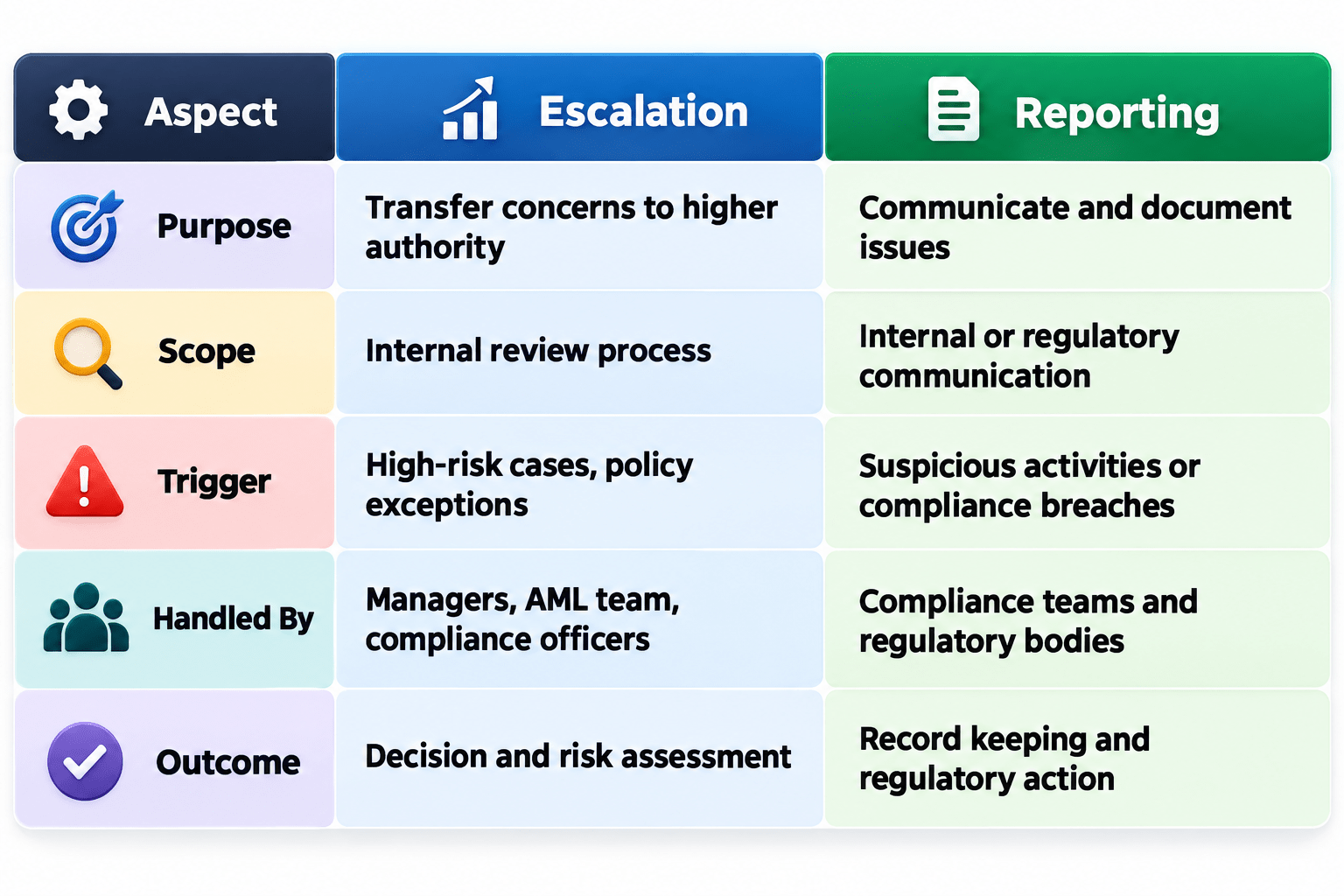
Escalation vs Reporting
Summary
5
Strengthen risk management and decisions.
4
Promote transparency and compliance.
3
Report suspicious activities through STRs.
2
Escalate high-risk cases internally.
1
Ensure proper review of compliance concerns.
Quiz
What is the primary purpose of internal escalation in AML?
A. To approve all client applications immediately
B. Transfer high-risk cases to the appropriate authority.
C. To increase customer onboarding speed
D. To reduce documentation requirements
Quiz-Answer
What is the primary purpose of internal escalation in AML?
A. To approve all client applications immediately
B. Transfer high-risk cases to the appropriate authority.
C. To increase customer onboarding speed
D. To reduce documentation requirements
By Content ITV